What are the costs and profits of lotus root intercropping
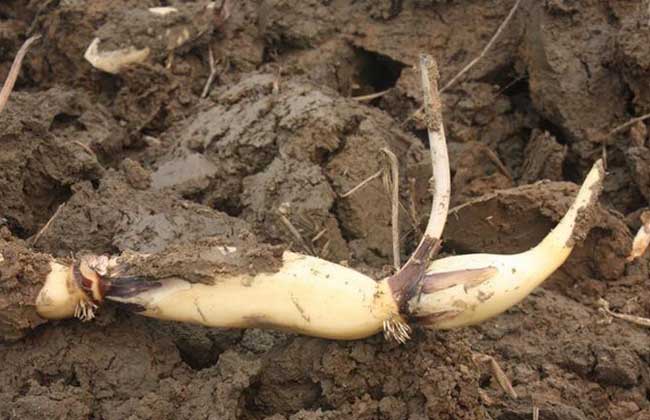
Lotus root originated in India and was introduced to China very early. As far back as the Southern and Northern Dynasties period, lotus root cultivation was already quite widespread. It can be eaten raw or cooked as a dish, and its medicinal value is quite high. Lotus root powder can aid digestion and stop diarrhea, stimulate the appetite and clear heat, nourish and build the constitution, and prevent internal bleeding. During the Xianfeng reign of the Qing Dynasty, it was already designated as a tribute item for the imperial kitchen. Now let us take a look at the costs and profits of lotus root intercropping!
Lotus root growing environment
1. Temperature: Lotus root prefers warmth. Seed lotus roots can only sprout above 15°C. During the vigorous growth period, the temperature should be 20-30°C and the water temperature 21-25°C. In the early stage of root formation, a relatively high temperature is also required to facilitate the swelling of the lotus root body. In the later stage, a relatively large day-night temperature difference is required, around 25°C during the day and around 15°C at night, to facilitate nutrient accumulation and the filling out of the lotus root body. During the dormant period, the temperature should be kept above 5°C; below 5°C, the lotus root is susceptible to freezing damage.
2. Light: Lotus root is a light-loving plant and is not tolerant of shade. It requires ample light during the growth period, and has no strict requirements for day length. Ample light in the early stage is beneficial to the growth of stems and leaves. Ample light in the later stage is beneficial to flowering, fruiting and the filling out of the lotus root body.
3. Water: Lotus root must not lack water throughout the entire growth period. During the sprouting and growth stage, shallow water is required, with a water level of 5-10 cm being suitable. As the plant enters the vigorous growth stage, the water level should gradually deepen to 30-50 cm. Afterwards, as the plant flowers, fruits and forms roots, the water level should gradually become shallower again, until the lotus root goes dormant and overwinters, when only fully moist soil or shallow water is needed. If the water level is too deep, it easily causes delayed root formation and slender lotus root bodies. If the water level rises sharply and submerges the lotus leaves for more than 1 day, it easily causes leaf death.
4. Soil: For lotus root growth, loam and clay loam rich in organic matter are most suitable. The soil organic matter content should be at least above 1.5%, and the soil pH should be between 5.6 and 7.5, with 6.5 being most suitable. Lotus root requires equal emphasis on the three elements nitrogen, phosphorus and potassium, and there are also certain differences among varieties. For seed lotus types, the demand for nitrogen and phosphorus is relatively greater, while for root lotus types, the demand for nitrogen and potassium is relatively greater.
Early lotus root - late rice model
1. Model advantages: Lotus root is planted from late March to early April and harvested in mid-July. Late rice is sown in mid-to-late June and transplanted in late July. This model was applied relatively early and covers a relatively large area. It requires little investment and gives stable returns.
2. Technical points: Strengthen early-maturing cultivation management of lotus root, promote lotus root swelling, and ensure early yield and returns. Late rice is managed conventionally.
3. Variety selection: Choose early-to-mid-maturing varieties, such as Elian No. 1, Elian No. 5 and Wuzhi No. 2, etc.
4. Reasonable close planting, with a conventional seed rate of about 450 kg per mu.
5. Reasonable fertilization: Apply sufficient base fertilizer and apply topdressing early. Apply 100 kg of ammonium bicarbonate, 50 kg of phosphate fertilizer and 15 kg of potassium sulfate compound fertilizer per mu, and apply as much organic fertilizer as possible. When standing leaves begin to appear, apply 15 kg of urea per mu as topdressing. Because the base fertility of the lotus root field is relatively sufficient, late rice can be given less or no base fertilizer.
6. Economic benefits: Lotus root is harvested in mid-July, with a yield of 900 kg per mu, a price of 2.6 yuan/kg, and an output value of 2340 yuan. Late rice yields 450 kg per mu at 1.6 yuan/kg, with an output value of 720 yuan. The total output value of the two seasons per mu is 3060 yuan. After deducting production costs, the annual profit is 2300 yuan. By comparison, single-season middle rice averages 650 kg per mu at 1.8 yuan/kg, with an output value of 1170 yuan and a profit of 800 yuan. Compared with single-season middle rice, this model increases efficiency by 1500 yuan per mu.
Early lotus root - seleng wormwood model
1. Model advantages: After lotus root is harvested, seleng wormwood is planted as a follow-on crop. Lotus root is cultivated with heat-preservation facilities, planted in early March, and harvested in stages from early June to early July. Seleng wormwood is planted in early August and harvested successively from late October to the following April (with heat preservation covering in winter). This is a new model promoted and applied in recent years.
2. Greenhouse construction: The greenhouse uses a steel-frame greenhouse, 6.0 m wide, 2.5 m high and 50 m long. The medium greenhouse uses bamboo arches, 3-3.5 m wide, 1.5-1.7 m high and 20-30 m long. The greenhouse runs north-south, which facilitates ventilation.
3. Lotus root planting: Choose the early-maturing and mid-maturing varieties Elian No. 1 and Elian No. 5. Plant early at the right time, in early March, 1 month earlier than open-field planting. Increase planting density, with a seed rate of 450 kg per mu. Apply sufficient base fertilizer and apply topdressing early. Apply 75 kg of ternary compound fertilizer per mu, and when standing leaves appear, apply 10 kg of urea as topdressing. Harvest and bring to market in a timely manner, usually in 2 harvests.
4. Seleng wormwood planting: In early July, after the lotus root harvest, drain the field water and sun the field for 20 days, then plow and harrow to prepare the soil, applying 3000 kg of decomposed organic fertilizer per mu. Make perimeter ditches and bed ditches well, with a ditch depth of 25 cm and a bed width of 1.2 cm. Cuttings are inserted in early August, with cuttings 8-10 cm long, bearing 2 un-sprouted plump axillary buds. Immediately after cutting, water thoroughly once and cover with a shade net. Water frequently to keep the bed surface moist, preferably by furrow irrigation, and apply topdressing in conjunction with irrigation. In late November, cover with film for heat preservation, with the greenhouse temperature preferably 18-20°C, and pay attention to uncovering the film for ventilation and dehumidification. It can be harvested 5 times a year, until the following April.
5. Economic benefits: The first lotus root harvest is in early June, with a yield of 450 kg per mu at 8.0 yuan/kg, and an output value of 3600 yuan. The second harvest is in early July, with a yield of 400 kg per mu at 3.0 yuan/kg, and an output value of 1200 yuan. The total output value of lotus root from the 2 harvests is 4800 yuan per mu. Seleng wormwood is harvested 5 times, with a yield of 3000-4000 kg per mu and an output value of 4100 yuan. The total output value of lotus root and seleng wormwood in the two seasons is 8900 yuan per mu. After deducting production costs, a profit of 6570 yuan can be obtained. Compared with "greenhouse lotus root - one season late rice," this model increases income by 2900 yuan per mu. However, the model requires a certain amount of investment and more labor, but the benefits are high, and it can resolve the contradiction of having more people and less land.
Double-crop lotus root model
1. Model advantages: Double-crop lotus root is a new model of planting lotus root twice and harvesting twice a year. The second-season lotus root in this model has the characteristics of a white and round lotus root body, uniform lotus root nodes, and a crisp, sweet and refreshing taste, and is very popular in the market. If the second season adopts trench harvesting, leaving part of the seed stock in the field, and field management is strengthened in a timely manner, the lotus root can mature earlier the following year and be harvested and brought to market in mid-June, obtaining a relatively high price and returns.
2. Variety selection: Choose the early-maturing variety Elian No. 1, which is 15-20 days earlier than the mid-maturing variety Elian No. 5. The first-season lotus root is harvested in mid-June, with large roots taken to market, and small roots left as seed stock for the second season and transplanted into the field in a timely manner. The second season uses 900 plants per mu, with 1200 effective buds, and is harvested by trench harvesting in November-December. The following year, field management is strengthened in a timely manner, and harvesting takes place again in mid-June, cycling year after year.
3. Water and fertilizer management: Because the first-season lotus root uses the original seed stock from the previous autumn's lotus root, its emergence speed is faster than that of transplanted plants. If water and fertilizer management is strengthened in a timely manner, root swelling and formation can occur in late May. Before emergence, in conjunction with intertillage and weeding, apply 100 kg of ammonium bicarbonate, 50 kg of phosphate fertilizer, 20 kg of potassium fertilizer, 2 kg of boron fertilizer, 1 kg of zinc fertilizer and 5 kg of carbendazim per mu, and when there are 1-2 standing leaves, apply 20 kg of urea as topdressing. The second-season lotus root should be given sufficient base fertilizer, applying 500 kg of bio-organic fertilizer and 50 kg of compound fertilizer per mu. When the first standing leaf appears, apply 15 kg of urea per mu.
4. Economic benefits: The first-season lotus root yields 750 kg per mu, with an output value of 3000 yuan. The second-season lotus root yields 450 kg per mu, with an output value of 1800 yuan. The total output value of the two seasons of lotus root is 4800 yuan per mu. After deducting costs, the average profit is 3700 yuan per mu. This model requires little investment and gives relatively high returns.
Early lotus root - water chestnut model
1. Cropping arrangement: Lotus root is planted in early April and harvested in mid-July, referring to the "early lotus root - rice" model. Water chestnut is raised as seedlings in early April, planted in mid-to-late July, and harvested from December to the following March.
2. Water chestnut sprouting: Varieties such as Xiaogan water chestnut and Hangzhou fruit water chestnut can be selected. In early April, choose vegetable plots in front of or behind houses to prepare the soil for sprouting. Prepare 200-250 seed water chestnut corms per mu of main field (3.5-3.5 kg).
3. Water chestnut temporary planting: When the water chestnut sprouts grow to about 6 cm, move them to the temporary planting field. The seedling field is divided into beds 1.5 m wide, surface water is drained, and sprouted seed water chestnuts are planted at a density of 13 cm × 17 cm.
4. Water chestnut seedling separation: In mid-to-late May, carry out seedling separation and temporary planting. Apply 50 kg of compound fertilizer per mu as base fertilizer in the seedling separation bed. After planting, manage with shallow water, and apply urea topdressing 2 times, 10 kg/mu each time.
5. Main field planting: Transplant to the main field for planting in mid-to-late July. Before planting, in conjunction with land preparation, apply 500 kg of bio-organic fertilizer and 100 kg of compound fertilizer per mu. The planting hole spacing is 0.5 m and the row spacing is 1 m, with 3-5 seedlings per hole.
6. Water and fertilizer management: In the early stage, shallow water is suitable to promote tillering, with a depth of 3-5 cm being suitable. Afterwards, gradually deepen the water layer to 5-10 cm to control tillering and promote water chestnut swelling. Apply topdressing 3 times throughout the growth period. The first time is 10 days after transplanting, applying 10 kg of urea per mu. The second time is 20 days after the first topdressing, applying 10 kg of urea per mu. The third time is before corm formation, applying 15 kg of compound fertilizer per mu to promote water chestnut swelling.
7. Economic benefits: The preceding crop lotus root yields 800 kg per mu, with an average price of 2.4 yuan/kg, and an output value of 1920 yuan. The following crop water chestnut yields 2300 kg per mu, with an average price of 1.2 yuan/kg, and an output value of 2760 yuan. The output value of the two seasons is 4680 yuan per mu, with a profit of 3700 yuan. This model gives relatively high returns, but requires more labor and needs more workers.
Lotus root field loach intercropping model
1. Model advantages: Intercropping loach in lotus root fields is a form of ecological farming. The ecological environment of lotus root fields is very suitable for loach survival, and loach burrowing into the mud to inhabit helps loosen the soil and decompose fertilizer, and can also prey on insect pests in the lotus root field.
2. Field facilities: Dig perimeter ditches around the field ridges, 1.5 m wide and 0.5 m deep, raise the field ridges to 0.6 m, and set up escape-prevention facilities at the inlet and outlet.
3. Field plot selection: The field should have convenient irrigation and drainage, strong water retention, rich soil organic matter content and a deep mud layer. Generally, a mud layer depth of about 25 cm is required, and an area of 334 mu is preferable, which is convenient for management.
4. Lotus root management: Plant in early April. Base fertilizer should be mainly basal fertilizer, supplemented by topdressing. Basal fertilizer should be mainly organic fertilizer, supplemented by inorganic fertilizer. Apply 1000 kg of bio-organic fertilizer and 50 kg of compound fertilizer per mu as base fertilizer, and 15 kg of urea as topdressing. The topdressing is applied 10 days before stocking loach.
5. Loach stocking: When the lotus root grows to 3-4 leaves, loach can be stocked, generally in mid-May. During stocking, maintain a water layer of 10-15 cm. For every 100 square meters, release 1.0-15 kg of loach fry about 5 cm long. Loach feed mainly consists of mixed feed such as wheat bran, bean dregs and earthworms. Feed once a day, with the feeding amount being 3-5% of the total body weight of the loach, and adjust the type and amount of feed at any time according to different temperatures.
6. Timely harvest: Lotus root is harvested from November to the following March. Loach can be delayed until March of the following year for catching.
7. Economic benefits: Lotus root yields 1500 kg per mu at 1.2 yuan/kg, with an output value of 1800 yuan. Loach yields 180 kg per mu at 26 yuan/kg, with an output value of 4680 yuan. The total output value of lotus root and loach per mu is 6480 yuan. After deducting costs, the profit is 4100 yuan.