Detailed Explanation of the Key Points of Soilless Cultivation Techniques for Chinese Chives
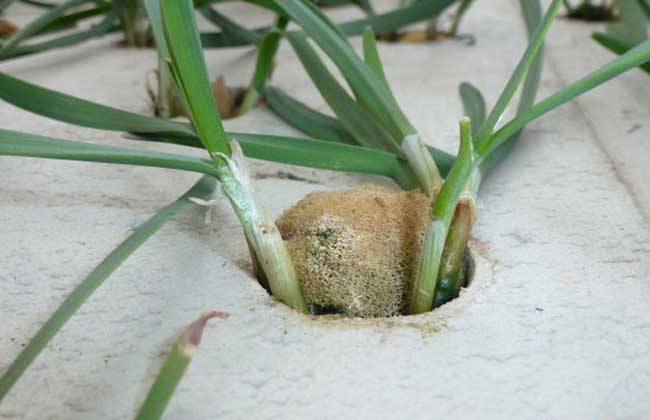
Chinese chives are a perennial herbaceous plant of the Liliaceae family, with strong adaptability, cold and heat resistance, and are cultivated everywhere across the country. The leaves, flower stalks and flowers are all eaten as vegetables, and the seeds etc. can be used as medicine. Soilless cultivation of Chinese chives has the advantages of labor-saving management, high yield and great economic benefit, and is very suitable for urban residents to grow at home. Let us take a look at the soilless cultivation techniques for Chinese chives below!
Growing Environment Conditions for Chinese Chives
1. Temperature: Chinese chives prefer cool conditions, tolerating both cold and heat. The optimum temperature for seed germination is above 12°C, the growing temperature is 15°C to 25°C, and the underground part can tolerate lower temperatures.
2. Light: The growth of Chinese chives requires medium light intensity and has strong shade tolerance, but if the light is too weak, photosynthetic products accumulate less, tillering is reduced and the plants become thin and weak, the yield is low and premature aging occurs easily; if the light is too strong and the temperature too high, there is much fiber and the quality is poor.
3. Water: The suitable relative air humidity for Chinese chives is 60-70%, and the soil moisture is 80-90% of the maximum field water-holding capacity.
4. Nutrition: It has strong adaptability to soil texture, and the suitable pH is 5.5-6.5. It has a large fertilizer requirement and strong fertilizer tolerance.
Soilless Cultivation Techniques for Chinese Chives
1. Use a flower pot (or wooden trough) 18-20 cm deep, filled with river sand of 1-2 mm particle size. Rinse the river sand clean with water to prevent it from carrying bacteria.
2. Select open-field chive roots more than two years old, cut off the old roots and leaves, keep the shortened stem roots, and insert and plant them into the pot, 3-4 plants per clump, with a plant and row spacing of about 3.3 cm.
4. After planting, water thoroughly once, then water according to soil moisture conditions. After new roots appear, apply nutrient solution. Generally, water once every other day and apply nutrient solution once every other day; in spring, summer and autumn water once every 1-2 days; in winter water once every 3-5 days. Do not apply nutrient solution on rainy days, in the afternoon or at night. When the leaves are yellow, apply more; when the leaves are dark, apply less nutrient solution.
5. The nutrient solution formula for soilless cultivation of Chinese chives is 15 g urea (or 22.5 g ammonium sulfate), 22.5 g monopotassium phosphate, and 15 kg water, which can be applied to 1.5 sq m (about 30 pots).
6. For sand-cultured Chinese chives, the suitable bed temperature is 14°C and the air temperature is 16°C. They can also grow at a bed temperature of 6°C and an air temperature of about 10°C. In winter, use bedding material and a small shed for insulation.
7. Sand-cultured Chinese chives have a 30-day natural dormancy period around Frost's Descent. After the Beginning of Winter, cut off the chive leaves and they will continue to grow.
Pest and Disease Control of Chinese Chives
1. In the early stage of Chinese chive gray mold and Chinese chive sclerotinia disease, on cloudy days use 10% procymidone smoke agent, or 45% chlorothalonil smoke agent, 250 g per mu, divided into 6-8 points and ignited, and keep the shed closed for 3-4 hours. In the evening, 50% chlorothalonil dust, or 10% procymidone dust, or 6.5% procymidone-carbendazim dust can also be sprayed, 1 kg per mu. It can also be controlled by spraying 50% iprodione wettable powder 1000-fold solution, or 50% dimethachlon wettable powder 1000-fold solution.
3. In the early stage of Chinese chive Phytophthora blight, use 72.2% propamocarb aqueous solution 600-800-fold, or 72% cymoxanil wettable powder 700-fold, or 60% fosetyl-aluminum wettable powder 1000-fold, or 25% metalaxyl wettable powder 800-fold; smoke agents and dusts are the same as for gray mold, and the method of use is the same as for gray mold.
3. In the early stage of Chinese chive southern blight, use 15% triadimefon 1000-fold solution or 20% tolclofos-methyl 1200-fold solution to drench the roots.
4. In the early stage of Chinese chive rust disease, promptly spray 15% triadimefon wettable powder 1500-fold solution, or 20% triadimefon emulsifiable concentrate 2000-fold solution, or 97% ferrous sulfate wettable powder 1500-fold solution.
5. In the early stage of Chinese chive bacterial soft rot, use 77% copper hydroxide 500-fold solution, or potassium permanganate 1000-fold solution, or agricultural streptomycin 2500-fold solution, or chloramphenicol 3000-fold solution to drench the roots for control.
6. In the early stage of Chinese chive viral disease, spray the leaf surface with 1:40 soybean milk water or 0.2% monopotassium phosphate. The selected agents should be rotated and used alternately, generally applied once about every 7 days, for 2-3 consecutive applications.
7. For chive maggots, during the peak emergence period of adults, select 48% chlorpyrifos emulsifiable concentrate 2000-fold solution, or 80% dichlorvos emulsifiable concentrate 800-fold solution, or 2.5% cyhalothrin emulsifiable concentrate 1500-2000-fold solution etc. for foliar spraying.