Detailed Explanation of Key Technical Points for Oyster Mushroom Cultivation in Greenhouses
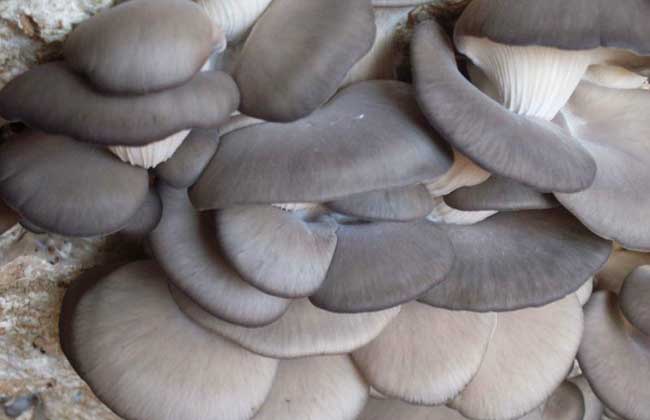
Oyster mushroom is a species in the genus Pleurotus of the family Pleurotaceae, order Agaricales, also known as oyster cap, north wind mushroom, Xiuzhen mushroom, etc. It is a widely cultivated edible mushroom rich in nutrients, containing 20-23 grams of protein per 100 grams of dried product, and has extremely high cultivation value. Let us take a look at oyster mushroom cultivation techniques in greenhouses!
Greenhouse Construction
The oyster mushroom cultivation greenhouse should run east-west, sheltered from the wind and facing the sun, with a width of 5 m, a length of 30 m, and a depth of 0.5 m (from the ground). The surrounding walls are built with bricks or piled with earth, with the south wall lower and the north wall higher. The south wall is 1 m high and the north wall is 1.5 m high (from the ground). Leave a 40×40 cm ventilation hole every 3 m (one on each of the south and north walls at corresponding positions). The roof is firmly framed with bamboo poles, covered with plastic film, and topped with straw curtains. 3-5 days before adding the substrate, fill the greenhouse with sufficient water, and after the water has seeped in, spread a layer of lime at a rate of 1 kg/sq m.
Selecting Good Varieties
Oyster mushrooms can be cultivated in all four seasons. The optimal temperature for low-temperature varieties is between 13-17°C, such as Dongjun and P2-2. The optimal temperature range for medium-temperature varieties is 20-24°C, such as Fengweigu and purple-spored oyster mushroom.
Cultivation Substrate Preparation
Fresh cottonseed hulls of the current year should be mixed and piled for 24 hours, then bagged the next day. Cottonseed hulls from the previous year should be mixed and fermented for 4-6 days to eliminate contaminating bacteria. When piling for fermentation, holes should be punched in the pile for aeration, and the pile should be turned at least 2 times during the period, with the fermentation time not exceeding 1 week at most. The substrate-to-water ratio must be strictly controlled during mixing. Overly wet substrate is unfavorable for both fermentation and mycelial growth. Nitrogen sources and nutrients should be added in proportion, along with fungicides for sterilization and pest prevention. When bagging, the amount of spawn should be no less than 20% to ensure rapid mycelial growth and prevent the bags from being contaminated by competing microorganisms.
Mycelial Growth Management
After the cultivation substrate is bagged, the bags are placed in the greenhouse for mycelial growth. For autumn cultivation, all bags are placed on the ground in a single layer. For spring cultivation, bags can be stacked crosswise in 2 layers or in a #-shaped pattern in 2-3 layers. For winter cultivation, every 4 bags are stacked into a pile, and two piles are placed together to promote mycelial growth at both ends of the bags. For autumn cultivation, roll up the greenhouse film and cover the greenhouse with straw curtains to prevent temperature rise from trapping heat. For winter cultivation, lower the greenhouse film to retain heat, and pull open several straw curtains during the day to raise the greenhouse temperature. For spring cultivation, roll up the front part of the greenhouse film for ventilation and cooling. During the mycelial growth period, special attention should be paid to the temperature inside the bags. If it exceeds 30°C, immediately ventilate to cool down or rearrange the stacks to dissipate heat. If high-temperature burning of mycelia occurs, dig out the areas with green mold in the bags and fill them with a paste made from plant ash. If the green mold has already formed spores, use plant ash mixed with 20% limewater to fill the contaminated areas.
Fruiting Management
After the oyster mushroom mycelia have fully colonized the bags, the bags can be stacked on the ridges inside the greenhouse for fruiting. For autumn cultivation, stack the bags to a height of 2-4 layers, placing 2-3 sorghum stalks or wooden sticks between each layer. Open the ventilation holes on the back wall, pull up the straw curtains in the morning and evening for ventilation, and spray water at noon to cool down. For winter cultivation, the bags can be stacked in 8 layers. Spray water at noon when it is warm, and roll up the front greenhouse film 1-1.5 m for ventilation. Generally, ventilation time is 10-20 minutes. After ventilation, promptly lower the greenhouse film and straw curtains. In the morning, part of the straw curtains can be pulled up to raise the temperature. For spring cultivation, stack the bags in 4-8 layers, roll up the front greenhouse film 1 m high, and cover with straw curtains down to the ground or level with the greenhouse film depending on the temperature. Spray water 1-2 times per day to maintain the relative humidity inside the greenhouse at around 85%. Water can also be poured into the furrows to keep the area around the stacks moist. For spring and autumn cultivation, roll up the greenhouse film and lower the straw curtains to avoid trapping heat, and pay attention to the temperature of the mushroom logs. After one flush of mushrooms is harvested, stop watering for 3 days, and resume spraying water to promote fruiting after primordia have formed. Generally, the first 2 flushes can produce 70-80% of the total yield. To connect the production schedule and improve efficiency, it is advisable to harvest 2-3 flushes of oyster mushrooms in greenhouse cultivation.