What vegetable varieties are better to choose for home growing?
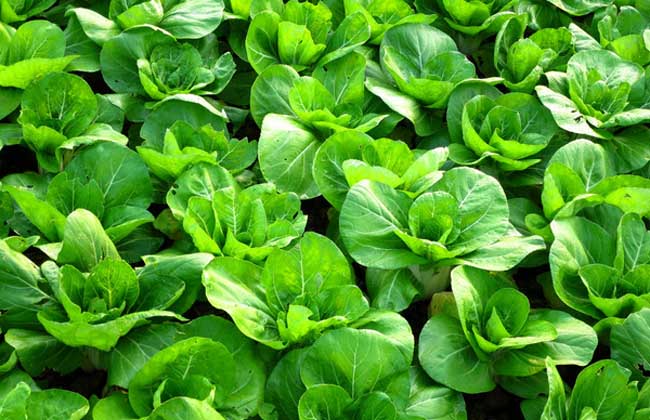
Vegetables are one of the indispensable foods in people's daily diet. Their nutrients mainly include minerals, vitamins, fiber and so on. The higher the content of these substances, the higher their nutritional value. In addition, the water and dietary fiber content in vegetables are also important nutritional quality indicators. Now let us take a look at what vegetables are good to grow at home!
Chinese chives
Chinese chives, also known as cao zhong ru, qi yang cao, lan ren cai, chang sheng jiu and so on, are a perennial herbaceous plant of the Liliaceae family. The leaves, flower scapes and flowers are all eaten as vegetables, and the seeds and other parts can be used as medicine. Chinese chives have strong adaptability, resisting cold and tolerating heat. They are cultivated everywhere in China. In many areas of the south they can be produced year-round. In the north, although the aboveground parts die in winter and the underground parts enter dormancy, they sprout and grow after the topsoil thaws in spring.
Cucumber
Cucumber is one of the main summer vegetables in all parts of China, also known as hu gua, ci gua, wang gua, qing gua and so on. It is an annual trailing or climbing herbaceous plant of the genus Cucumis in the Cucurbitaceae family. It is commonly cultivated throughout China, and many areas grow it in greenhouses or plastic tunnels. It is now widely planted in temperate and tropical regions, and is rich in nutrients such as protein, carbohydrates, vitamin B2, vitamin C, vitamin E, carotene, niacin, calcium, phosphorus, iron and so on.
Scal lion
Scal lion, also known as xiang cong, mian cong, huo cong, si ji cong and so on, is a perennial herbaceous plant of the genus Allium in the Liliaceae family. It originated in Siberia, has a long history of cultivation in China and is widely distributed, with Shandong, Hebei, Henan and other provinces as important producing areas. According to the length of the white portion, it can be divided into two types: large scallion and small scallion. Large scallion plants are tall, with white and sweet white portions, and are mostly grown in the north. The south mostly produces small scallion, a commonly used seasoning also called xiang cong, which is generally eaten raw or used in cold dishes.
Amaranth
Amaranth, also known as yan lai hong, lao shao nian, lao lai shao, san se xian and so on, is an annual herbaceous plant of the genus Amaranthus in the Amaranthaceae family. It originated in China, India and Southeast Asia and other places. Since ancient times in China it has been eaten as a wild vegetable. As a cultivated vegetable, it is grown mostly in China and India, and more in southern China than in the north. In various places in southern China there are amaranth varieties with excellent quality and high nutrition.
Water spinach
Water spinach, also known as weng cai, kong xin cai, weng cai, zhu ye cai, tong cai and so on, is a trailing plant of the genus Ipomoea in the Convolvulaceae family. It is distributed in all parts of China and widely cultivated in the provinces of the Yangtze River basin. It likes high temperature and humid environments, prefers moist soil, and likes sufficient light. It is not strict about soil conditions and likes fertilizer and water.
Yardlong bean
Yardlong bean, also known as jiang dou, chang jiao dou, dai dou, qun dai dou and so on, is a cultivated species of the cowpea species in the genus Vigna that can form long pods. It is an annual twining herbaceous plant and contains various vitamins and minerals and so on. The young pods are thick and fleshy, crisp and tender when stir-fried, and can also be blanched and served cold or pickled. In the areas south of the Yangtze River in China, it can be cultivated in spring, summer and autumn.
Radish
Radish is a biennial or annual herbaceous plant of the genus Raphanus in the Brassicaceae family. The original species originated on the warm coasts of Europe and Asia, and it is grown all over the world. In areas with suitable climatic conditions it can be planted in all four seasons, and in most areas autumn cultivation is the main method, making it one of the main vegetables in autumn and winter.
Pak choi
Pak choi, also known as qing cai, you cai and so on, is a close relative of Chinese cabbage (heading cabbage). Both belong to the same species of Brassica rapa, and it is also relatively close to Western cabbage, all belonging to the genus Brassica in the Brassicaceae family. It originated in China and is distributed in both the north and south, and is very widely cultivated in China. Moreover, according to measurements, it is the vegetable richest in minerals and vitamins.
Cilantro
Cilantro, also known as yuan sui, hu sui, xiang sui and so on, is a biennial or annual herbaceous plant of the genus Coriandrum in the Apiaceae family. It resembles celery, with small and tender leaves, slender stems and a rich fragrance. It is a seasoning in soups and drinks, mostly used as a condiment for cold dishes, or to enhance the flavor of blanched dishes and noodle dishes. Its place of origin is the Mediterranean coast and Central Asia, and it is now grown in most areas.
Chili pepper
Chili pepper, also known as la zi, la jiao, niu jiao jiao, hong hai jiao, chao tian jiao and so on, is an annual or limited-perennial herbaceous plant of the genus Capsicum in the Solanaceae family. The fruit is long and finger-shaped, with a tapering and often curved tip. It is green when unripe and becomes red, orange or purple-red when mature. It originated in the tropical regions of Central and Latin America, and is now commonly cultivated in countries around the world.
Tomato
Tomato, also known as fan shi, xi hong shi, yang shi zi and so on, is an annual or perennial herbaceous plant of the genus Solanum in the Solanaceae family. Its flowering and fruiting period is summer and autumn. It originated in South America and is widely cultivated in both the north and south of China. The fruit is rich in nutrition and has a special flavor. It can be eaten raw, cooked, processed into tomato sauce or juice, or canned whole.
Carrot
Carrot, also known as hong luo bo, gan xun and so on, is a variety of wild carrot and a biennial herbaceous plant of the genus Daucus in the Apiaceae family. It originated in western Asia. Afghanistan is the earliest place where purple carrots were cultivated, with a cultivation history of more than 2000 years. It is now widely cultivated throughout the country. The root is eaten as a vegetable and contains various vitamins A, B, C and carotene.
Eggplant
Eggplant, also known as ai gua, bai qie, diao cai zi, luo su and so on, is an upright branched herbaceous to subshrub plant of the genus Solanum in the Solanaceae family. It originated in tropical Asia, and is cultivated in every province of China. The fruit can be eaten as a vegetable. The root, stem and leaves are used as medicine as an astringent and have a diuretic effect. The leaves can also be used as an anesthetic. The seeds are a swelling-reducing medicine and are also used as a stimulant, but they easily cause stomach weakness and constipation. Eating the fruit raw can relieve poisoning from eating mushrooms.
Garlic
Garlic is the collective name for plants of the garlic group, also known as suan tou, du suan, hu suan and so on. It is a half-year herbaceous plant of the genus Allium in the Liliaceae family. According to different skin colors, it is divided into purple-skin varieties and white-skin varieties. Its place of origin is western Asia and Central Asia. It was introduced into China from the Western Regions during the Qin and Han dynasties and, through artificial cultivation and breeding, has anti-cancer effects and is deeply loved by the public.
Celery
Celery is a plant of the genus Apium in the Apiaceae family. There are three kinds: water celery, dryland celery and Western celery. Their functions are similar, and dryland celery is better for medicinal use. It is rich in nutrients such as protein, carbohydrates, carotene, B vitamins, calcium, phosphorus, iron, sodium and so on. It originated in the swampy areas along the Mediterranean coast, and is now commonly cultivated in countries around the world.