Detailed Guide to Hypsizygus marmoreus Cultivation: Growing Methods and Management Essentials
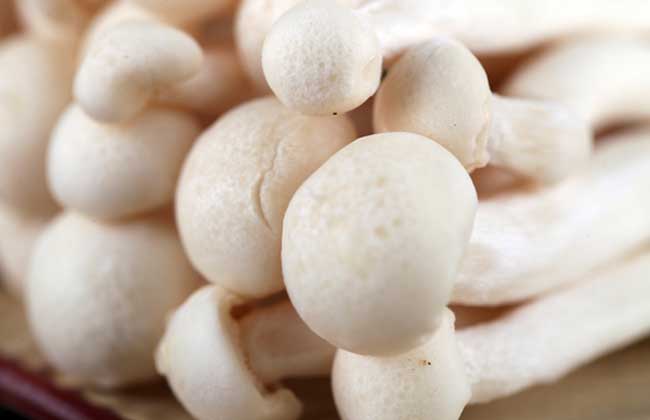
Hypsizygus marmoreus, also known as jade mushroom, spotted jade mushroom, shimeji mushroom, etc., is an edible fungus of the family Tricholomataceae and genus Hypsizygus. It has a crisp and tender texture, a fresh flavor, and a crab-like taste, with fruiting bodies ranging from medium to large. Currently, two strains are cultivated: light gray and pure white. The white strain is also called "white jade mushroom" or "jade dragon mushroom" and is mostly cultivated industrially. Let's take a look at Hypsizygus marmoreus cultivation techniques together!
Temperature Conditions
Hypsizygus marmoreus is a medium-to-low temperature edible fungus. Under natural conditions, it mostly appears in late autumn and early spring. The mycelium growth temperature is 5-30°C, with the optimum at 20-25°C. Above 35°C or below 4°C, the mycelium stops growing, and above 45°C it cannot survive. Primordium formation requires stimulation at a lower temperature of 10-16°C. The most ideal temperature for fruiting body growth is 13-18°C.
Humidity Conditions
The water content of the Hypsizygus marmoreus substrate should be 65%. Before fruiting, the cultivation bags should be properly replenished with water so that the substrate water content reaches 70-75%, which is necessary to meet the growth needs of Hypsizygus marmoreus. During the bud differentiation stage, the relative humidity of the mushroom house should be adjusted to 90-95%. During the fruiting body growth stage, the relative humidity of the mushroom house should be adjusted to 85-90%. If the relative humidity remains above 95% for a long time, the fruiting bodies tend to develop yellow spots and become soft in texture.
Light Conditions
During the mycelium growth stage, Hypsizygus marmoreus requires no light. Direct light not only inhibits growth but also darkens the color of the mycelium. However, during the reproductive stage, a certain amount of weak light is needed to promote normal development of the primordia. There is a certain correlation between light and the number of primordia formed. Darkness inhibits cap differentiation and produces deformed mushrooms. In darkness, Hypsizygus marmoreus tends to whiten, resulting in poor product texture. During fruiting body growth, there is obvious phototropism. During the fruiting stage, light control at 200-1000 lx is ideal.
Air Conditions
Hypsizygus marmoreus is a moderately aerobic fungus. The mycelium is not sensitive to air, but in an airtight environment, as respiration time, the carbon dioxide concentration increases, and the mycelium growth rate slows down. During fruiting body development, it is relatively sensitive to CO2, especially during bud differentiation, which is very sensitive to carbon dioxide concentration. During bud differentiation, the carbon dioxide concentration in the mushroom house should be 0.05-0.1%. When the fruiting bodies grow larger, the carbon dioxide concentration in the mushroom house should be 0.2-0.4%. In practice, the carbon dioxide concentration is often raised to an appropriate level by reducing ventilation. Closing windows and covering with film can intermittently delay cap opening, promote long stipes, improve quality and increase mushroom yield. However, if the carbon dioxide concentration in the mushroom house remains above 0.4% for a long time, the fruiting bodies tend to become deformed.
pH Level
Hypsizygus marmoreus mycelium is not strict about pH within a certain range (pH 5.0-8.0). The mycelium can grow at pH 4.0-8.5. Different strains have different pH requirements. During the mycelium growth stage, pH 6.5-7.5 is preferable. Therefore, in practice, the substrate should be around pH 8.0.
Nutritional Conditions
Hypsizygus marmoreus is a low-temperature grass-inhabiting fungus or wood-rotting white rot fungus with a strong ability to decompose lignin. Its main nutritional substrates in nature include broadleaf trees such as beech and horse chestnut. Due to improved cultivation techniques, Hypsizygus marmoreus can also be cultivated using only sawdust from Japanese cedar, pine, etc. When cultivating Hypsizygus marmoreus solely with coniferous sawdust, attention should be paid to the degree of sawdust composting and the distribution of sawdust particle size, as well as the type and amount of supplements (nutrients).
That's all for the introduction to the cultivation conditions of Hypsizygus marmoreus. Now let's continue to look at Hypsizygus marmoreus cultivation techniques!
Crop Scheduling
Production seasons are arranged according to local climatic conditions and the characteristic of Hypsizygus marmoreus having a relatively long growth and development period. In southern provinces of China, mushroom bags are generally made in September each year when the temperature stabilizes below a maximum of 28°C. From September to November, mycelium incubation and post-ripening culture are carried out. From November to December, fruiting occurs when the maximum temperature is below 18°C. In the north, this is correspondingly earlier as latitude increases. In most areas of Shandong, Henan, and Hebei, mushroom bags are generally started in late August. From August to October, mycelium incubation and post-ripening culture are carried out. From mid-to-late November to mid-to-late December, fruiting occurs. In provinces such as Gansu and Ningxia, inoculation is generally done before May each year, mushroom bags are started in mid-June, mycelium incubation and post-ripening culture are carried out from July to September, and fruiting occurs from late September to mid-to-late October. In Northeast China, it is correspondingly earlier.
Substrate Preparation
Hypsizygus marmoreus cultivation requires substrate materials that are relatively hard, and the porosity (air permeability) of the substrate is also very important, determining the growth rate and robustness of the mycelium. Therefore, when preparing the substrate, not only nutritional aspects but also the water-holding capacity and porosity of the substrate must be fully considered to determine the type and amount of nutritional additives in the substrate. The choice of nutritional additives will greatly affect the quality of Hypsizygus marmoreus. Of course, ultimately, the type and quantity of nutritional additives (supplements) used must be decided on the basis of cost accounting. The quality of nutritional additives has a great impact on the mycelium growth and development of Hypsizygus marmoreus as well as the quality and yield of the mushrooms. There are many substrate formulas to choose from. According to local conditions, the following formulas can be used for reference.
1. Broadleaf:coniferous sawdust 79% (weight ratio, same below), rice bran or wheat bran 18%, white sugar 1%, lime 1%, gypsum powder 1%, water content 65% (suitable for main sawdust-producing areas).
2. Cottonseed hull 98%, gypsum powder 1%, lime 1%, water content 65% (suitable for main cottonseed hull-producing areas).
3. Cottonseed hull 48%, sawdust 35%, wheat bran 10%, corn flour 5%, lime 1%, gypsum powder 1%, water content 65% (suitable for areas with abundant cottonseed hulls and sawdust).
4. Corncob 40%, sawdust 40%, wheat bran 12%, corn flour 5%, gypsum powder 1.5%, lime 1.5%, water content 65% (suitable for areas with abundant corncobs and sawdust).
5. Corncob 30%, cottonseed hull 46%, wheat bran 16%, corn flour 5%, lime 1.5%, gypsum powder 1.5%, water content 65% (suitable for areas with abundant cottonseed hulls and corncobs).
6. Corncob 80%, wheat bran 12%, corn flour 5%, gypsum powder 1.5%, lime 1.5%, water content 65% (suitable for main corncob-producing areas).
Note: Raw materials should be fresh and free of mold. Corncobs should be crushed into particles 3-4 mm in diameter. Based on local materials, use nearby sources, select a formula, weigh accurately, add water and mix well, and adjust pH to 7.15-8.15 with lime water.
Bagging and Sterilization
Use low-density polyethylene gusseted bags with a folded width of 17 cm and a length of 30-33 cm, filling each bag with about 500 g of dry material. The material height is 18 cm, and the bag should be filled with moderate tightness. Use a 2.0 cm diameter steel rod to make a cylindrical hole in the center of the bag, stopping 3 cm from the bottom of the bag (be careful not to reach the bottom and puncture the bag), and finally tie the opening. Making the hole allows the material in the center of the bag to be fully decomposed and utilized, and helps waste gas accumulated in the material during incubation to be discharged from the bag in time. When making the hole, do not move too fast; push straight in at a uniform speed, and mark the depth on the steel rod to avoid breaking the bag bottom. After bagging is completed, immediately use atmospheric pressure sterilization (100°C) for 14-16 hours.
Cooling and Inoculation
After sterilization, when the temperature of the mushroom bags drops to about 60°C, promptly move them to a cooling room and cool to below 30°C before inoculation. During inoculation, strictly follow aseptic procedures. The inoculation amount is 25-30 bags per 500 mL canning jar of spawn, or 10-15 bags per 250 mL water bottle of spawn.
Mycelium Cultivation
After inoculation, move the mushroom bags onto pre-disinfected cultivation shelves for incubation, controlling the temperature at 20-25°C. Control the relative air humidity at 60-65%. Ventilate 3-4 times/day for more than 30 minutes each time, and cultivate in darkness for about 50 days, by which time the mycelium can fully colonize the bags.
Post-ripening Cultivation
After the Hypsizygus marmoreus mycelium fully colonizes the bags, it must be cultured for about another 50 days at 20-25°C. Fruiting can occur only when physiological maturity is reached and sufficient nutrients are stored. The sign of physiological maturity of the mushroom bag is that the mycelium in the bag changes from pure white to earthy yellow, the bag loses water, becomes lighter in weight, and the substrate shrinks into an uneven, wrinkled state, with no pests or diseases. After post-ripening cultivation is completed, if it is still a high-temperature season unsuitable for fruiting, the mushroom bags should be moved to a cooler, clean, ventilated, and dark place for storage, and fruiting should be carried out when the climate is suitable.
Scratching and Water Injection
When the fruiting season for Hypsizygus marmoreus arrives, take out the cultivation bags and stand them upright on the ground or on bed frames. Untie the bag openings and produce mushrooms upright from a single end. Gently remove the old spawn on the surface of the substrate to stimulate fruiting body formation on the substrate surface. The quality of scratching directly affects fruiting body formation and yield. After scratching, inject clean water into the mushroom bags in sequence, and after 2 hours pour off the remaining water to induce budding.
Proper Bud Induction
After scratching and water injection, place the mushroom bags neatly, cover the bag openings with non-woven fabric or newspaper, spray water to maintain moisture, and keep the mushroom house temperature at 10-16°C. The relative air humidity should be 90-95%, and the carbon dioxide concentration should be below 0.1-0.2%. After about 7 days of weak light (light intensity 10-30 lx) irradiation, a layer of pale white aerial mycelium can grow on the substrate surface at the bag opening, forming a mycelial film. At this time, regulate a day-night temperature difference of about 8°C. Within a few days, the mycelial film gradually changes from white to gray, marking that the primordia are about to form. At this point, gradually increase humidity and raise light to about 50-100 lx. After 3-5 days, dense primordia will appear on the surface of the gray mycelial film and gradually differentiate into mushroom buds.
Fruiting Management
After mushroom buds appear, control the mushroom house temperature at 13-18°C, relative air humidity at 85-90%, ventilate 6-8 times daily, control carbon dioxide concentration below 0.1%, and keep light intensity at 200-500 lx to promote the development and growth of mushroom buds. From budding to harvest generally takes 8-15 days (depending on temperature; higher temperatures speed it up, lower temperatures delay it).
Timely Harvesting
Harvesting Hypsizygus marmoreus is best done at night or early morning, avoiding noon or afternoon. Three days before harvest, the relative air humidity should be around 85% to extend the fresh-keeping period after harvest. When harvesting, hold the mushroom bag horizontally with both hands and shake the mushroom cluster. After the mushroom cluster loosens and separates from the substrate surface, pull it out, being careful not to damage the caps. Place the harvested fresh mushrooms carefully in foam boxes or plastic crates. After harvesting, clean the substrate surface, stop watering for 3 days, cover with moist non-woven fabric, and after the mycelium on the substrate surface recovers, spray water to maintain moisture and induce budding. After about 20 days, the second flush of mushrooms can form.