Detailed Explanation of Key Cultivation Techniques and Management Methods for Wine Cap Mushroom
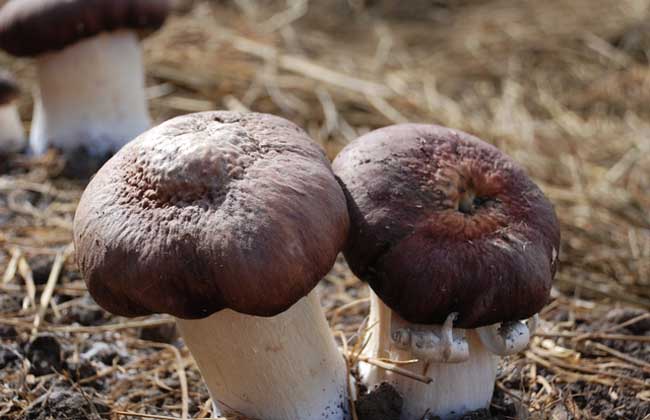
The wine cap mushroom, also known as the wrinkled globe stropharia, wrinkled stropharia, or wine-red stropharia, is a fungus of the genus Stropharia in the family Strophariaceae. It is not only one of the top ten mushrooms on the international mushroom trading market, but also one of the mushrooms recommended by the Food and Agriculture Organization of the United Nations for cultivation in developing countries. It has very broad development prospects. Let's take a look at the cultivation techniques for wine cap mushroom below!
Cultivation Prospects of Wine Cap Mushroom
1. The cultivation technique of wine cap mushroom is simple and extensive, and it can be cultivated directly with raw materials. It has strong resistance to competing organisms and is easy to cultivate successfully.
2. The cultivation materials for wine cap mushroom are abundant in source and it can grow on various straw substrates (such as rice straw, wheat straw, etc.). In the vast rural areas of China, it can be used as a main measure for treating straw. The spent material after cultivation can be directly returned to the field, improving the soil and increasing fertility.
3. The wine cap mushroom has strong stress resistance and a wide temperature adaptation range. It can fruit at 4-30°C and can overwinter naturally in provinces and regions such as Fujian and Guangdong. Because the suitable cultivation season is long, it is helpful for adjusting to market availability during the off-season of other mushrooms or vegetables.
4. Because of its high yield, low production cost, and rich nutrition, the wine cap mushroom is easily accepted by a large number of consumers as soon as it is introduced to the market.
Cultivation Conditions of Wine Cap Mushroom
1. Temperature: The mycelial growth temperature of wine cap mushroom is 5-34°C, with the optimum at 25-12°C. Below 12°C, mycelial growth is slow; above 35°C, mycelia stop growing and are prone to aging and death. The temperature for primordium formation and fruiting body development is 4-30°C, with the optimum at 14-25°C. Below 4°C and above 30°C, fruiting bodies are difficult to form and grow.
2. Moisture: The moisture content of the mycelial growth medium for wine cap mushroom is required to be about 65-70%; for primordium differentiation, the air humidity is 90-95%; for fruiting body growth and development, the substrate moisture content is 70%; for primordium differentiation, the air humidity is between 90-95%.
3. Ventilation: The mycelium growth of wine cap mushroom does not have a high oxygen requirement, but the carbon dioxide concentration must not exceed 2%. Fruiting body growth and development require sufficient oxygen. Excessive carbon dioxide easily leads to deformed mushrooms. During the fruiting period, ventilation should be provided for 2-3 hours daily.
4. Light: The mycelium growth stage of wine cap mushroom does not require light. Fruiting body growth requires 100-500 lx of light. Diffused sunlight can promote robust fruiting bodies and improve quality.
5. pH: Wine cap mushroom is suitable for growth in a weakly acidic environment. Mycelia can grow in both medium and soil at pH 4-9, but pH 5-6.5 is appropriate. For mycelial growth, the medium pH is appropriately 5.5-6.5. During fruiting body growth, the substrate pH is appropriately 5-6, and the casing soil material pH is appropriately 5.5-6.
Cultivation Preparation for Wine Cap Mushroom
1. Cultivation materials: Wine cap mushroom can use crop straw as raw material. With a culture material that does not contain any organic fertilizer, the mycelia of wine cap mushroom can grow normally and produce mushrooms. If nitrogen, phosphorus, or potassium fertilizer is added to the straw, the mycelial growth of wine cap mushroom is instead poor. Sawdust, barnyard manure, leaves, and dry grass are also not ideal for cultivating wine cap mushroom. Large-scale cultivation of wine cap mushroom requires a large amount of material, so materials should be collected in advance and stored for later use. Crop straw can be rice straw, wheat straw, barley straw, rye straw, flax straw, etc.
2. Cultivation method: Wine cap mushroom can be cultivated in mushroom houses by ground bed cultivation, box cultivation, and shelf cultivation, but it is not suitable for intensive indoor cultivation. In Germany, Poland, and the United States, it is mainly cultivated outdoors (in gardens and orchards) using raised beds for extensive bare-ground or protected cultivation. In China, it is also mostly cultivated outdoors with raw materials, because no special equipment is needed, production is simple, management is easy, cultivation cost is low, and economic benefits are good.
3. Cultivation season: In North China, if protected with plastic greenhouses, production can be arranged almost year-round except during the brief severe winter and intense summer heat. In warmer regions, winter fallow fields can be used and cultivated with protective sheds. The sowing period should preferably be arranged from mid-to-late November to early December so that the peak fruiting period falls around the Spring Festival, or the sowing period can be adjusted according to market demand so that the peak fruiting period falls in the vegetable off-season or in a season when the market supply of other mushrooms is low.
4. Cultivation site: Outdoor cultivation is the main method for cultivating wine cap mushroom. Warm, wind-sheltered, and shaded places can provide a microclimate suitable for the growth of wine cap mushroom. Semi-shaded places are more suitable for the growth of wine cap mushroom, but continuous shade (such as under large trees) will seriously hinder the growth and development of wine cap mushroom.
Cultivation Techniques for Wine Cap Mushroom
1. Land preparation and bed making: First, open drainage ditches around the cultivation site, mainly to prevent water accumulation after rain. The specific method for land preparation and bed making is to first take part of the surface loam and pile it nearby for later use as casing soil, then shape the ground into ridges, slightly higher in the middle and slightly lower on both sides. The bed height is 10-15 cm, width 90 cm, length 150 cm, and the distance between beds is 40 cm. In order not to affect tree growth, the soil does not need to be turned. Build the mushroom bed between two trees or slightly closer to one side of the bed to facilitate orchard management.
2. Site disinfection: After land preparation and bed making are completed and before stacking begins, the site should be disinfected. Pour 1% tea seed cake water on the beds to prevent earthworm damage, and spray dichlorvos on and around the beds. If a mountain area is chosen as the mushroom site, termite-killing agents such as termite spirit and termite powder must be spread to kill termites.
3. Material treatment: The culture material should be obtained locally according to different regions and must be fresh, dry, and not moldy. The following formulas can be used: 1. 100% dry pure rice straw. 2. 100% dry pure wheat straw. 3. 50% soybean straw, 50% corn stalk. 4. 80% dry rice straw, 20% dry sawdust. 5. 40% dry rice straw, 40% rice husk, 20% miscellaneous wood sawdust.
4. Straw soaking and pre-stacking: Before stacking, the rice straw must first absorb enough water. Introduce clean water into a ditch or water tank, put the rice straw directly into the ditch or tank to soak, and tread on the straw while soaking. The soaking time is generally about 2 days, with slight differences depending on the rice straw variety. Pre-fermentation: When the daytime temperature is above 23°C, pre-fermentation is needed to prevent the straw pile from fermenting after stacking and the temperature from rising, which would affect mycelial growth.
5. Building the mushroom bed: The most important thing in building the mushroom bed is to press the straw flat and firm. The thickness of the straw material should be 20 cm, no more than 30 cm at most, and no less than 20 cm. Use 20-30 kg of dry straw per square meter and 600-700 g of spawn. When stacking straw, place the first layer of straw about 10 cm from the bed edge. Generally stack 3 layers, each about 8 cm thick. Break the spawn into pieces the size of pigeon eggs and sow them between two layers of straw. The depth of the sowing holes is 5-8 cm, using a quincunx planting pattern, with hole spacing of 10-12 cm. Increasing the number of sowing holes can make the mycelia grow faster.
6. Covering: After the stack is built and sowing is completed, add a covering on the surface of the straw pile. The covering can be old burlap bags, non-woven fabric, straw curtains, old newspapers, etc. Old burlap pieces have the best effect because they have strong moisture retention and are easy to handle. Generally a single layer is enough. For large-scale cultivation, straw curtain covering is also acceptable. The covering on the straw pile should be kept moist at all times to prevent the straw pile from drying out. Soak the burlap in clean water, take it out, drain excess water, and then cover the straw pile.
Management During the Spawn-Running Period of Wine Cap Mushroom
1. Moisture regulation of the mushroom bed: Before stacking, the rice straw must absorb enough water. This is the key to ensuring that the mushroom bed maintains sufficient moisture. Within 20 days after sowing, generally do not spray water directly on the mushroom bed. For routine watering, only spray the covering, and do not let excess water flow into the material. This is beneficial to mycelial growth inside the pile. If the rice straw did not absorb enough water earlier, after stacking it will turn white and dry, causing mycelial growth speed to slow down.
2. Moisture regulation during the growth period: During the mycelial growth stage, water should be sprayed at the right time and in the right amount. In the first 20 days, generally do not spray water or spray little. When the amount of mycelia on the mushroom bed has clearly increased and occupies more than 1/2 of the culture material, if the straw on the surface of the mushroom bed is dry and whitish, water should be sprayed appropriately. The amount of water sprayed should also differ by part of the mushroom bed. Spray more on the sides around the mushroom bed, and spray less or not at all in the middle. If the humidity on the mushroom bed has already reached the requirement, do not spray water every day, otherwise the mycelia will decline.
3. Pile temperature regulation: 1-2 days after stacking and sowing, the pile temperature generally rises slightly. The pile temperature is required to be 20-30°C, preferably controlled at around 25°C, so that mycelia grow quickly and robustly. After stacking and sowing, observe changes in pile temperature regularly every morning and afternoon so that corresponding measures can be taken promptly to prevent abnormal pile temperature.
Casing Soil Method for Wine Cap Mushroom
1. Casing time: About 30 days after sowing, when the mycelia are close to fully colonizing the culture material, casing soil can be applied on the surface of the pile. Sometimes the surface culture material is dry and no mycelia can be seen climbing onto the surface of the straw pile. You can gently dig open the surface material and check the mycelia in the middle and lower layers. If the mycelia from two adjacent inoculation holes are already close to meeting, then it is time to apply casing soil. The specific casing time should also be treated differently according to different seasons and different climatic conditions.
2. Soil selection: The quality of the casing soil has a great influence on the yield of wine cap mushroom. The casing material should be fertile, loose, able to retain (absorb) water, and able to expel carbon dioxide and other gases produced in the culture material. Humus soil has protective properties and a granular structure, making it suitable as a casing material. Abroad, 50% humus soil plus 50% peat soil with a pH value of 5.7 is considered a standard casing material. In actual cultivation, local materials are mostly used, selecting loose-textured garden loam.
3. Casing method: Spread the previously prepared loam on the mushroom bed to a thickness of 2-4 cm, no more than 5 cm at most. About 0.05 cubic meters of soil is needed per square meter of mushroom bed. After casing, the moisture of the casing layer must be adjusted, and the soil water-holding capacity is required to reach 36-37%. A simple method for testing soil water-holding capacity is to pinch a soil particle by hand. If the soil particle becomes flat but does not break apart and does not stick to the hand, it indicates that the moisture content is suitable.
4. Casing management: After casing, drier mushroom beds can be sprayed with water. The droplets should be fine so that the water moistens the casing layer without entering the material. Under normal conditions, mycelia can be seen climbing onto the casing layer 2-3 days after casing. The main work after casing is to regulate the humidity of the casing layer well. In order to prevent internal wetness and external dryness, it is best to spray and moisten the upper covering. The amount of water sprayed should be flexibly controlled according to the dryness and wetness of the site and weather conditions. As long as the water content in the mushroom bed is suitable, water can also be withheld for 1-2 days or longer.
Pest Control for Wine Cap Mushroom
1. Termites: Wine cap mushroom must not be cultivated in places with many termites. The site should preferably not be continuously cropped for many years, so as to avoid breeding pests.
2. Mites: During cultivation, placing cotton balls dipped in 0.5% dichlorvos around the mushroom bed can repel mites, springtails, mushroom gnats, and other pests. Newspapers or waste cloth dipped in sugar solution can also be placed on the mushroom bed, or freshly roasted fragrant pig bones or oil cake powder can be placed there to trap and kill mites. For springtails, a mixture of 1 part honey, 10 parts water, and 2 parts 90% trichlorfon can be used for trapping and killing.
3. Ants: If an ant nest is found in the cultivation site or straw pile, pesticide should be spread promptly to kill them. If they are red ants, red ant powder can be spread in places with ant trails. After the ants eat it, the entire nest can be killed, with very good results. If they are white ants, 1-3 g of termite powder can be sprayed into the ant nest, and results can be seen in about 5-7 days.
4. Slugs: Slugs like to live in dark and damp environments, so a cultivation site with higher terrain, convenient drainage and irrigation, and 50-70% shade should be selected. For slug control, taking advantage of their pattern of hiding on sunny days and emerging on rainy days, manual capture can be used. A 10% salt water solution can also be sprayed around the site to drive away slugs.
5. Rodent damage: In outdoor cultivation sites for wine cap mushroom, mice often make nests in the straw piles, damaging the mushroom bed and harming mycelia and mushroom buds. In the early stage, a method of cutting off food can be used or trapping can be adopted. Mouse blood can also be dripped around the cultivation site and beside the mushroom bed to make other mice flee when they see it.
Harvesting and Processing of Wine Cap Mushroom
1. Harvest time: Wine cap mushroom should be harvested promptly according to maturity and market demand. From budding, that is, when the white point appears, to maturity takes about 5-10 days, with differences depending on temperature. At low temperatures, the growth rate is slow, and the mushroom body is thick and fleshy and not easy to open the cap. On the contrary, at high temperatures, the mushrooms are small and open easily. The whole growth period can produce 3 flushes of mushrooms. Generally, the second flush has the highest yield, and the interval between flushes is about 15-25 days.
2. Harvest standard: The suitable harvest time is when the gills of the fruiting body have not yet broken or have just broken and the cap is bell-shaped. At the latest, it should be harvested when the cap is incurved and the gills are grayish white. If harvested only when mature, when the gills have turned dark purplish-gray or blackish brown and the cap is flat, the commercial value will be reduced. Mushrooms of different maturity levels differ greatly in quality and taste, and those that have not opened their caps are best.
3. Harvest method: When wine cap mushroom reaches the harvest standard, grasp the lower part of the mushroom body with the thumb, index finger, and middle finger, twist gently, and after it loosens, pull it upward. Be careful to avoid loosening the small mushroom buds around it. After harvesting, the holes left on the mushroom bed should be filled level promptly, and residual mushrooms left on the mushroom bed should be removed to prevent them from rotting and attracting pests that harm healthy mushrooms. For harvested mushrooms, cut off the soil-bearing base.
4. Fresh mushroom sales: Remove residual soil, culture material, and other impurities from harvested fresh mushrooms, remove diseased and insect-damaged mushrooms, put them into bamboo baskets or plastic baskets, and transport them to sales points as soon as possible for fresh sale. Place fresh mushrooms in a ventilated and cool place to avoid fluffy aerial mycelia growing on the cap surface and affecting commercial appearance. They can be kept fresh for 2-3 days at 2-5°C. If kept too long, quality will decline.
5. Processing methods
1. Drying: For drying, refer to the dehydration methods for button mushroom slices and straw mushrooms, using artificial mechanical dehydration. Alternatively, after blanching fresh mushrooms, arrange them on bamboo trays and place them into a dehydrator for dehydration until the moisture content reaches 11-13%. Wine cap mushrooms dehydrated and dried after blanching have a strong aroma and good taste. Processing opened-cap mushrooms by this method can improve quality. Baking dehydration can also be used: bake over low heat at 40°C until 70-80% dry, then raise the temperature to 50-60°C until the mushroom bodies are fully dry. After cooling, promptly put them into plastic food bags to prevent dried mushrooms from absorbing moisture and becoming moldy or deteriorating.
2. Salting: For salting, refer to the processing technology for salted button mushrooms and use the salting method to process wine cap mushroom. Wine cap mushroom bodies are generally relatively large, and blanching requires 8-12 minutes, with the degree being that the mushroom bodies are cooked but not mushy, controlled according to mushroom body size. Usually cooked mushrooms sink in cold water, while raw mushrooms float. Pack them into a jar layer by layer with one layer of salt and one layer of mushrooms, place a heavy object on top, then add the lid. The brine must cover the mushroom bodies. The brine concentration is 22 degrees Baume.
3. Canning: Experts in canning believe that this mushroom is suitable for canning, and processing can be carried out by referring to the processing method for button mushrooms. Because wine cap mushrooms vary greatly in body size, high-quality mushrooms of relatively moderate size should be selected as raw materials.