How to Grow Peppers in Greenhouses? Detailed Explanation of Cultivation Techniques
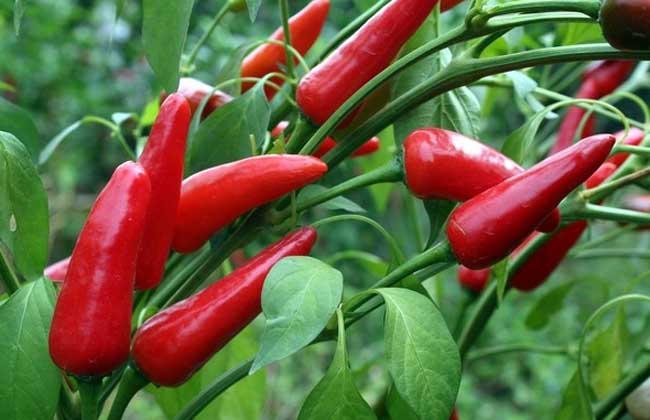
Peppers, also known as bullhorn peppers, long peppers, sweet peppers, etc., are annual or limited perennial herbaceous plants of the genus Capsicum in the Solanaceae family, native to the tropical regions of Central and Latin America. They are now widely cultivated around the world as important vegetables and seasonings. The seed oil is edible, and the fruit also has deworming and diaphoretic medicinal effects, giving it extremely high cultivation value. Let's take a look at greenhouse pepper cultivation techniques together!
Temperature Conditions
The suitable temperature requirements for pepper growth and development vary depending on the growth stage. The suitable temperature for the germination stage is 25-30°C; for the seedling stage, 25-30°C during the day and 20-25°C at night; for the fruiting stage, 25-30°C during the day and 16-20°C at night. Below 15°C or above 35°C easily causes flower drop. The suitable soil temperature during the growing period is 17-22°C. High temperatures above 35°C combined with high humidity will cause excessive vegetative growth of stems and leaves. During the fruit development and color-turning stage, the required daytime temperature is 25-30°C and nighttime temperature is 18-20°C.
Light Conditions
Peppers are vegetables that are relatively tolerant of weak light and have low requirements for light intensity. However, long-term growth under conditions of insufficient light intensity causes the leaves to become pale, internodes to elongate, and yield to decrease. Excessive light is also unfavorable for growth and development, manifesting as sparse foliage, with fruits exposed outside the leaf canopy, making them prone to sunscald. When cultivating peppers in greenhouses, the plastic greenhouse provides shading, which is also the reason why greenhouse cultivation more easily achieves high yields than open-field cultivation.
Moisture Conditions
Peppers have strict water requirements and are neither drought-tolerant nor waterlogging-tolerant. The plant itself does not require a large amount of water, but because the root system is underdeveloped and its ability to absorb soil moisture is relatively weak, it has poor drought tolerance. Air humidity that is too high or too low greatly affects seedling growth and flowering and fruit setting. Generally, the suitable relative air humidity is 60-80%. During the seedling stage, relatively high air humidity easily triggers disease epidemics. During the early flowering stage, excessive humidity causes flower drop. During the peak flowering stage, air that is too dry can also cause flower and fruit drop.
Soil Conditions
Peppers are not very strict about soil requirements and can be planted in neutral and slightly acidic soils with a pH of 6.2-8.5. However, because pepper roots are weak, shallow in the soil, have a long growing period, and bear many fruits, it is best to choose loam or sandy loam with high, dry terrain, deep soil layers, good drainage, and medium or above fertility.
Nutritional Conditions
Peppers have relatively high requirements for the three major fertilizer elements: nitrogen, phosphorus, and potassium. During the seedling stage, appropriate phosphorus and potassium fertilizers are needed. The flower bud differentiation stage is extremely significantly affected by the level of fertilization. Appropriately using more phosphorus and potassium fertilizers can promote flowering. Nitrogen fertilizer should not be applied one-sidedly, especially during the early flowering stage, as too much nitrogen fertilizer will cause severe flower and fruit drop.
That covers the growing environment conditions needed for greenhouse pepper cultivation. Now let's continue to look at greenhouse pepper seedling cultivation techniques!
Seedling Time
Peppers grown in greenhouses are generally sown in mid-October, transplanted from January to mid-February of the following year, and harvested beginning in early April. For early spring cultivation, varieties such as Sujiao No. 5, Sujiao No. 11, Luojiao 98A, Hongyingda, and Shengfangzhou can be selected. The yield is generally around 4000 kg per mu, with high economic benefits.
Seed Treatment
Before sowing, pepper seeds should be soaked in a 10% trisodium phosphate solution for 30 minutes. To prevent anthracnose and bacterial spot disease, first pre-soak in clean water for 5-6 hours, then soak in copper sulfate solution for 5 minutes, then rinse clean with water before accelerating germination. During germination acceleration, wrap the treated seeds in a wet cloth and place them at 20-23°C. After 24 hours, raise the temperature to 25-34°C. After the seeds begin to sprout (white tips showing), lower the temperature to 20-25°C to harden the sprouts. Sow after 50% of the seeds have sprouted.
Sowing and Seedling Cultivation
Because heated seedling cultivation has a high emergence rate and fast growth, the sowing rate should be less than that of cold frame seedling cultivation. After sowing, cover with about 0.5 cm of nutrient soil, then cover the soil with a layer of straw, then a layer of plastic film, and finally cover with a small arch tunnel sealed for insulation. After sowing, heat day and night, maintaining the temperature at 22-24°C. When 40% of the seeds have emerged, remove the straw covering the soil and the film on top of the straw to prevent seedling legginess. After full emergence, pay attention to ventilation and cooling.
Reasonable Watering
Greenhouse pepper hotbeds easily dry out, so water should be replenished frequently. Too little watering cannot meet the needs of seedling growth, while too much watering leads to high humidity, which easily causes pepper seedling legginess, damping-off disease, and other diseases. The suitable seedbed soil moisture is to keep the surface soil whitish and the subsoil moist.
Controlling Legginess
If the bed temperature is too high and seedlings become leggy, the most effective measure is to frequently check the bed temperature and control the temperature. Hotbed seedling cultivation has a short duration, so sufficient base fertilizer should be applied in the nutrient soil, and generally no additional topdressing is needed. If the seedlings are relatively small and thin, spray 0.2% monopotassium phosphate 2-3 times for foliar topdressing. If the nutrient soil is too dry, water at noon on a sunny day, and the amount of water should not be too large.
Timely Seedling Separation
When the seedlings grow 2 true leaves, separate the seedlings once, transplanting them into nutrient pots, one plant per pot. Before separating, harden the seedlings at low temperature for 2-3 days, and water to loosen the seedlings 1-2 days before separation. Plant the separated seedlings shallowly, with the cotyledons exposed above the soil surface, and water promptly after planting. After separation, seal the greenhouse, maintaining a daytime temperature of 25-30°C and nighttime temperature of 16-18°C. After the seedlings recover, maintain a daytime temperature of 20-25°C and nighttime temperature of 14-16°C. Do not water unless dry; when dry, water lightly. Water once 1 week before transplanting, and after 2 days lift the seedlings to harden them, which helps rooting and recovery.
That covers greenhouse pepper seedling cultivation techniques. Now let's continue to look at greenhouse pepper cultivation and management techniques!
Land Preparation and Fertilization
Peppers can be planted in flat beds or on ridges. For convenience of mulching and watering, as well as to help raise soil temperature, ridge planting in a north-south direction is recommended. When determining ridge spacing for ridge planting, it must vary by variety, and the row and plant spacing should be determined according to the plant spread angle of the variety used. For winter-spring crops, the dense planting method of wide and narrow rows with two plants per hole is generally suitable. The wide row spacing is 55-60 cm, and the narrow row spacing is 40-50 cm. When fertilizing, first spread organic fertilizer on the ground, deep plow twice to mix the fertilizer thoroughly with the soil, then open furrows according to row spacing, apply cake fertilizer and chemical fertilizer in the furrows, mix thoroughly with the soil, and then build ridges over the furrows, with a ridge height of 15-20 cm.
Scientific Transplanting
The transplanting time for greenhouse peppers is late January. Transplanting must be done on a sunny day, and it is hoped that several consecutive sunny days will follow after transplanting. Therefore, one should listen to and check weather forecasts frequently. Transplanting should preferably be done in the morning. When transplanting, open holes at a hole spacing of about 33 cm. Plant about 4000 holes per mu, with 2 plants per hole, totaling 8000 plants per mu, using dense planting to strive for early yield. The 2 plants in the same hole should be uniform in size. When planting seedlings, pour warm water (30-40°C) into the hole to place the seedling, and close the hole after the water seeps down.
Temperature Management
After transplanting greenhouse peppers, in order to promote seedling recovery, early spring cultivation should be kept closed for insulation, maintaining no ventilation for 5-6 days to maintain a high-temperature and high-humidity environment. Do not ventilate during the day and cover straw mats appropriately early to maintain a relatively high temperature at night. After seedling recovery, maintain a daytime temperature of 26-28°C, and ventilate to cool down when it exceeds 30°C.
Humidity Management
The suitable relative air humidity for pepper growth is 60-80%, and the suitable relative soil moisture is about 80%. Excessive humidity easily causes leggy growth of plants, affecting pollen grain dispersal and thereby affecting pollination and fertilization. Under the condition of ensuring a certain temperature, ventilate boldly to reduce humidity inside the greenhouse.
Ventilation Management
The suitable temperature for pepper flowering and fruit setting is 20-25°C. At this time, ventilation volume and ventilation time should be increased. Ventilation can reduce humidity, increase light, promote sturdy and compact plant growth with short and numerous internodes, and also facilitate pepper flowering and pollination, resulting in more fruit and ensuring early maturity and high yield. Generally, during the pepper flowering and fruit setting period, control the nighttime temperature to not fall below 15°C, and ventilation can be done day and night without affecting flowering and fertilization.
Light Management
In winter, light intensity is low. While ensuring greenhouse temperature, the lighting time should be extended as much as possible, uncovering straw mats early and covering them late, so that plants receive more light. At the same time, keep the film surface clean to improve light transmittance. Reflective screens can be hung on the north side of the greenhouse to increase light intensity. On cloudy or snowy days, light intensity is low and plant respiration consumes more, so foliar topdressing can be done by spraying 1% sugar water.
Water and Fertilizer Management
When sufficient water is applied at transplanting, generally no watering is done until the first fruit sets. During the seedling hardening period after recovery, mainly cultivate the soil. The soil below the plastic film can maintain moisture and good aeration. At the end of seedling hardening, water once. At this time, the first pepper has grown to about 3 cm in diameter. Apply 20 kg of ammonium sulfate and 10 kg of potassium sulfate per mu with the water. After that, apply fertilizer once with every one or two waterings, applying 10 kg of urea or 10 kg of ammonium sulfate per mu.
Plant Adjustment
During greenhouse pepper cultivation, pruning should be carried out to promote fruiting. The method is: when the young fruit set on the secondary lateral branches of the main lateral branches grows to 1 cm in diameter, leave 5 leaves above it and pinch off the growing tip, so that nutrients are concentrated to supply fruit growth. Leggy branches appearing in the middle and later stages should be removed promptly.
That covers greenhouse pepper cultivation and management techniques. Now let's continue to learn about greenhouse pepper pest and disease control techniques!
Gray Mold
When humidity in the greenhouse is low, use 65% metalaxyl wettable powder at 600 times dilution or 50% vinclozolin wettable powder at 800 times dilution for control. Spray once every 7-10 days, with 2-3 consecutive applications.
Southern Blight
In the early stage of the disease, use 15% triadimefon wettable powder at 1000 times dilution to drench the stem base for control.
Powdery Mildew
Use 20% triadimefon emulsifiable concentrate at 2000 times dilution for spray control.
Viral Disease
During the seedling stage, use 20% Virus A wettable powder at 500 times dilution for spray control.
Soft Rot
Spray promptly before and after rain. Use 72% agricultural streptomycin wettable powder at 4000 times dilution or 77% copper hydroxide wettable powder at 500 times dilution for spray control.
Aphids
Use 10% imidacloprid wettable powder at 600 times dilution for spray control.
Red Spider Mites
Use 1.8% abamectin emulsifiable concentrate at 2000 times dilution or 70% propargite emulsifiable concentrate at 2000 times dilution for spray control, spraying once every 7-10 days.
Whiteflies
Use 2.5% deltamethrin emulsifiable concentrate at 2500 times dilution or 10% buprofezin emulsifiable concentrate at 1000 times dilution for spray control.