What Plant Is Water Bamboo? Get to Know This Aquatic Vegetable
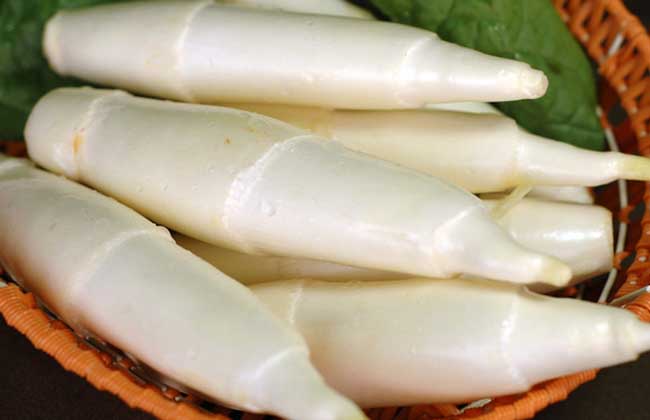
Water bamboo is also known as gaogua, gusun, gushou, jiaosun, gaosun and so on. It is a perennial herbaceous plant with persistent roots of the genus Zizania in the grass family (Poaceae). The ancients called it "gu," and before the Tang Dynasty it was cultivated as a grain crop; its seeds were called gu rice or diaohu, and it was one of the "six grains" (tu, shu, ji, liang, mai, gu). Later people discovered that some gu plants, after being infected by the smut fungus, did not send up ears, yet showed no sign of disease, and their stems kept swelling, gradually forming spindle-shaped fleshy stems. This is the water bamboo we eat today.
Water bamboo has rhizomes. The above-ground stem can produce 23 rounds of tillering, forming clumps of tiller branches. The culms are upright and stout, with adventitious roots at the base. After the main stem and tiller branches enter reproductive growth, if the water bamboo smut fungus is parasitic at the base, they cannot grow normally, and form oval or nearly round fleshy stems. The leaf blades are flat, long and lanceolate, with a mucronate acuminate tip, slightly contracted or gradually narrowed at the base, generally rough on the upper surface and margins and smooth beneath, with the midrib raised on the back. The leaf sheaths are long and thick, clasping one another to form a "false stem." The flowering and fruiting period is autumn and winter, with large panicles and cylindrical caryopses.
Water bamboo is a thermophilic plant, with an optimum growth temperature of 10-25°C, and it is not tolerant of cold, high temperatures or drought. In plains areas, double-season water bamboo is mostly planted. Double-season water bamboo has no strict requirements for day length but has high demands for water and fertilizer, and temperature is an important factor affecting stem formation. Water bamboo has a well-developed root system and a high water requirement, so it is suited to clay loam or loam with abundant water sources, convenient irrigation, deep and soft soil layers, fertile soil, rich organic matter and a strong ability to retain water and fertilizer.
Water bamboo originated in China and Southeast Asia. At present, only China and Vietnam cultivate water bamboo as a vegetable, and China cultivated it earliest. It is distributed across northern and southern China, and is grown in Hebei, Jiangsu, Zhejiang, Anhui, Jiangxi, Fujian, Taiwan, China, Hong Kong, China, Henan, Hunan, Hubei, Hainan, Guangdong, Guangxi, Sichuan, Yunnan, Heilongjiang and other places. Among them, Yuyao water bamboo is best known in Hemudu Town, which now produces 50,000 tons of water bamboo a year. The 10,000-mu pollution-free water bamboo base in Hemudu Town has been listed successively as a second-level vegetable base of Ningbo City, a water bamboo supply base of the Shanghai Vegetable Group, and a high-quality and high-efficiency agriculture demonstration base of Zhejiang Province.
Water bamboo mainly contains protein, fat, carbohydrates, vitamin B1, vitamin B2, vitamin E, trace amounts of carotene and minerals, and so on. The organic nitrogen in tender water bamboo exists in the form of amino acids and can also provide sulfur, giving it a delicious taste and relatively high nutritional value, and it is easily absorbed by the human body. However, because water bamboo contains a relatively large amount of oxalic acid, its calcium is not easily absorbed by the human body. Medicinally, water bamboo clears damp-heat, removes toxins and promotes milk secretion; the stigmasterol in it can scavenge reactive oxygen species in the body and inhibit tyrosinase activity, thereby preventing melanin formation, and can also soften the stratum corneum on the skin surface, making the skin smooth and delicate.