Detailed Explanation of Key Techniques for Growing Spinach in Greenhouses
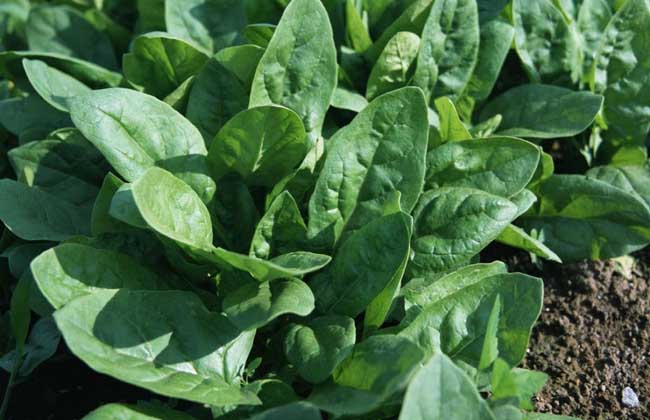
Spinach is one of the most common vegetables, also known as Persian spinach, boleng, boling, parrot vegetable, red-root vegetable, flying dragon vegetable, etc. It is an annual herbaceous plant of the genus Spinacia in the family Amaranthaceae, native to Iran and now found all over the world. It is widely cultivated throughout China and has extremely high cultivation value. Let us take a look at greenhouse spinach growing techniques below!
Cultivation Environment
Spinach is a cold-tolerant vegetable. The seeds can germinate at 4°C, with the optimum being 15-20°C. The suitable temperature for vegetative growth is 15-20°C; growth is poor above 25°C. The aboveground part can withstand low temperatures of minus 6-8°C. It has low requirements for sunlight intensity and relatively high water requirements; with sufficient water, growth is vigorous, the flesh is thick, the yield is high, and the quality is good. It has strong adaptability to soil, but fertile soil with strong water and fertilizer retention is still best. It is not tolerant of acid, with a suitable pH of 7.3-8.2, and requires more nitrogen fertilizer plus appropriate phosphorus and potassium fertilizer.
Selecting Varieties
Spinach can be divided by seed morphology into two varieties: the prickly-seeded type and the smooth-seeded type. The prickly-seeded type has rhombic, prickly fruits, with smaller and thinner leaves that are halberd-shaped or arrow-shaped. Because of its tender texture and low astringency, it is suitable for eating (the pointed-leaf type); it has relatively strong cold and heat tolerance, matures early, and bolts early. The smooth-seeded type has irregularly round, prickly-free fruits, with large, deeply wrinkled leaves that are ovate, elliptical, or irregular in shape, short petioles, relatively weak heat tolerance, and later bolting, making it suitable for overwintering cultivation. During cultivation, varieties suitable for early-spring greenhouse planting such as Boza 58, Boza 18, Quanneng, and Boza Guanneng can be selected.
Land Preparation and Fertilization
After the autumn vegetable crop is harvested, do not remove the greenhouse film; directly carry out fertilization, land preparation, and bed making. Generally, apply 3-5 tons of high-quality fully decomposed farmyard manure per mu, 20-25 kg of diammonium phosphate, and 10-15 kg of potassium sulfate or 40-50 kg of 45% ternary compound fertilizer, and form flat beds 1-1.5 m wide.
Presprouting and Sowing
One day before sowing the spinach seeds, soak the spinach seeds in cool water for about 12 hours. Rub off the mucus, remove and drain, then sow or carry out presprouting at 15-20°C; after most seeds show white sprouts in 3-4 days, they can be sown. Sowing is generally done in early December. When sowing, evenly scatter the seeds on the leveled bed surface, with a sowing depth of 1-1.5 cm, then tread over it again, and after treading, water thoroughly. Drilling is best. The row spacing is 8-10 cm. Generally, about 4 kg of pure seeds are sown per mu.
Scientific Topdressing
Before overwintering, when the spinach seedlings are about 10 cm tall, apply 1 overwintering fertilizer according to growth conditions, with 10-15 kg of urea and 10-15 kg of superphosphate per mu. After the Spring Festival, the seedlings begin to grow; apply 20-25 kg of urea and 15-20 kg of phosphorus and potassium fertilizer per mu, and apply the 3rd topdressing after 10-15 days. Spinach topdressing is always applied by broadcasting; never scatter chemical fertilizer into the heart leaves, so as to avoid burning the seedlings. Each topdressing should be combined with watering.
Field Management and Care
From after sowing spinach until mid-February of the following year, the main focus is preserving the seedlings. Before Minor Snow, water thoroughly once to preserve soil moisture and protect the seedlings. In mid-February of the following year, as the outside temperature continues to rise, spinach begins to turn green and grow; water once, and by early March apply 1 fertilizer with the water, applying 15-20 kg of ammonium sulfate or urea per mu, until harvest.
Pest and Disease Control
Common pests and diseases of spinach mainly include aphids, leafminers, downy mildew, and anthracnose. For aphids, spray with 40% dimethoate 1000-fold solution or 50% pirimicarb 2000-3000-fold solution. For leafminers, spray with 50% phoxim emulsifiable concentrate 1000-fold solution or 80% trichlorfon powder 1000-fold solution. For downy mildew, spray with 58% Ridomil 500-fold solution or 75% chlorothalonil 600-fold solution. For anthracnose, spray with 50% thiophanate-methyl 500-fold solution or 50% carbendazim 700-fold solution for control. Stop spraying 10-15 days before spinach harvest.
Timely Harvest
Greenhouse spinach should be harvested promptly in mid-to-late March, otherwise it will affect the production of the next crop. Water 1-2 days before harvest, and harvest in the morning when there is a lot of dew on the leaves. Use a leek sickle held flat against the bed surface, cut leaving a 1-2 cm main root, remove old and yellow leaves, tie into small bundles of about 500 grams with Chinese iris, line the basket with plastic film, pack them tightly into the basket, and wrap it tightly.