What plant is wild spinach? A detailed guide in one article
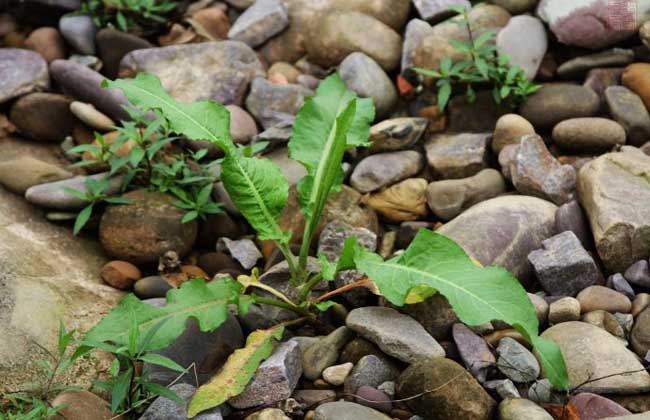
Wild spinach, also known as sorrel, curly dock, and dock root, is an annual herbaceous plant of the genus Rumex in the Polygonaceae family. It can be found in most grasslands of Europe and West Asia. Its tender stems and leaves taste sour and can be eaten raw or served as a cold salad. It is rich in vitamin A, vitamin C, and oxalic acid, tastes tart, and is often used as a seasoning in cooking. Used medicinally, it has the effects of cooling the blood, detoxifying, and killing parasites, and is mainly used for pulmonary tuberculosis with hemoptysis, hemorrhoid bleeding, carbuncles and sores, scabies, and itchy skin.
The root of wild spinach is a fibrous root. The stem is erect, 40-100 cm tall, with deep grooves, and is usually unbranched. The leaves are lanceolate or narrowly elongated, 8-14 cm long and 1-2.6 cm wide, tapering at both ends, with entire margins, and petiolate. The basal leaves and lower stem leaves are arrow-shaped, 3-12 cm long and 2-4 cm wide, with acute or rounded-obtuse tips, acute basal lobes, and entire or slightly wavy margins. The petiole is 2-10 cm long. The upper stem leaves are smaller, with short petioles or sessile. The ocrea is membranous and easily ruptured. The inflorescence is a narrow panicle, terminal, with sparse branching.
The flower clusters of wild spinach are axillary, spaced or dense on a paniculate spike, and the flower spikes are leafy, growing at the upper ends of the branches. The flowers are unisexual, dioecious, and green. The pedicel has a joint at its base. The tepals are oblong-ovate, with prominent fine reticulate veins, each with an oblong-ovate tubercle on the back, narrowly margined, mostly with a long bristle in the center of each side, the tip straight or curved, and sometimes without bristles, with the margin even narrower. The achene is elliptical, with 3 sharp angles, pointed at both ends, about 2 mm long, dark brown, and glossy. It is enclosed within the persistent perianth. The flowering period is May to July, and the fruiting period is June to August.
Wild spinach is now cultivated as a vegetable and has relatively high nutritional value. Every 100 grams of tender wild spinach leaves contains 92 g of water, 3.2 mg of carotene, 70 mg of vitamin C, 1.8 g of protein, 0.7 g of fat, 2 g of carbohydrates, 440 mg of calcium, and 80 mg of phosphorus. However, because wild spinach contains acidic potassium oxalate and certain tartaric acids, poisoning sometimes occurs due to excessive oxalic acid content, and there have been reports in the literature of children dying after eating wild spinach leaves.
The ancient name of wild spinach is Rumex, meaning "to suck." In ancient times, people sucked its leaves to quench their thirst during journeys, so the flower meaning of wild spinach is "thoughtfulness." A person born under the blessing of this flower, if female, is sure to be full of maternal love, gentle, and understanding, just like the Virgin Mary; of course, once in love, she also gives without regret, letting the other person feel deep affection.