Where are the main production areas of nori distributed?
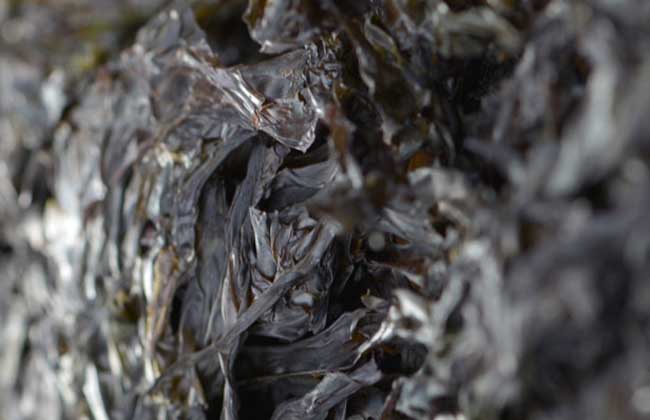
Nori is the collective name for a variety of alternating algae in the red algae family Bangiaceae, including Porphyra haitanensis, Porphyra yezoensis, and Porphyra tenera. It contains chlorophyll and pigments such as carotene, lutein, phycoerythrin, and phycocyanin. Because of differences in the proportions of these pigments, different species of nori appear purplish red, blue-green, brownish red, brownish green, and other colors, but it is named for being mostly purple. Now let us take a look at where nori's production areas are!
Where are nori's production areas?
In China, nori production areas are distributed in coastal regions. Porphyra haitanensis is mostly cultivated along the coasts of Fujian and southern Zhejiang, while in the north, Porphyra yezoensis is mainly cultivated. Xiapu County, the "hometown of nori," is one of the oldest counties in Fujian and was also the earliest region in southern China to cultivate kelp and nori. As early as the Yuan Dynasty, there were records of people in Xiapu cultivating nori, and it holds the "Xiapu Nori" national geographical indication.
Is nori a plant?
Nori is not a plant. Because it can carry out photosynthesis, nori is often mistaken for a plant, but biologists generally believe it is not a true plant because it lacks true vascular tissue (xylem and phloem), unlike aquatic grasses. In addition, several kinds of cyanobacteria are associated with seaweed, and large seaweeds mostly grow in cold regions. The artificially cultivated species include Porphyra yezoensis and Porphyra haitanensis.
Common types of nori
1. Porphyra haitanensis: Porphyra haitanensis is a seaweed unique to China that can be artificially cultivated. The thallus is dark purple-green with a slight brown tint, lanceolate, subovate, or long ovate, with a heart-shaped, round, or wedge-shaped base, and edges that are slightly wrinkled or not, with sparse teeth. Porphyra haitanensis has a long history in China and was first named after Haitan Island, the main island of Pingtan County, Fujian Province. As early as the third year of the Taiping Xingguo era of the Song Dynasty, it was listed as a tribute item. At present, it is widely cultivated along the coasts of Fujian and southern Zhejiang.
2. Porphyra yezoensis: The thallus of Porphyra yezoensis is bright purplish red or slightly blue-green, ovate or long ovate, generally 12-70 cm or more in height, with a round or heart-shaped base, wrinkled edges, and cells arranged neatly, smooth and without teeth. The chromatophore is stellate and located in the center. The basal cells extend into an ovate or long rod shape. It is monoecious, and the thallus can form monospores for vegetative reproduction. It is a common species along the coast of northern China and the main cultivated algae north of the Yangtze River. It is rich in protein, polysaccharides, and vitamins and can be used as food or medicine.
3. Porphyra suborbiculata: Porphyra suborbiculata is a plant of the genus Porphyra in the family Bangiaceae. The thallus is purplish red, round or kidney-shaped, sheet-like, membranous, 6-10 cm wide and 3-15 cm high, with a heart-shaped base and obvious teeth along the edges. It is monoecious. It usually grows on rocks in the middle and upper intertidal zones, with its peak growth period from December to April of the following year.
4. Porphyra dentata: Porphyra dentata is a plant of the genus Porphyra in the family Bangiaceae. The thallus is light purplish red or purplish red, sheet-like, membranous, 15-100 cm long and 2-10 cm wide, with a round or heart-shaped base, few wrinkles, toothed edges, and is monoecious. It usually grows on rocks in the middle and upper intertidal zones.
5. Porphyra tenera: Porphyra tenera is a plant of the genus Porphyra in the family Bangiaceae. The thallus is mostly ovate, lanceolate, or irregularly round, 20-30 cm high, with large ones reaching 60 cm, 10-18 cm wide, and a few reaching more than 30 cm. The base is wedge-shaped, round, or heart-shaped, and the edges are somewhat wrinkled, smooth, and without teeth. The thallus is relatively thin, only 20-33 micrometers thick.