Is nori actually a plant? Read this and you'll understand
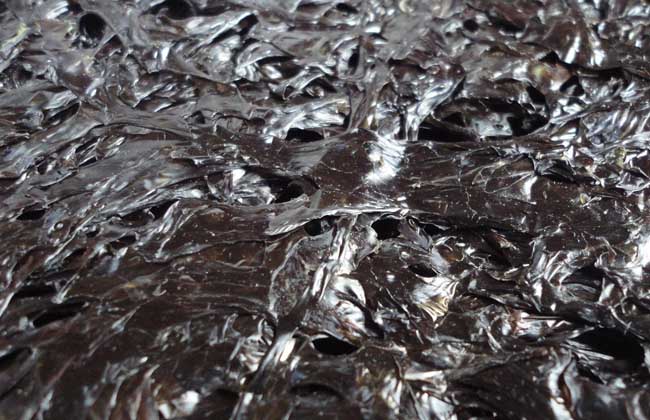
Nori is not a plant, but rather a collective term for certain mutually alternating algae in the sea, with a great many species; the common ones are mainly Pyropia yezoensis, Pyropia haitanensis, Pyropia tenera, and others. Artificial cultivation has been carried out in China's coastal areas, and at the beginning of the 21st century China's nori production jumped to first place in the world. It is rich in protein and iodine, phosphorus, calcium, and others, and is used for food and medicine, with the effects of resolving phlegm and softening hardness, clearing heat and promoting diuresis, and tonifying the kidney and nourishing the heart.
Because nori can carry out photosynthesis, it is often mistaken for a plant, but biologists generally believe it is not a true plant, because it has no true vascular tissue (xylem and phloem), unlike water plants. In addition, several kinds of cyanobacteria are related to seaweed. Large seaweeds mostly grow in cold regions, and the artificially cultivated species are Pyropia yezoensis and Pyropia haitanensis.
Nori has a simple shape, consisting of three parts: a disc-shaped holdfast, a stalk, and a blade. The blade is a single or branched membranous body made up of 1 layer of cells (a few species consist of 2 or 3 layers), and its body length varies with the species, ranging from several centimeters to several meters. It contains pigments such as chlorophyll and carotene, xanthophyll, phycoerythrin, and phycocyanin; because of differences in their content proportions, different species of nori appear purple-red, blue-green, brown-red, brown-green, and other colors, but mostly purple, and nori gets its name from this.
The leafy thallus of nori mostly grows in the intertidal zone, preferring sea areas with strong wind and waves, smooth tidal flow, and rich nutrient salts. It is highly drought-tolerant, and the suitable light intensity is 5000 to 6000 lux. It has the characteristics of a high light saturation point and a low light compensation point, and is a high-yield crop. In China, Pyropia haitanensis is mostly cultivated along the coasts of Fujian and southern Zhejiang, while in the north, Pyropia yezoensis is mainly cultivated.
Nori is rich in nutrition; its protein content exceeds that of kelp, and it also contains relatively large amounts of carotene and riboflavin. Every 100 grams of dried nori contains 24 to 28 grams of protein, 0.9 grams of fat, 31 to 50 grams of carbohydrates, 330 milligrams of calcium, 440 milligrams of phosphorus, 32 milligrams of iron, 1.23 milligrams of carotene, 2.07 milligrams of riboflavin, 5.1 milligrams of nicotinic acid, 3.4 grams of alanine, 3.2 grams of glutamic acid, 2.4 grams of glycine, 2.6 grams of leucine, and 1.4 grams of isoleucine. Its content of protein, iron, phosphorus, calcium, riboflavin, carotene, and others ranks first among all kinds of vegetables, so nori also has the reputation of a “treasury of nutrition.”