Where do tomatoes come from? A detailed explanation of the distribution of major production areas nationwide
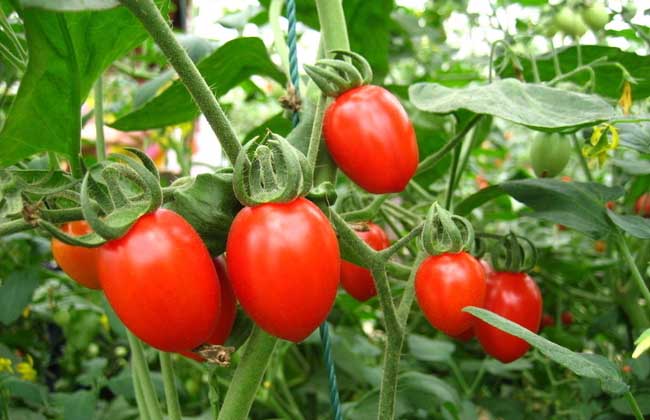
The tomato is a herbaceous plant in the genus Solanum of the nightshade family, with the scientific name tomato. Its fruit is rich in nutrients and has a distinctive flavor. It is a summer vegetable and fruit that can be eaten raw, cooked, processed into tomato sauce, juice, or canned whole. Now let's take a look at where tomatoes come from!
Where do tomatoes come from?
The tomato originated in South America, with its center of origin in the Andean region of South America. In Peru, Ecuador, Bolivia and other places, large areas of wild species are still distributed today. It is currently one of the most commonly cultivated fruit vegetables in the world. It is widely planted throughout our country, and the cultivation area continues to expand.
The production environment of tomatoes
1. Temperature: The tomato is a warmth-loving vegetable. Under normal conditions, the optimum temperature for assimilation is 20-25°C, and the optimum soil temperature for root growth is 20-22°C. Raising the soil temperature can not only promote root development, but also significantly increase the nitrate nitrogen content in the soil, accelerating growth and development and increasing yield.
2. Light: The tomato is a light-loving crop, with a light saturation point of 70000lx, and the suitable light intensity is 30000-50000lx. The tomato is a short-day plant. In the process of transitioning from vegetative growth to reproductive growth, it basically requires short-day conditions, but the requirement is not strict. Some varieties can bud and bloom earlier under short-day conditions, while most varieties bloom earlier and grow robustly under 11-13 hours of sunlight.
3. Water: The tomato needs a relatively large amount of water, but it does not require frequent large-scale irrigation. Generally, a soil moisture of 60-80% and an air humidity of 45-50% are suitable. High air humidity not only hinders normal pollination, but also causes severe disease under high-temperature and high-humidity conditions.
4. Soil: The tomato is not very strict about soil conditions, but in order to obtain high yields and promote good root development, deep soil layers, good drainage, and fertile loam rich in organic matter should be selected. The suitable soil pH is 6-7, and soil that is too acidic or too alkaline should be improved.
The plant culture of tomatoes
The tomato first grew in Peru and Mexico in South America and was a wild berry growing in forests. Because of its delicate and bright color, the locals regarded it as a poisonous fruit, viewing it as the “fruit of the fox” and calling it “wolf peach.” It was used only for ornamental purposes, and no one dared to eat it. It was treated merely as an ornamental plant.
According to records, in the 16th century, a British duke named Orodara was traveling in South America and liked the tomato, an ornamental plant, very much, so he brought it back to Britain as if he had obtained a treasure and presented it to his lover Queen Elizabeth as a gift of love to express his affection. From then on, the names “love fruit” and “lover's fruit” spread widely. But people all planted tomatoes in their estates and gave them to their loved ones as gifts symbolizing love.
After generation after generation, there was still no one who dared to eat tomatoes. By the 17th century, a French painter had depicted tomatoes many times. Facing such a beautiful, lovely, and “poisonous” berry, he simply could not resist its temptation, and so the idea of personally tasting what it was like arose. He ate one at the risk of his life and found it sweet, sour, and sweet within the sourness. However, when he lay in bed waiting to die, he was actually fine, and so the news that “tomatoes are not poisonous and can be eaten” quickly spread across the world.
From then on, hundreds of millions of people have safely enjoyed the culinary pleasure brought by this brave warrior who “dared to be first in the world” at the risk of his life. By the 18th century, Italian chefs used tomatoes to make fine dishes that were brightly colored and delicious, and guests praised them endlessly. The tomato finally made it onto the dining table. From then on, the tomato won everyone's love and was praised as the red fruit, golden apple, ruby, and love fruit.