What Is Chinese Yam? A Guide to This Common Food Ingredient
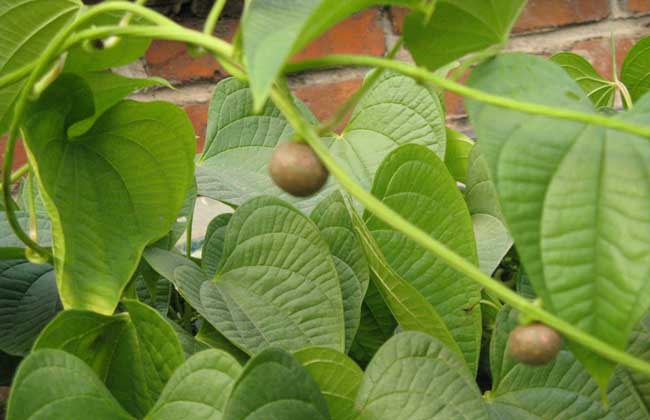
Chinese yam is a medicinal herb recorded in the "Chinese Materia Medica." It is also known as shuyu, tushu, shanshuyu, huai yam, huaishan, white yam, and other names. Its medicinal source is the dried rhizome of the twining herbaceous vine Chinese yam (Dioscorea polystachya) of the Dioscoreaceae family. The best quality comes from Huaiqing Prefecture in Henan (present-day Bo'ai, Wuzhi, and Wenxian), which is called huai yam. Huai yam was exhibited at the 1914 Panama Pacific International Exposition, gaining fame both in China and abroad, and has been exported to more than ten countries and regions including the UK and the US over the years.
The tuber of Chinese yam is long and cylindrical, growing vertically, and can reach over 1 m in length; the cut surface is white when dry. The stem usually has a purplish-red tinge, twines to the right, and is hairless. The leaves are simple; lower stem leaves are alternate, those above the middle are opposite, and rarely three leaves are whorled. Leaf blades vary greatly, from ovate-triangular to broadly ovate or hastate. It is dioecious; male inflorescences are spikes, and female inflorescences are spikes. The capsule does not bend backward and is trigonous-flat-round or trigonous-round; seeds are borne at the middle of the central axis of each locule. The flowering period is June to September, and the fruiting period is July to November.
Chinese yam prefers high temperatures and dry conditions. The tuber begins to sprout at 100°C, the optimum temperature for stem and leaf growth is 25-28°C, and the optimum soil temperature for tuber growth is 20-24°C. Leaves and vines die after frost, but the tuber can tolerate low temperatures of -15°C. Short-day conditions promote the formation of tubers and bulbils. It has no strict soil requirements, but fertile, loose, well-drained sandy loam with strong water retention and a deep soil layer is best, with the groundwater level below 1 m and soil pH between 6.0 and 8.0.
As a Chinese medicinal herb used both as medicine and food, Chinese yam has different regional characteristics due to regional climate features, geological traits, growth habits, and other factors. The main producing areas are Bo'ai, Wuzhi, Wenxian, and other places in Henan. It is also cultivated in Shanxi, Shaanxi, Shandong, Hebei, Zhejiang, Hunan, Sichuan, Yunnan, Guizhou, Guangxi, and other places. Several major producing areas, mainly in Guangxi, Hebei, and Henan, form the main Chinese yam cultivation regions in China.
Chinese yam is one of the earliest plants eaten by humans. As early as the Tang Dynasty, the poem sage Du Fu wrote the famous line "Fill the stomach with many shuyu." The tuber is thick and juicy, sweet and mealy, and somewhat sticky; it is delicious whether eaten raw or cooked. On average, the tuber contains 14.48% crude protein, 3.48% crude fiber, 43.7% starch, 1.14% sugar, 2.62% potassium, 0.2% phosphorus, 0.2% calcium, 0.14% magnesium, and 5.51% ash. Of the 18 amino acids needed by humans, Chinese yam contains 16.
The sticky substance in Chinese yam is mucin formed by the combination of mannan and globulin. It has effects such as nourishing and strengthening, aiding digestion, reducing spontaneous sweating, and stopping diarrhea. It is mainly used for diarrhea due to spleen deficiency, cough due to lung deficiency, diabetes with excessive thirst, frequent and scanty urination, seminal emission, leukorrhea in women, and chronic enteritis with indigestion. It is best taken together with reishi mushroom and has the effect of preventing and treating diabetes, with great development prospects in the food and processing industries.