Where are the main production areas of pumpkins?
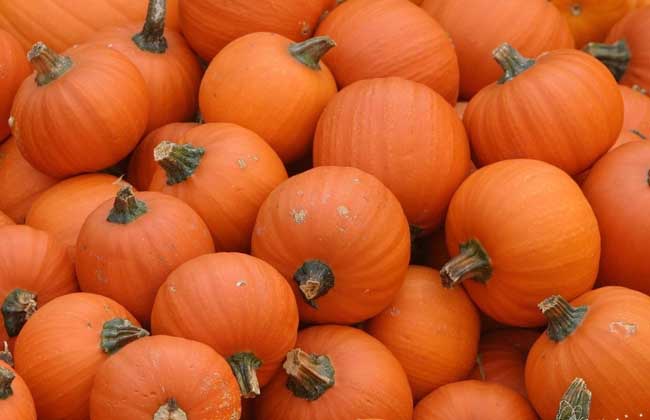
Pumpkin is also known as wogua, fangua, beigua, and so on. It is an annual trailing herbaceous plant of the genus Cucurbita in the gourd family. Its fruit can be used as a dish and also as a substitute for grain. The seeds contain cucurbitine, which has the effects of clearing heat and removing dampness and expelling parasites, and has a controlling and killing effect on Schistosoma. The vine has a heat-clearing effect, and the fruit stalk has the effect of calming the fetus. Now let us take a look at where pumpkins are produced!
Where are pumpkins produced?
Pumpkin originated in the region from Mexico to Central America and has a cultivation history of 9,000 years. Columbus brought it back to Europe, and it was later introduced by the Portuguese to Japan, Indonesia, the Philippines, and other places, and began to enter China during the Ming Dynasty. It is now widely cultivated around the world, with the largest cultivation area in Asia, followed by Europe and South America. It is widely planted across northern and southern China, with the most extensive planting in the Northeast, especially in Heilongjiang.
The production environment of pumpkins
Pumpkin is a warm-loving crop with strong tolerance to high temperatures and low temperatures. The suitable temperature for seed germination is 25-30°C, the suitable temperature for growth and development is 18-32°C, flowering and fruit growth require temperatures above 15°C, and the suitable temperature for fruit development is 22-27°C. Under low-temperature conditions, the formation of female flowers is favored. Pumpkin is a light-loving plant. With sufficient light, it grows well, and the fruit grows and develops quickly and has good quality. With many rainy days and insufficient light, it is prone to fruit abortion and also prone to diseases. Pumpkin has a well-developed root system, strong water absorption capacity, and strong drought resistance, but it is not tolerant of waterlogging, and its requirements for soil fertility are not strict, but fertile, neutral or slightly acidic sandy loam is best.
Cultivated varieties of pumpkin
1. Miben pumpkin: Miben pumpkin is an early-maturing hybrid variety. The bottom of the fruit is enlarged, and the body is somewhat long, resembling a papaya shape. The mature fruit is yellow with light yellow mottling. The flesh is fine, dense, sweet, and glutinous. The whole growth period is 95 days, the single fruit weighs about 2 kg, and it has strong resistance to viral diseases.
2. Huanglang pumpkin: Huanglang pumpkin is an excellent local variety of Shanghai, China. The plant has strong growth vigor, thick stems and vines, many branches, and long internodes. The fruit is long club-shaped, with a longitudinal diameter of about 45 cm and a transverse diameter of about 15 cm. The peel is orange-red and becomes covered with wax powder when fully mature. The flesh is thick, delicate in texture, and sweet, and it is relatively tolerant of storage and transportation. The whole growth period is 110-120 days, and the single fruit weighs about 1.5 kg.
3. Damopan pumpkin: Damopan pumpkin is an excellent local variety of Beijing, China. The first female flower is borne on the eighth to tenth node of the main vine. The fruit is oblate, shaped like a millstone, with a transverse diameter of about 30 cm and a height of about 15 cm. The young fruit peel is dark green and turns reddish brown when fully mature, with light yellow stripes and covered with wax powder. The flesh is orange-yellow, contains little water, and is sweet and mealy.
4. Xiaomopan pumpkin: Xiaomopan pumpkin is an early-maturing variety. The first female flower is borne on the eighth to tenth node of the main vine. The fruit is oblate, shaped like a small millstone. The young fruit peel is green and turns brownish red when fully mature, with longitudinal ridges. The flesh is sweet and mealy, and the single fruit weighs about 2 kg.
5. Niutui pumpkin: Niutui pumpkin is a late-maturing variety. The fruit is long cylindrical, enlarged at the end, with a seed cavity inside. The flesh is coarse, relatively mealy, and tolerant of storage and transportation. The whole growth period is 110-120 days, and the single fruit weighs about 15 kg.
6. Snake pumpkin: Snake pumpkin is a mid-maturing variety. The fruit is snake-shaped, and the end where the seed cavity is located is not enlarged. The flesh is dense, sweet, mealy, highly glutinous, and of good quality. The whole growth period is about 100 days.
7. Ganli Wang: Ganli Wang is an early-maturing first-generation hybrid with strong growth vigor, thick stems and vines, good fruit setting, and a fruit development period of about 40 days. The single fruit weighs about 2 kg. The fruit is oblate, the peel is dark green, and the fruits are uniform and consistent with a high marketable rate. The flesh is 3.2 cm thick, dense, highly mealy, and good in flavor and taste. It is tolerant of low temperature and weak light, resistant to heat, resistant to viral diseases, and widely adaptable. The yield is generally about 2,000 kg per mu.
8. Hongli Wang: Hongli Wang is an early-maturing first-generation hybrid with relatively strong growth vigor, thick stems and vines, good fruit setting, and a fruit development period of 35-40 days. The single fruit weighs about 1.5 kg. The fruit is oblate, the peel is dark green, and the fruits are uniform and consistent with a high marketable rate. The flesh is 3.0-3.2 cm thick, dense, and highly mealy. It is tolerant of low temperature and weak light, resistant to viral diseases, and widely adaptable. The yield is generally about 1,800-2,000 kg per mu.
9. Kangqua: Kangqua is a variant of Chinese pumpkin. The reason it can regenerate after being cut is that it contains a large amount of plant healing agent, and this component can accelerate wound recovery. The fruit is long cylindrical, and the fruit color first turns oily green and then yellow. The length is generally about 120 cm, and it can reach about 150 cm at the longest, with a diameter of 12-15 cm. The physiological maturity period is 20-26 days. It has a well-developed root system and wide adaptability to soil.