What Plant Is Asparagus? A Comprehensive Introduction to Asparagus as a Vegetable
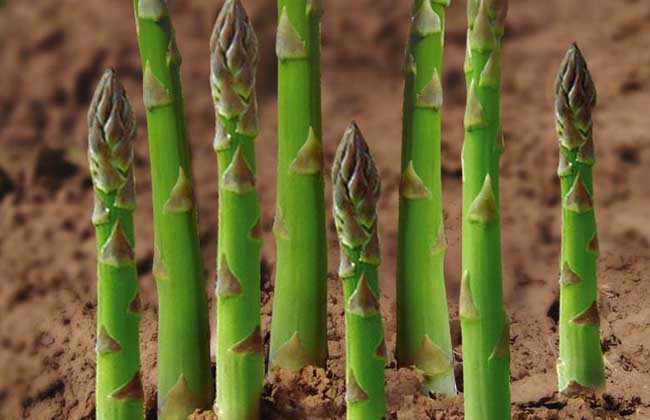
Asparagus is the young shoot of Asparagus officinalis, a plant in the genus Asparagus of the lily family. It is also known as Di bamboo shoot, South Di bamboo shoot, dew bamboo shoot, and so on. Its appearance resembles the young shoots of the grass-family plant reed, but it is entirely different. A gift of nature that grows wild, it is rich in nutrients and has a unique flavor, combining the qualities of a natural wild plant and a green organic food. Its main producing areas include China, Peru, Germany, France, Spain, the United States, Japan, and others. At present, China is the largest producer of asparagus, far ahead of other countries.
Asparagus has a fibrous root system, composed of fleshy storage roots and fibrous absorbing roots. The fleshy storage roots arise from the nodes of the underground rhizome and are mostly distributed within the 30 cm soil layer below the surface. They are long-lived; as long as the growing point is not damaged, they can continue extending forward year after year, generally reaching about 2 m, and they serve to anchor the plant and store nutrients assimilated by the stems and leaves. The fibrous absorbing roots are short-lived and will shrivel at any time under adverse conditions such as high temperature, drought, soil salinization, unsuitable soil pH, excessive moisture, or insufficient air.
The stem of asparagus is divided into three parts: the underground rhizome, the scale buds, and the aboveground stem. The underground rhizome is a shortened modified stem that mostly grows horizontally; when the branches become dense, new branches grow upward, causing the root crown to rise. The fleshy storage roots are borne on the rhizome. The rhizome has many nodes, and the buds on the nodes are covered by scales, hence they are called scale buds. The scale buds at the tip of the rhizome mostly cluster together, forming a scale bud cluster. The scale buds sprout to form the product organ, the spear, or the aboveground plant. The aboveground stem is a fleshy stem, and its young stem is the product.
The leaves of asparagus are of two kinds: true leaves and cladodes. The true leaves are degenerate leaves, borne on the nodes of the aboveground stem, appearing as triangular, membranous scales. The cladodes are modified branches, clustered and needle-like. The flowers are borne 1 to 4 per axil, greenish-yellow. The male flower has a perianth 5 to 6 mm long, and the filaments are adnate to the perianth segments below the middle. The female flower is smaller, with a perianth about 3 mm long. The berry is 7 to 8 mm in diameter, red when ripe, and contains 2 to 3 seeds. The flowering period is May to June, and the fruiting period is September to October.
Asparagus is a dioecious plant, and male and female plants differ considerably in their traits. In cultivation, male plants are mostly grown. Male plants are shorter, more branched, flower earlier, and produce more stems; the individual young stem weight is smaller, but the yield is high and the harvest period is longer. Female plants are taller, sparsely branched, flower later, and produce very few stems; the young stems are thicker, and the total yield is slightly lower.
Asparagus enjoys the reputation of the king of vegetables on the international market. It is rich in various amino acids, proteins, and vitamins, all at levels higher than those of ordinary fruits and vegetables. In particular, the asparagine and trace elements such as selenium, molybdenum, chromium, and manganese in asparagus have the effect of regulating body metabolism and improving immunity. In the prevention and treatment of high blood pressure, heart disease, leukemia, blood cancer, edema, cystitis, and other conditions, they have a strong inhibitory effect and pharmacological action.