What is the growing environment of truffles like
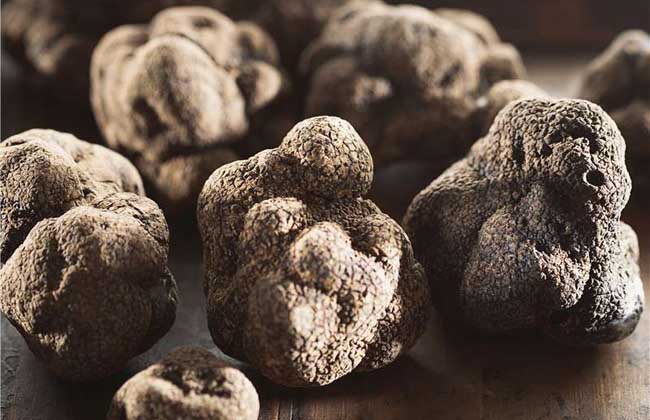
Truffle is a general term for a type of fungus. Its requirements for the growing environment are extremely strict, and it cannot be artificially cultivated. Its output is scarce, which makes it rare and expensive. Therefore, Europeans rank truffles alongside caviar and foie gras as the “three great delicacies of the world.” Among the many varieties, the black truffle produced in France and the white truffle produced in Italy are the most highly regarded. Now let us take a look at the growing environment of truffles!
The morphological characteristics of truffles
The truffle fruiting body is lump-shaped. The ascocarp is spherical or oval, brown or dark brown. Some are as small as a bean, while others are as large as a Fuji apple. The surface has polygonal warty protrusions that reflect a red luster, with a depression at the top. The flesh (spore-producing tissue) is initially white, later becomes brown or gray, and turns black when mature. The cut surface is brown with marble-like veins, giving off a moist forest-like smell with a dried fruit aroma, by which it attracts small animals to come foraging and carry the spores elsewhere for reproduction.
The growing environment of truffles
1. Truffles grow in the soil. They are a type of tuberous fungus attached beneath pine tree roots, containing a large amount of water and trace mineral elements such as potassium, calcium, magnesium, iron and fluorine. Unlike ordinary mushrooms, they are not soft and juicy, but rather relatively firm in texture. They prefer alkaline soil. High-quality truffles are mainly produced in limestone terrain areas, such as Alba in Italy, Perigord in France, and Yunnan in China, all of which are located in limestone terrain areas.
2. The nutrients of truffles come from the attached tree roots and soil. If truffles have grown in a place, the nutrients of the land and plants will be absorbed completely by the truffles, and nothing else can grow there for a period of time. During their growth process, they cannot tolerate any slight environmental change. Their pickiness about the environment is truly astonishing, but at present Western countries have achieved semi-artificial cultivation.
3. Truffles especially like to grow under pine trees, oak trees, poplar trees, willow trees, hazel trees and linden trees, and their color and smell vary depending on the tree species. Today, mechanized farming methods, pesticide spraying on the soil, excessive or insufficient rainfall, and changes in forest tree species are also the main reasons for the large-scale decline in truffle production in the 20th century.
The producing area distribution of truffles
1. Croatia: White truffles have only been found in Italy and Croatia in the Balkan Peninsula. Their color is slightly golden, light brown (beige) or pale brown, and they have dark brown or milky white patches or fine veins. They vary in size, with small ones as big as a golf ball and large ones like an apple. In a good year, the world output of white truffles is only 3 tons. Compared with the annual output of about 35 tons of black truffles, one can imagine how precious they are.
2. Piedmont: The Piedmont region in northwestern Italy is located in the upper Po River valley, bordered by the Alps to the west and north and by the Ligurian Apennines to the south. Alba in the province of Cuneo in this region produces white truffles.
3. Provence: Black truffle Provence is the most important black truffle producing area in the world, accounting for 90% of France's output. The main production centers are concentrated in Tricastin in the north, with an annual output of about 30 tons.
4. Sarlat: Sarlat is rich in black truffles and foie gras. Almost all famous French foie gras manufacturers are concentrated here. Sarlat cuisine indeed holds a place in the cuisine of southwestern France.
5. Mainland China: China also produces truffles. Their appearance is very similar to French black truffles, but the scales on the outer skin are relatively small, and the internal white veins are relatively fine and dense. They mainly grow on the fibrous roots of pine trees, which is also the origin of the Chinese name “truffle.” The main producing areas are in Sichuan and Yunnan. Mature Chinese black truffles have a complex mushroom flavor, a kind of olfactory taste that is hard to understand.
6. Taiwan, China: According to the latest reports, a small amount of truffles also grows in the high-altitude mountainous areas of Taiwan Province, China. Their appearance is very similar to those of France or the mainland, and they belong to a closely related source. However, Asians generally have little contact with or understanding of this delicacy, so no commercial operation has been carried out.