What Are Truffles? A Detailed Guide to Truffle Basics
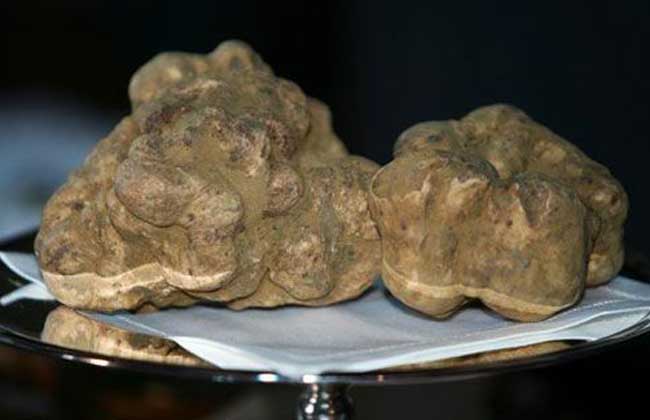
Truffles are the collective name for fungi in the genus Tuber, family Tuberaceae, phylum Ascomycota. There are about 10 different varieties. They are usually annual fungi, mostly growing by attaching mycelial threads to the roots of broadleaf trees, generally under pine, oak, and holm oak trees. They spread within a radius of 120-150 cm around the base of the tree, with the lump-shaped main body hidden 3-40 cm underground. They are found in Italy, France, Spain, China, New Zealand, and other countries.
The truffle fruiting body is lump-shaped, with a spherical or elliptical ascocarp, brown or dark brown, some as small as a bean and others as large as a Fuji apple, with a surface covered in polygonal warty protrusions that reflect a red sheen, and a depression at the top. The flesh (spore-producing tissue) is initially white, later turning brown or gray, and becoming black when mature. The cut surface is brown with marble-like veins, giving off a moist forest-like odor with a dried-fruit aroma, by which it lures small animals to come foraging and carry the spores elsewhere for reproduction.
Truffles grow in the soil. They are a type of tuber fungus attached to the roots of pine trees, containing large amounts of water and trace mineral elements such as potassium, calcium, magnesium, iron, and fluorine. Unlike ordinary mushrooms, they are not soft and juicy but rather firm in texture. They prefer alkaline soil. High-quality truffles are mainly produced in limestone terrain areas, such as Alba in Italy, Perigord in France, and Yunnan in China, all of which are located in limestone terrain areas.
Truffles derive their nutrients from the attached tree roots and soil. If truffles have grown in a place, the nutrients of the soil and plants will be absorbed completely by the truffles, and nothing else can grow there for a period of time. Truffles also cannot tolerate any slight environmental change during their growth process; their pickiness about the environment is truly astonishing. As long as the surrounding living environment undergoes a slight change, truffle spores will be unable to grow. However, semi-cultivated growth has already been achieved in Western countries.
The maturity period of black truffles is usually from November each year to March of the following year, and the best season is usually between December and March of the following year. The people who collect truffles are called “truffle hunters.” Each truffle hunter carries a family treasure map recording the locations, times, and sizes of truffles once found by their forebears. The process of searching for truffles is very interesting, and hunters in different countries use different methods.
Truffles are rich in protein, 18 kinds of amino acids, unsaturated fatty acids, multiple vitamins, essential trace elements such as zinc, manganese, iron, calcium, phosphorus, and selenium, as well as large amounts of metabolites such as sphingolipids, cerebrosides, ceramides, triterpenes, androsterone, adenosine, truffle acid, sterols, truffle polysaccharides, and truffle polypeptides. They have extremely high nutritional and health-care value. Androsterone has significant effects in supporting yang and regulating the endocrine system. Sphingolipid compounds have obvious activity in preventing Alzheimer's disease and atherosclerosis and in antitumor cytotoxicity. Polysaccharides, polypeptides, and triterpenes have effects such as enhancing immunity, anti-aging, and anti-fatigue, and can be used for health preservation.