What Is Black Truffle? Get to Know This Precious Edible Fungus
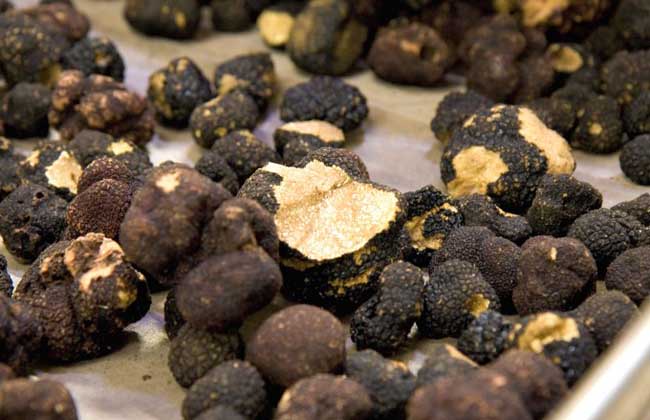
Black truffle is a wild edible fungus that grows underground, also known as truffle, "motherless fruit" and so on. Its surface is rugged and uneven, and its color ranges between dark brown and black, with small raised bumps and veins running through it in gray or light black and white. Its smell is peculiar and hard to describe; some describe it as resembling mushrooms, garlic, rotting leaves, wetlands, fermented corn, pickled vegetables, honey, gas, wet straw, cheese, cinnamon, musk, and even unwashed bed sheets that have gone years without cleaning. Some even describe its smell as resembling semen. As far as is currently known, it is mainly distributed in a small number of areas in the Alps and the Himalayas.
Black truffle is extremely particular about its growing environment. If there is even the slightest change in sunlight, moisture, or the pH of the soil, it cannot grow. It is the only delicious delicacy in the world that cannot be cultivated in a neat and orderly way. A tree may produce truffles, while another tree next to it that looks exactly the same cannot, and to this day people still do not understand why. Unlike ordinary fungi such as mushrooms, truffle spores are not spread by wind, but by animals that gnaw on truffles. They mainly grow under pine, oak, hazel, beech, and orange trees. This is because truffles cannot carry out photosynthesis and cannot survive independently; they must obtain nutrients through a symbiotic relationship with the roots of certain trees.
The maturity period of black truffle is usually from November each year to March of the following year, and the best season is usually between December and March of the following year. The people who collect truffles are called "truffle hunters." Each truffle hunter carries a family treasure map recording the locations, times, and sizes of the truffles that previous generations once found. The process of searching for truffles is very interesting, and hunters in different countries use different methods. In France, people are used to treating sows as capable assistants in harvesting black truffles. A sow's sense of smell is extremely keen, and from 6 m away it can smell truffles buried 25 cm to 30 cm deep underground.
Black truffle is rich in protein, 18 kinds of amino acids (including 8 essential amino acids that the human body cannot synthesize), unsaturated fatty acids, multiple vitamins, essential trace elements such as zinc, manganese, iron, calcium, phosphorus, and selenium, as well as large amounts of metabolites such as sphingolipids, cerebrosides, ceramides, triterpenes, androsterone, adenosine, truffle acid, sterols, truffle polysaccharides, and truffle polypeptides. It has extremely high nutritional and health-care value. Among these, androsterone has notable effects in supporting yang and regulating the endocrine system. Sphingolipid compounds have obvious activity in preventing Alzheimer's disease, atherosclerosis, and anti-tumor cytotoxicity. Polysaccharides, polypeptides, and triterpenes have effects such as enhancing immunity, anti-aging, and anti-fatigue, and can be used for health preservation.
The taste of black truffle is very peculiar. The flavors of mushrooms, garlic, wet mud, honey, corn, bedbugs, rotting leaves, and so on have all been used to describe the aroma of truffles. Some people also often say that they give off the smell of musk, semen, and unwashed bed sheets that have gone years without cleaning. Even professional perfumers describe it as a gasoline smell mixed with some garlic and rotten egg odors, and of course the fermented breath of accumulated fallen leaves in some forest wetlands, mixed with a trace of yeast and honey. As for what it actually tastes like, everyone reaches a different conclusion.
Over the past two thousand years, black truffle had only been found in the southern part of the Alps in Europe, which is the main reason why Chinese people are unfamiliar with black truffle. At the end of the last century, Chinese scientists discovered the distribution of black truffle in the southeastern region of the Himalayas, which caused a sensation around the world. From then until now, black truffle produced in China has all been used for export. In recent years, textual research on folk applications in truffle-producing areas has shown that, in fact, in the folk areas of ethnic minorities such as Tibetans and Yi people in southwestern China, black truffle, called "motherless fruit" for hundreds of years, had long been used by local mountain people to enhance physical strength, improve sexual ability, and regulate women's menstruation. Its effects are said to be outstanding.