Where do truffles come from? A detailed breakdown of the world's main producing regions
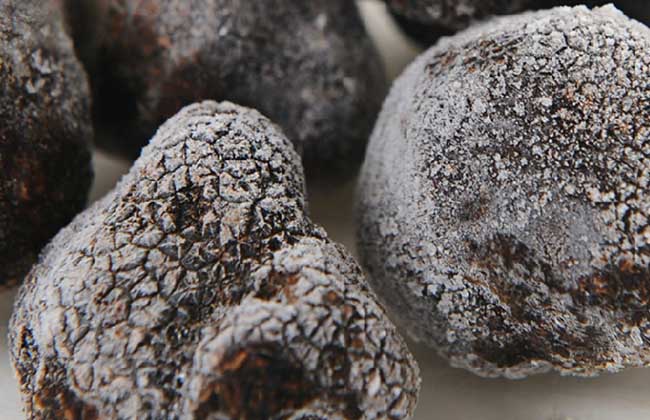
Truffle is the general term for a type of fungus in the phylum Ascomycota, family Tuberaceae, genus Tuber; there are about 10 different varieties, usually annual fungi, most of which grow attached to the roots of broadleaf trees, generally under pine, oak and holm oak trees, with a distinctive smell and rich in protein, amino acids and other nutrients. Let's take a look below at where truffles come from!
Where do truffles come from?
Truffle producing areas are distributed across Italy, France, Spain, China, New Zealand and other countries, and among the many types, the black truffle from France and the white truffle from Italy are the most highly regarded. Chinese truffles look very similar to French black truffles, with smaller scales on the outer skin and finer, denser white veins inside; they mainly grow on the fibrous roots of pine trees, which is also the origin of the Chinese name “truffle” (truffle). The main producing areas are in the Sichuan and Yunnan regions, and mature Chinese black truffles carry a complex mushroom flavor, an aroma that is hard to make sense of.
The culinary value of truffles
Truffles are rich in protein, 18 amino acids (including the 8 essential amino acids that the human body cannot synthesize), unsaturated fatty acids, a variety of vitamins, essential trace elements such as zinc, manganese, iron, calcium, phosphorus and selenium, as well as large amounts of metabolites such as sphingolipids, cerebrosides, ceramides, triterpenes, androsterone, adenosine, truffle acid, sterols, truffle polysaccharides and truffle polypeptides, giving them extremely high nutritional and health value. Among these, androsterone has a notable effect in supporting yang and regulating the endocrine system; sphingolipid compounds show clear activity in preventing Alzheimer's disease and atherosclerosis as well as in antitumor cytotoxicity; and polysaccharides, polypeptides and triterpenes help boost immunity, resist aging and relieve fatigue, so they can be used for health preservation.
The growing environment of truffles
1. Truffles grow in the soil; they are a type of tuber fungus attached to the roots of pine trees, containing plenty of water and trace mineral elements such as potassium, calcium, magnesium, iron and fluorine. Unlike ordinary mushrooms, they are not soft and juicy but rather firm in texture. They prefer alkaline soil, and high-quality truffles are mainly produced in limestone terrain areas, such as Alba in Italy, Perigord in France and Yunnan in China, all of which are located in limestone terrain areas.
2. Truffles draw their nutrients from the attached tree roots and the soil. If truffles have grown in a place, the nutrients of the soil and plants will be absorbed completely by the truffles, and nothing else can grow there for a period of time. During their growth they cannot tolerate any slight environmental change, and their pickiness about the environment is truly astonishing, but semi-cultivated growth has now been achieved in Western countries.
3. Truffles especially like to grow under pine, oak, poplar, willow, hazel and linden trees, and their color and smell vary with the tree species. Today, mechanized farming methods, pesticide spraying on the soil, excessive or insufficient rainfall, and changes in forest tree species are also the main reasons for the large-scale decline in truffle production in the 20th century.