When is the planting time for moringa?
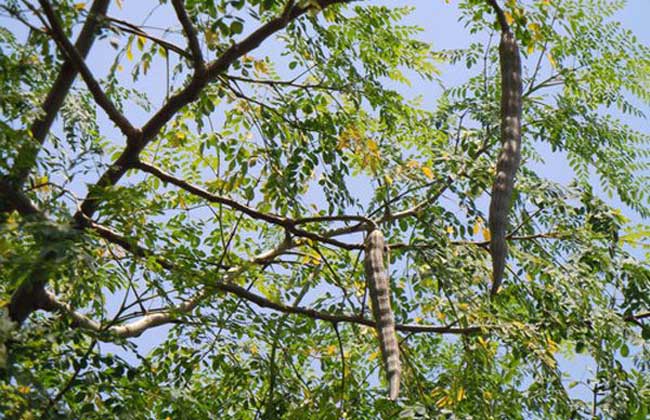
Moringa is the most nutritious tree in the world, containing about 20 amino acids, 46 antioxidants and abundant trace elements. It originated in northern India, and there are about 14 varieties worldwide. It is now also widely grown in our country, cultivated in tropical and subtropical regions as an ornamental tree, and it has very high planting value. Let us take a look below at when moringa is planted!
When is moringa planted?
Moringa can be started from seed right after the Spring Festival, and the seedlings are transplanted once they have grown to 10 cm. Moringa has very strong adaptability and does not demand much from soil pH. Its taproot is very well developed, and it is very easy to manage. Ordinarily, aside from watering, no special care is needed. Once the trunk grows to the thickness of a fist, watering is no longer necessary, as its drought tolerance is especially strong. When the tree grows to about one meter, the tender leaves can begin to be harvested.
Growing conditions for moringa
Moringa likes sunlight and has a very long taproot, so it can withstand long periods of drought. Its suitable growing temperature is 25-35°C. In shaded conditions it can endure high temperatures of 48°C, and it can also tolerate slight frost. Severe cold may kill the above-ground part of the moringa, but after the severe cold, new shoots can still sprout again and grow into a plant. It can adapt to various soils such as sandy soil and clay soil, and it can also grow in slightly alkaline soil.
Propagation methods for moringa
Moringa is very easy to propagate, either by sowing seeds or by cuttings. Its growth rate among trees is second only to balsa. A seed-grown seedling can reach 3 m in 10 months. If propagated from 0.8-1 m long cuttings, it can flower in 2 years, and by 3 years it can already be used as a living support for vines. It is heat-tolerant, drought-resistant and tolerant of poor soil. If water and fertilizer are sufficient, its growth rate and yield will be even higher. Its drawbacks are that the branches are brittle and break easily, it cannot withstand typhoons, and its lifespan is short, generally not exceeding 20 years.