When is the best time to plant sesame? A full analysis of planting time
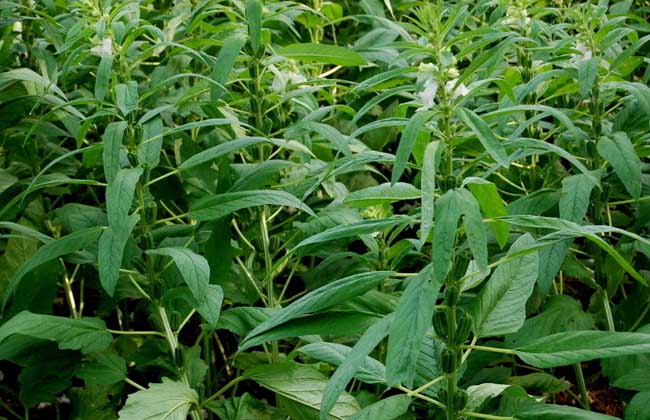
Sesame is an annual upright herbaceous plant of the genus Sesamum in the family Pedaliaceae, 60-150 cm tall, found throughout the world's tropical regions and some temperate regions. It is one of China's main oil crops and has high cultivation value. Since ancient times, China has had many kinds of foods and delicious dishes made with sesame and sesame oil, which have long been renowned throughout the world. Let's take a look at sesame planting time below!
Sesame planting distribution
Sesame originated in the Yunnan-Guizhou Plateau of China. It is a warmth-loving plant, and its cultivation is mainly distributed between 40°N and 40°S. China's sesame planting areas can reach as far as 45°N, mainly in the provinces along the Yellow River and the middle and lower reaches of the Yangtze River, as well as being more widely distributed in Henan, Hubei, Anhui, Jiangxi, Hebei and other provinces, among which Henan has the highest output, accounting for about 30% of the national total. According to statistics, the national sesame planting area is about 790,000 hectares, with an output of about more than 580,000 tons.
Sesame planting time
The suitable sowing period for summer sesame is from late May to early June, and the suitable sowing period for autumn sesame is early to mid-July, and in conditions with better heat it can be delayed until late July. Whether summer sesame or autumn sesame, both are sown in seasons with high temperatures and large evaporation, so fine land preparation and maintaining soil moisture are the keys to full seedling emergence.
Sesame sowing methods
Sesame has three methods: dibbling, broadcasting and drilling. The seed rate per mu is 400 grams for broadcasting, 350 grams for drilling and 250 grams for dibbling. In fields with high soil fertility, few pests and diseases and high water content, sowing can be appropriately reduced.
1. Broadcasting: Broadcasting is the traditional sowing method in the Jianghuai region and is suitable for sowing to catch soil moisture. When broadcasting, the seeds are evenly scattered, the soil covering is shallow, and seedlings emerge quickly, but it is not conducive to field management.
2. Drilling: Drilling can control row and plant spacing, implement reasonable close planting, and facilitate field management such as thinning and intertillage, and is suitable for mechanized operations.
3. Dibbling: Dibbling uses 5-7 seeds per hole. Regardless of the sowing method, shallow and even sowing with a depth of 2-3 cm is appropriate.
Sesame planting techniques
1. Prepare beds and sow: The bed ditch is 33 cm wide, the bed height is 20 cm, and the bed width is 1-1.2 m. Appropriate bed width makes management convenient. Dig shallow furrows on the bed surface with a furrow spacing (also the row spacing) of 33 cm. When sowing, because sesame seeds are small and the density is difficult to control, they can be mixed evenly with a small amount of dry fine soil before sowing.
2. Chemical weeding: 3 days after sowing, use 60 ml of 60% Harness emulsifiable concentrate per mu, dilute with 50 kg of water, and spray evenly on the bed surface, which can reduce weed growth.
3. Timely thinning: After more than ten days, thin the seedlings after they grow 2-3 cotyledons, and thin again after 5-6 days, so that the plant spacing is between 22-24 cm, with 8,000-10,000 plants per mu. Suitable plant spacing is beneficial to branching.
4. Scientific fertilization: First, apply sufficient base fertilizer, applying 1,500 kg of farmyard manure per mu. After growing 3-4 true leaves, apply human excrement and urine 1-2 times. The flowering and capsule-setting period is the most vigorous growth period of sesame and also the peak period of fertilizer demand. Apply 10-15 kg of ammonium sulfate per mu as a top dressing, and use a mixed solution of 0.4% potassium dihydrogen phosphate and 0.2% borax for foliar spraying, spraying once every 5-7 days for 2 consecutive sprays.
5. Topping and harvesting: After the full fruiting period, when the leaf nodes at the top of the main stem cluster and growth nearly stops, pick off the terminal bud on a sunny morning. When the sesame fruits turn yellow and ripe and the seeds are black, they can be harvested.