Where are the main producing areas of black sesame? An introduction to the distribution of its producing regions
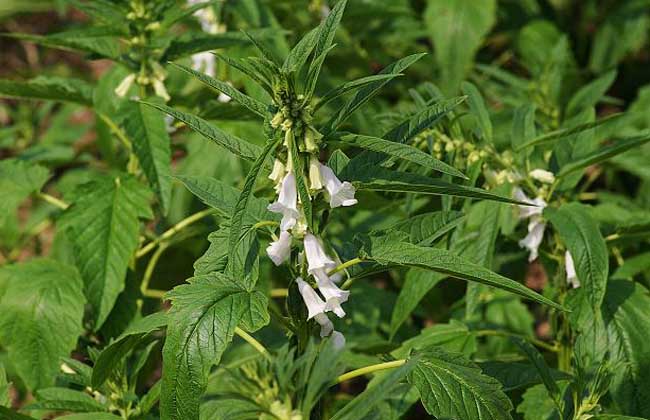
Black sesame is the black seed of sesame in the Pedaliaceae family. It contains a large amount of fat and protein, and also contains carbohydrates, vitamin A, vitamin E, lecithin, calcium, iron, chromium and other nutrients. It helps strengthen the stomach, protect the liver, and promote the growth of red blood cells. It can also increase melanin in the body, which is beneficial to hair growth. Let us take a look below at the distribution of black sesame producing areas!
Distribution of black sesame producing areas
Black sesame is widely cultivated in China. The main producing areas are Shandong, Henan, Hubei, Sichuan, Anhui, Jiangxi, Hebei and other provinces. It is an annual herbaceous plant. The mature seeds come in two kinds, black and white. The black ones are mostly used medicinally, while the white ones are mostly eaten. Names vary slightly from place to place, with many terms such as zhima, youma, jusheng and huma.
Environment of black sesame producing areas
1. Soil: Because black sesame seeds are small and the root system is shallow, it is most suitable for planting in loose soil that is slightly acidic to neutral (pH 6.5-7.5). Loose soil can reconcile the supply conflicts among water, fertilizer and air, and is conducive to the extension of the root system.
2. Temperature: The entire growth period of black sesame requires accumulated heat of 2500-3000°C, and development is most suitable at an average day and night temperature of 20-24°C.
3. Rainfall: The suitable rainfall during the entire growth period of black sesame is 210-250 millimeters.
4. Sunlight: Black sesame requires sufficient sunlight throughout its entire growth period. Sufficient sunlight can strengthen photosynthesis, help the accumulation of nutrients, meet the needs of flowering and fruiting, make the fruit numerous and the seeds plump, and is conducive to the formation of oil.
Identification of true and false black sesame
1. Macroscopic identification: This product is flat and oval, 2.5-4 mm long and 1.5-2 mm wide, with one end bluntly rounded and the other end pointed, about 1 mm thick. The surface is black, with reticulate wrinkles or not obvious. Under a magnifying glass, fine verrucose protrusions can be seen. The edge is smooth or has 2 raised ridge lines, and the tip has a round dot-shaped brown hilum. The seed coat is membranous. The endosperm is white and fleshy, wrapping the embryo outside as 1 thin layer. The embryo is straight, with 2 large white cotyledons, oily. The odor is weak, the taste is mild, and after crushing it has a sesame oil aroma.
2. Microscopic identification: Cross section of the seed: the outermost part of the seed coat is 1 row of palisade-arranged cylindrical cells, the outer wall slightly protruding outward in a round-headed shape, the cells filled with melanin and containing one large spherical calcium oxalate crystal cluster formed by the combination of a large number of small prismatic crystals. Inward is one row of flattened cells with thin walls, and scattered small prismatic crystals are commonly seen in the cell cavities. Further inward, several layers of degenerated and compressed outer endosperm cells can be seen. The inner endosperm consists of 3-4 layers of thin-walled cells, polygonal. The cotyledons are of the dorsiventral type, and below the upper epidermis are cylindrical palisade cells. The cells of the endosperm and embryo are all filled with starch grains and fatty oil.
3. Powder identification: Black-gray, oily, with aroma. The surface view of the outer seed coat cells is polygonal, the cells are filled with melanin, and contain one large spherical calcium oxalate crystal cluster, 25-48 micrometers in diameter. The cotyledon and endosperm cells are nearly round and contain a large amount of aleurone grains. The free aleurone grains are oval, 3-7 micrometers long, containing one globoid and one square or polygonal crystalloid. Fatty oil droplets are scattered.