Sesame Cultivation Techniques: Key Points and Planting Management Methods Explained
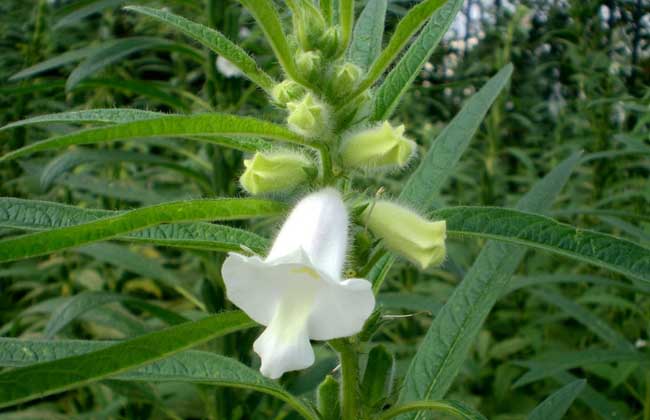
Sesame, also known as zhima, huma and other names, originated in the Yunnan-Guizhou Plateau of China. It is an annual upright herbaceous plant of the genus Sesamum in the family Pedaliaceae, found throughout the world's tropical regions and some temperate regions. It is one of China's main oil crops, with a planting area of about 790,000 hectares and a yield of more than 580,000 tons, giving it high cultivation value. Let us take a look at sesame cultivation techniques together below!
Sesame Growing Environment
1. Soil: Because the seeds are small and the root system is shallow, it is best suited to loose soil that is slightly acidic to neutral (pH 6.5-7.5). Loose soil can balance the supply of water, fertilizer and air, and is favorable for root extension.
2. Accumulated temperature: The whole growth period of sesame requires an accumulated temperature of 2500-3000°C, and development is most suitable at an average day-night temperature of 20-24°C.
3. Rainfall: The suitable rainfall during the whole growth period of sesame is 210-250 mm.
4. Sunlight: Sesame requires sufficient sunlight throughout its whole growth period. Sufficient sunlight can strengthen photosynthesis, help the accumulation of nutrients, meet the needs of flowering and fruiting, make the capsules numerous and the seeds plump, and favor the formation of oil.
Sesame Cultivation Techniques
1. Bed preparation and sowing: The furrow is 33 cm wide, the bed is 20 cm high, and the bed is 1-1.2 m wide. A suitable bed width makes management easier. Dig shallow furrows on the bed surface with a furrow spacing (also the row spacing) of 33 cm. When sowing, because sesame seeds are small and the density is difficult to control, they can be mixed evenly with a small amount of dry fine soil before sowing.
2. Chemical weeding: 3 days after sowing, use 60 ml of 60% Henaisi emulsifiable concentrate per mu, add 50 kg of water to dilute, and spray evenly on the bed surface, which can reduce weed growth.
3. Timely thinning: After more than ten days, when 2-3 cotyledons have grown, thin the seedlings, and thin again after 5-6 days, so that the plant spacing is 22-24 cm, with 8000-10000 plants per mu. Suitable plant spacing favors branching.
4. Scientific fertilization: First, apply sufficient base fertilizer, with 1500 kg of farmyard manure per mu. After 3-4 true leaves have grown, apply human excrement and urine 1-2 times. The flowering and capsule-setting stage is the period of most vigorous growth for sesame and also the peak period of fertilizer demand. Apply 10-15 kg of ammonium sulfate per mu as a top dressing, and spray the leaves with a mixed solution of 0.4% potassium dihydrogen phosphate and 0.2% borax, spraying once every 5-7 days for 2 consecutive sprays.
5. Topping and harvest: After the full fruiting stage, when the leaf nodes at the top of the main stem cluster and growth nearly stops, pick off the terminal bud on a sunny morning. When the sesame capsules turn yellow and ripe and the seeds are black, they can be harvested.
Sesame Disease and Pest Control
1. When Fusarium wilt and Phytophthora blight occur at the sesame seedling stage, use 0.5 kg of 50% Yekuling wettable powder per mu, mix with 20 kg of moist fine soil, and apply in bands at the bottom of the furrow (soil disinfection), then sow. Alternatively, when sesame seedling disease first appears, use 25 g of 25% copper-ammonia complex fungicide Ruikumei per mu, diluted with about 40 kg of water, or spray with 800-1000 times copper sulfate solution or 800 times 80% DuPont Xinwansheng solution, once every seven days, for 2-3 consecutive sprays.
2. Sesame bacterial wilt can occur throughout the entire growth period. Use 50 g of 20% Yeqingshuang wettable powder per mu, or 50 g of 50% carbendazim wettable powder, diluted with about 50 kg of water, and spray. If the disease occurs obviously in spots and patches, the liquid can instead be used to drench the roots, with better results. Drenching the roots with 3000 times Lvheng No. 1 solution at the early stage of disease is very effective.
3. Sesame stem spot blight is more severe in the later growth stage. Use 50 g of 50% carbendazim wettable powder per mu, or 500-700 times Lvheng No. 7, or 60 g of 70% thiophanate-methyl wettable powder, diluted with about 50 kg of water, and spray.
4. The sesame stem borer occurs from the early flowering stage until before harvest, but is more numerous and causes serious damage during the full pod stage. Grasp the peak larval period and use 2-3 packets of 3% Kaiou per mu, or 800-1000 times 90% trichlorfon solution, spraying about 50 kg of liquid per mu.
5. The sesame hawk moth occurs more in the middle and late stages. Grasp the peak larval period and use 2-3 packets of 3% Kaiou per mu, or 800-1000 times 90% trichlorfon solution, or 1500 times 80% dichlorvos emulsifiable concentrate, spraying 50 kg of liquid per mu.
6. In sesame mosaic disease, affected plants show mosaic patterns and wrinkling, with twisted and dwarfed stems, generally failing to set fruit or producing small capsules with shriveled, thin seeds, and the mosaic patterns turn yellow as they spread. Virus-resistant varieties can be selected, such as Hubei's Bagu Cha, Suxuan No. 5, and E Zhi No. 1, and Henan's Zheng Zhi No. 1, Xiangyin 55, and Liutiaoqing, while also paying attention to controlling sesame aphids.