How to Plant Autumn Garlic? Detailed Explanation of Cultivation Techniques
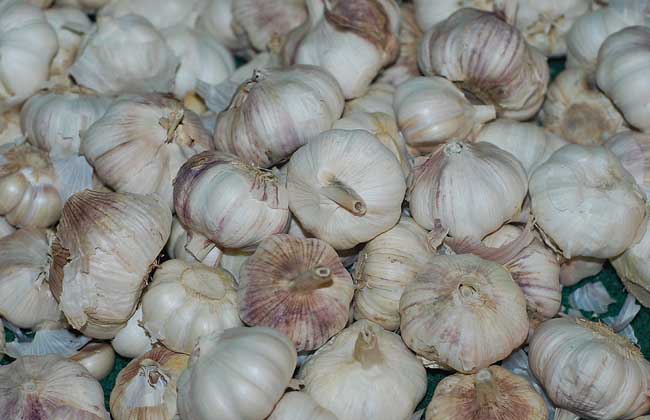
Garlic is also known as garlic bulb, garlic head, hu garlic, hu, single garlic, single-clove garlic, etc. It is the collective name for plants of the garlic group, a biennial herbaceous plant of the genus Allium in the lily family. The optimal sowing period is to allow the plant to grow to 5-6 leaves before overwintering, when the plant has the strongest cold resistance, will not freeze to death in the severe winter, and lays a good foundation for the plant to successfully pass through vernalization. Let us take a look at autumn garlic cultivation techniques together below!
Timely Sowing
The optimal sowing period for garlic is to allow the plant to grow to 5-6 leaves before overwintering, when the plant has the strongest cold resistance, will not freeze to death in the severe winter, and lays a good foundation for the plant to successfully pass through vernalization. In the Yangtze River Basin and areas to its south, sowing is generally done in mid-to-late September. In September, the weather in the Yangtze River Basin is cool, suitable for garlic seedling emergence and growth. If sown too early, the seedlings grow too vigorously before overwintering and consume nutrients, which reduces overwintering ability and may also undergo vernalization again, causing secondary growth and forming multi-clove garlic the following year, reducing garlic quality. If sown too late, the seedlings are small, the tissues are tender, the root system is weak, less nutrients are accumulated, cold resistance is lower, and many die during the overwintering period. Therefore, garlic must have its sowing period strictly controlled.
Reasonable Close Planting
Close planting is the foundation of increasing yield. The yield of garlic scapes and garlic bulbs is composed of three factors: the number of plants per mu, the number of cloves per plant, and scape weight and clove weight. Appropriate close planting should be done according to variety characteristics, so that there are more plants per mu. Early-maturing varieties generally have shorter plants, fewer leaves, and a shorter growth period, so the density should be correspondingly larger, preferably about 50,000 plants per mu, with row spacing of 14-17 cm, plant spacing of 7-8 cm, and about 150-200 kg of seed per mu. Mid-to-late-maturing varieties have a long growth period, tall plants, and more leaves, so the density should be correspondingly smaller to make the population structure reasonable and fully utilize light energy. The density should be controlled at around 40,000 plants per mu, with row spacing of 16-18 cm, plant spacing of about 10 cm, and about 150 kg of seed per mu.
Sowing Methods
“Plant scallions deep and garlic shallow” is experience gained by farmers through many years of practice. The generally suitable sowing depth for garlic is 3-4 cm. There are two sowing methods for garlic. One is insertion sowing, that is, inserting the seed cloves into the soil, then covering with soil and firming. The second is furrow sowing, that is, using a hoe to open a shallow furrow and dibbling the seed cloves into the soil. After opening one furrow, the soil dug out at the same time is used to cover the seed cloves of the previous row. After sowing, cover with about 2 cm of soil, lightly firm with the foot, and water thoroughly. To prevent drought, two layers of rice straw or other moisture-retaining materials can be covered on the soil. Planting should not be too deep, because too deep delays emergence, makes the false stem too long, causes the root system to absorb too much water and fertilizer, leads to excessive growth, and makes the garlic bulb subject to soil compression and difficult to expand. However, planting should also not be too shallow, because too shallow makes it easy for the cloves to “jump” during emergence, makes the root zone prone to water shortage at the seedling stage, leads to poor root development, and makes the plants susceptible to freezing and death during overwintering.
Cultivation and Weeding
Herbicides can be sprayed from sowing to before emergence. Prometryn is effective for controlling crabgrass, chenopodium, smartweed, foxtail, etc. in garlic fields, with 100-150 g of 50% prometryn used per mu. Simazine and atrazine are used at 120-240 g per mu. Pendimethalin is used at 35-65 g per mu. For garlic fields dominated by monocotyledonous grass weeds, use 120-150 g of napropamide per mu 5-7 days after sowing (before emergence), dilute with 30-50 kg of water, and spray in the evening. For garlic fields dominated by dicotyledonous broadleaf weeds, use 120-150 mL of 25% oxadiazon per mu, or 45-60 mL of 24% goal, 7-10 days after sowing (before emergence), add 40-60 kg of water, and spray in the evening. During the garlic seedling growth period, cultivate when weeds have just sprouted, which also removes the weeds. Weeds between plants that are difficult to cultivate should also be pulled out early to avoid competing with garlic seedlings for nutrients.
Topdressing Management
Although garlic seedlings have the nutrition of the seed cloves during the growth period, topdressing should still be applied at the right time to promote seedling growth and increase the plant's nutrient area. Because the garlic root system has a weak ability to absorb water and fertilizer, topdressing should use quick-acting fertilizers to avoid nutrient deficiency and yellowing leaf tips. Garlic is generally topdressed 3-4 times.
1. Seedling-promoting fertilizer: After garlic seedlings emerge completely, apply 1 application of light human excrement and urine to promote seedlings. Do not apply ammonium bicarbonate to avoid burning the seedlings.
2. Vigorous growth fertilizer: 60-80 days after sowing, apply 1 heavy application of decomposed human and animal manure plus chemical fertilizer, 20-30 dan per mu, 10 kg of ammonium sulfate, and 5 kg of potassium sulfate or potassium chloride. Early-maturing varieties should be topdressed early, and mid-to-late-maturing varieties should be topdressed later, to promote vigorous seedling growth and thick stems and leaves, so that there are few or no yellow tips when the mother clove rots.
3. Scape-bearing fertilizer: After the seed garlic mother clove rots, flower buds and bulbils differentiate one after another and enter the stem elongation stage. During this period, old roots senesce and a large number of new roots emerge. At the same time, stems, leaves, and garlic scapes also elongate rapidly, and the garlic bulb also begins to expand slowly, thus requiring more nutrients. A heavy application of quick-acting potassium and nitrogen fertilizer (compound fertilizer is better) of 10-15 kg should be applied. Apply about half a month before the tail appears (the short scape at the lower part of the false stem can be observed by peeling back the plant) to meet the need and promote fast and vigorous growth of the garlic scape.
4. Garlic bulb expansion fertilizer: For early-maturing and early mid-maturing varieties, because the temperature is not yet high when the garlic bulb expands. The garlic bulb expansion period is correspondingly longer. To promote bulb enlargement, quick-acting nitrogen and potassium fertilizer must be topdressed before harvesting the garlic scapes. For example, apply 5-10 kg of nitrogen-potassium compound fertilizer per mu. If urea is applied alone, about 5 kg is enough. Do not topdress too much, otherwise it will cause the young buds of already formed cloves to turn green and grow leaves again, consuming the nutrients of the cloves. Topdressing should be done before harvesting the garlic scapes. After the garlic scapes are harvested, there will be abundant nutrients to promote garlic bulb expansion. If topdressing is done after harvesting the garlic scapes, it is likely to cause excessive vegetative growth and reduce yield. If the field soil is relatively fertile and the garlic leaves are thick and dark, the expansion fertilizer may be omitted. For mid- and late-maturing varieties, because scape emergence is late and the temperature is higher, garlic is generally harvested about 20-25 days after scape harvest, so the expansion fertilizer may also be omitted.
Water Management
1. Full emergence stage: Generally, full emergence occurs 1 week after sowing. After topdressing the full-emergence fertilizer, if the field soil is relatively dry, irrigate once to promote seedling growth.
2. Early seedling stage: The seedling stage is the key period for the differentiation and formation of garlic vegetative organs. After full emergence, garlic enters the early seedling growth stage. Because water was irrigated once after full emergence, and because this period in the Yangtze River Basin is also a time of more autumn rain, irrigation should be controlled, and attention should be paid to field drainage after autumn rain.
3. Mid-to-late seedling stage: This is marked by the period from before overwintering to the end of mother clove depletion. This stage is relatively long and is also an important period of garlic vegetative growth. Before overwintering, rainfall in many places has already decreased significantly. If the soil is relatively dry, irrigate once. After overwintering, the temperature gradually rises, and the seedlings begin to enter vigorous growth again, so they should be irrigated in time to promote garlic leaf growth and thickening of the false stem.
4. Scape emergence stage: The differentiated leaves of the garlic seedlings have all unfolded, leaf area growth has reached its peak, the root system has also expanded to its maximum range, and garlic scape growth is accelerating. This period has the greatest demand for fertilizer and water, so after topdressing the scape-bearing fertilizer, irrigation for scape emergence should be done in time. After the “tail appears,” watering should be continuous to promote seedling growth with water, and irrigation should be stopped only 2 to 3 days before scape harvest to facilitate storage and transport.
5. Bulb expansion stage: After the garlic scapes are harvested, water immediately to promote rapid expansion and weight gain of the garlic bulb. Stop watering 5 days before harvesting the garlic bulbs to control growth and promote the accelerated transport of assimilates from the leaves to the garlic bulbs.
Timely Harvesting
1. Harvesting garlic scapes
① Generally, when the garlic scape has emerged from the leaf sheath and begins to bend, it is the suitable time to harvest garlic scapes. The timing of garlic scape harvest has a great influence on the yield and quality of garlic scapes. If harvested too early, the yield is not high, they break easily, and their marketability is poor. If harvested too late, although yield can be increased, too many nutrients are consumed, affecting garlic bulb growth and development. Moreover, the garlic scape tissue ages and fiber increases. In particular, the tissue at the base of the garlic scape ages and becomes unfit to eat.
② It is best to harvest garlic scapes at noon and in the afternoon on sunny days, when the plants are somewhat wilted, the leaf sheath and garlic scape separate easily, and the leaves are flexible and not easy to break, which can reduce leaf damage. If garlic scapes are harvested on rainy days or after rain, the plants have already absorbed sufficient water, and the garlic scapes and leaves have poor flexibility and break extremely easily.
③ The scape harvesting method should be determined according to the specific situation. If the main purpose is to harvest garlic scapes, such as with Ershuizao garlic, whose leaf sheath is tight, in order to obtain high yield, the false stem can be split open or scored with a needle. The garlic scape yield is high and the quality is excellent, but after the false stem is split open, the plant easily withers and dies, the garlic bulb yield is low, and the cloves easily scatter. If the main purpose is to harvest garlic bulbs, such as with Cangshan garlic, the false stem should be kept as intact as possible during scape harvest to promote garlic bulb growth. When harvesting scapes, generally pinch and injure the false stem with the left hand at the 3rd-4th leaf from the top, and pull out the garlic scape with the right hand. Although this method slightly lowers garlic scape yield, the false stem is only lightly damaged and the plant remains upright, which is beneficial to garlic bulb expansion and growth.
2. Harvesting garlic bulbs: Garlic bulbs can be harvested 15-20 days after scape harvest (mostly 18 days). The signs for timely garlic bulb harvest are: most leaves have dried up, the upper leaves have faded to grayish green, the leaf tips are dry and drooping, the false stem is in a soft state, and the garlic bulb has basically formed. If harvested too late, the garlic bulb is tender and has high water content, the tissue is not solid, it is not plump, and it easily shrivels after storage. If harvested too late, the garlic bulb easily splits apart, and the cloves easily fall off when pulling the garlic, losing commercial value. When harvesting garlic bulbs, use a shovel to dig in hard ground, and pull them out directly by hand in soft ground. After lifting the garlic, transport it to the yard, with the garlic leaves of the back row resting on the heads of the front row, drying only the tops and not the heads, to prevent the garlic bulbs from being scorched or turning green. After turning them frequently for 2-3 days, the stems and leaves are dry and they can be stored.