Which regions are the main ginger-producing areas?
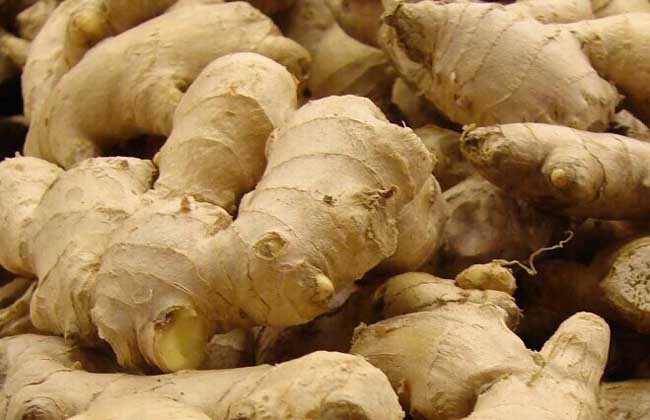
Ginger, also known as shengjiang, baijiang, chuanjiang and so on, is a perennial herbaceous plant of the genus Zingiber in the family Zingiberaceae. Ginger originated in China and tropical regions such as Southeast Asia. It has a long history of use as food and medicine in China, and its development and utilization also began relatively early. It is an economic crop with great value for development and utilization. Let us take a look below at the production regions of ginger!
The production regions of ginger
Ginger originated in China and tropical regions such as Southeast Asia, and is also commonly cultivated in tropical regions of Asia. In China, it is widely cultivated from the central, southeastern to southwestern regions, including Laifeng, Tongshan, Yangxin, Echeng, Xianning and Daye. The Weifeng large ginger produced in Qingzhou, Shandong, is especially well known.
The production environment of ginger
1. Temperature: Ginger likes a warm, humid climate and has weak cold resistance and drought resistance. The plant can only grow during the frost-free period. The most suitable temperature for growth is 25-28°C. When the temperature is below 20°C, germination is slow. When frost occurs, the plant will wither, and after frost damage the rhizome completely loses its ability to sprout.
2. Light: Ginger is shade-tolerant but not tolerant of strong sunlight, and it is not strict about day length. Therefore, when cultivating it, shade sheds should be built or intercropped plants should be used for appropriate shading to avoid strong sunlight.
3. Water: The root system of ginger is not well developed, and its drought tolerance and waterlogging tolerance are poor, so its water requirements are especially particular. During the growth period, soil that is too dry or too wet is unfavorable to the growth and expansion of the ginger rhizome, and both easily cause disease and rot.
4. Soil: Ginger likes fertile, loose loam or sandy loam. When planted in heavy, wet low-lying land, it grows poorly, and it also grows poorly in barren land with poor water retention. Ginger has the greatest need for potassium fertilizer, followed by nitrogen fertilizer, and the least need for phosphate fertilizer.
The hometowns of ginger in China
1. Laiwu ginger: Laiwu ginger has a cultivation history of more than 2,000 years. In feudal society, it was once a tribute to the imperial court. It is famous for its plump rhizomes, thin skin, few fibers, strong pungency, delicious taste and fresh, glossy color. It was rated as a famous-brand product at the Third China Agricultural Exposition, and Laicheng District was named “Hometown of Chinese Ginger”.
2. Anqiu large ginger: Anqiu large ginger is produced in Anqiu City, Weifang, and is a famous specialty of Shandong Province. It has a long planting history. As early as the Wanli period of the Ming Dynasty, there were records of cultivating large ginger. After nearly 500 years of seed selection and breeding, Anqiu large ginger has developed the characteristics of bright color, compact structure, large rhizomes, few fibers, and a pungent, fresh aroma. In 2006, the General Administration of Quality Supervision, Inspection and Quarantine approved geographical indication product protection for Anqiu large ginger.
3. Changyi large ginger: Changyi is rich in large ginger and has long been known as the “hometown of ginger”. Its unique conditions give Changyi large ginger large rhizomes, yellow flesh, a fine and tender texture, smooth skin and a strong pungent aroma. It contains a variety of vitamins and minerals and sells very well in domestic and international markets, with various products in short supply. Changyi large ginger is a geographical indication certification trademark and an agricultural product geographical indication product.
4. Juxian large ginger: Juxian large ginger has a long planting history. Very early on, historical records stated that “Ju land produces taro”, among which “taro” refers to today's large ginger. Based on accurate records in Juxian local historical annals, Juxian has been cultivating large ginger for at least 380 years. Juxian large ginger is a geographical indication certification trademark.