Detailed Explanation of Key Technical Points for Broad Bean Pest and Disease Control
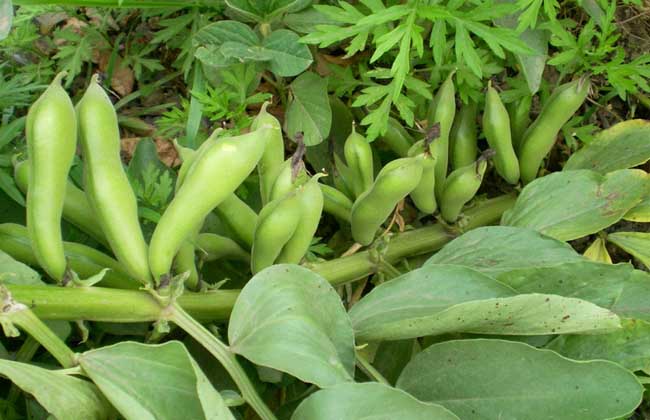
Broad bean is one of the earliest cultivated legume crops by humans, and more than 50 countries around the world grow broad beans. In pest and disease control, in addition to selecting disease-resistant varieties, maintaining rational close planting and pruning, doing a good job of drought prevention and drainage, increasing phosphorus and potassium fertilizer application, and enhancing plant resistance, chemical control is also very necessary. Now let us take a look at broad bean pest and disease control techniques together!
Broad Bean Damping-Off
[Damage Characteristics] The disease can occur at all growth stages of broad bean, but is more severe at the tender pod stage. It mainly infects the stem base or underground parts of broad bean, and also damages seeds. When the stem base is infected, black lesions mostly appear on one side of the stem or around the stem, causing the stem to turn black.
[Control Methods] At the early stage of disease onset, spray 58% metalaxyl-mancozeb wettable powder 500 solution, or 75% chlorothalonil wettable powder 600-700 solution, or 21% iminoctadine-carbendazim wettable powder 800-1000 times solution, or 20% tolclofos-methyl emulsifiable concentrate 1100-1200 solution, etc.
Broad Bean Chocolate Spot
[Damage Characteristics] Reddish small spots first appear on the leaves, and the small spots gradually expand into round or oval lesions. In severe cases, all parts turn black and wither, and black sclerotia form on the inner wall of the stems.
[Control Methods] At the early stage of disease onset, spray Bordeaux mixture at 1:2:100. After that, spray 50% carbendazim 500 times solution once every 10 days for 2-3 consecutive sprays. Spraying Bordeaux mixture at the early stage is better than spraying carbendazim.
Broad Bean Rust
[Damage Characteristics] Rust spots appear on the leaves until the leaves dry up, and in severe cases the entire plant dies.
[Control Methods] Spray 50 g of 15% triadimefon mixed with 50-60 kg of water, using 40-60 kg of spray solution per mu. About 20 days after application, spray once more.
Broad Bean Fusarium Wilt
[Damage Characteristics] Fusarium wilt mainly causes the roots to become black, with a short and small main root, few lateral roots, yellowing leaves, a wilted plant appearance, and drooping stem and leaves at the top.
[Control Methods] At the early stage of disease onset, drench the roots with 50% thiophanate-methyl 500 times solution, applying 2-3 times, which has a relatively good control effect.
Broad Bean Brown Spot
[Damage Characteristics] Broad bean brown spot can infect the stems, leaves, pods, and seeds of broad bean. When leaves are infected, reddish-brown small freckles first appear, then expand into round or oval lesions. The center of the lesion is light gray, and the edges are dark brown and reddish, with a diameter of 3-8 mm. Densely packed black small dots arranged in concentric rings form on them. When the disease is severe, they merge with each other into irregular large patches.
[Control Methods] At the early stage of disease onset, spray 70% thiophanate-methyl wettable powder 600-800 times solution, or 50% copper succinate-glutarate wettable powder 500-600 solution, etc., once every 7-10 days for 1-2 consecutive sprays.
Broad Bean Verticillium Wilt
[Damage Characteristics] At first, yellowing occurs only on one section of the plant while the other side remains normal in color. The leaves on the upper part of the stem gradually yellow from the lower part upward. The yellowing leaves are initially pale green or green-yellow, and later turn completely yellow.
[Control Methods] 1. Select disease-resistant varieties and practice crop rotation. 2. At the early stage of disease onset, drench with 50% metham-sulfur suspension concentrate 500-600 times solution, or 50% carbendazim wettable powder 500 times solution, or 50% copper succinate-glutarate wettable powder 350 times solution, applying 500 mL of the prepared spray solution per plant. Stop application 3 days before harvest.
Broad Bean Anthracnose
[Damage Characteristics] Broad bean anthracnose mainly damages leaves, stems, and pods. At the early stage of leaf damage, dark reddish-brown small spots are scattered on the surface, then expand into lesions 1-3 mm in size with a light brown center and reddish-brown edges. After the lesions merge, they form large patches about 10 mm in size. The lesions are round to irregular in shape and are mostly restricted by leaf veins. Diseased leaves rarely dry up, and black small dots form on the lesions in the later stage.
[Control Methods] Before disease onset or at the early stage of disease onset, spray 80% anthracnose thiram wettable powder 800-1000 times solution, or 58% metalaxyl-mancozeb wettable powder 800-1200 times solution, etc. Spray once every 7-10 days for 2-3 consecutive sprays. Stop application 3 days before harvest.
Broad Bean Mosaic Disease
[Damage Characteristics] Broad bean mosaic disease affects the whole plant. In production, symptoms differ due to different strains of Bean yellow mosaic virus, and there are two types: mosaic type and yellowing type. Mosaic-type diseased plants are obviously stunted, with wrinkled, curled, and thickened leaves, and the mesophyll shows yellow-green alternating mosaic mottling. Mildly diseased plants are not obviously stunted, but the top heart leaves often turn yellow or curl. Severely diseased plants are obviously smaller than healthy plants and do not flower or set fruit. Yellowing-type plants are stunted, with yellow and thin leaves, upright stems, generally without wilting, and diseased leaves tend to fall early in the later stage.
[Control Methods] 1. Select disease-resistant varieties and pay attention to strengthening field management. 2. Spray pesticides in time to control aphids. 50% pirimicarb wettable powder 2500-3000 times solution can be used. Stop application 3 days before harvest.
Broad Bean Root Rot
[Damage Characteristics] On affected plants, water-soaked spots first appear on the main root and stem base, then turn black and rot. Lateral roots wither, and the cortex easily falls off. On the surface of the rotten roots there is a dense white snow-like layer, which is the mycelium of the pathogen, and black particles resembling mouse droppings, which are the sclerotia of the pathogen. In the later stage, the water in the diseased stems evaporates, the diseased parts dry up and turn grayish-white, the epidermis cracks like hemp fibers, and sometimes there are also black particles resembling mouse droppings inside.
[Control Methods] 1. Strengthen field management. Irrigate in time during drought, and drain and remove waterlogging in time during rainy periods. Practice rational crop rotation, avoid excessive nitrogen fertilizer application, and maintain rational close planting so that the field has good ventilation and light transmission, improves plant disease resistance, and reduces disease. 2. At sowing, mix 150 g of 50% carbendazim per mu with fine soil to cover the seeds. 3. At the seedling stage, drench the roots with 50% carbendazim 1000 times solution, or spray with 70% thiophanate-methyl 800-1500 times solution, or 65% zineb wettable powder 600 times solution for control.
American Leafminer
[Damage Characteristics] The American leafminer uses its larvae to burrow under the epidermis of broad bean leaves, winding through and feeding on green tissue, creating irregular grayish-white linear tunnels. When damage is severe, almost all leaf tissue is affected, and the leaves are covered with burrows, especially the leaves at the base of the plant, which suffer the most and may even wither and die. The larvae can also mine tender pods and flower stalks, and the adults can also suck plant sap, causing the feeding sites to become small white spots.
[Control Methods] Grasp the peak emergence period of adults and spray in time to control adults, or spray to control adults when damage first appears. To control larvae, carry out several consecutive applications every 5-6 days. "Banqianjing" 500 times solution, or "Aweidu" 800 times solution, or 40% "omethoate" emulsifiable concentrate 1000 times solution, etc., can be used.