What are the growing environment requirements for morel mushrooms?
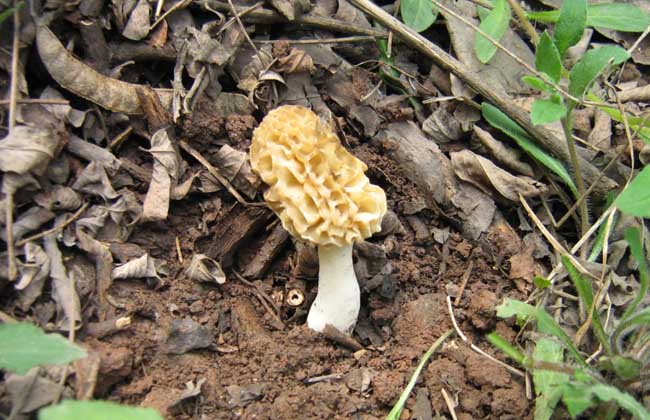
Morel mushrooms are a rare edible and medicinal fungus of the genus Morchella in the family Morchellaceae, often growing on broad-leaved forest floors and beside roads, singly or in groups. Wild morel mushrooms are distributed in China's Xizang region, Yunnan region, and the **Tianshan Mountains, and are also commonly seen in the Changbai Mountain area of Jilin. Now let's take a look together at the growing environment of morel mushrooms!
The nutritional requirements of morel mushrooms
The better carbon sources for morel mushrooms are soluble starch, fructose, maltose, sucrose, glucose, and the like. The better nitrogen sources are cysteine monohydrochloride, aspartic acid, asparagine, urea, alanine, glutamic acid, and the like. Wood extract, tomato juice, malt extract, and apple extract all promote the growth of morel mushrooms, with wood extract having the greatest growth-promoting effect. Using an agar medium with humus soil leachate to culture the mycelium, at 20°C, the mycelium can cover the entire slant in 7-10 days.
The forest stand conditions for morel mushrooms
Morel mushrooms generally grow under forests of Pinus, Quercus, and the like, and especially prefer to grow in old apple orchards. The ash and charred wood of apple trees are the best nutrients for morel mushrooms. They can occur in Paulownia nurseries, pear orchards, bamboo groves, and under broad-leaved forests such as white poplar, Chinese tallow tree, poplar, willow, walnut, Rosaceae, and Fagaceae, and can also appear in spruce and fir coniferous forests or mixed coniferous-broadleaf forests, and even in corn fields and shrublands.
The humidity requirements of morel mushrooms
During the mycelium growth stage of morel mushrooms, the soil moisture content is around 50%, with relatively low humidity. The formation of primordia and the development of fruiting bodies require a large amount of water (80-90 mm of precipitation). Especially in February-March, with monthly precipitation of 40-50 mm, and a single precipitation of 5-6 mm once every 4-5 days, this is most suitable for fruiting body development. The relative humidity in the forest is also relatively high, generally at 80%-85%.
The temperature requirements of morel mushrooms
Morel mushrooms are a low-temperature type of fungus. The underground mycelium begins to grow at 1-2°C in early spring, and the fruiting period is in March-April. At 10-25°C, the daily growth rate of the mycelium accelerates as the temperature rises; above 28°C, the daily growth rate of the mycelium drops sharply. At 25°C, although the daily growth rate of the mycelium is the fastest, the mycelial mat is thin and prone to aging. At around 20°C, the mycelium grows relatively fast and is dense and robust, so the optimum growth temperature for morel mushroom mycelium is 17-22°C.