When is the best time to plant broccoli?
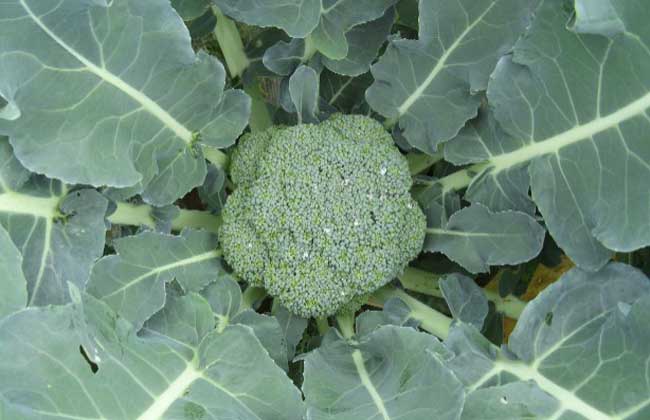
Broccoli originated in the coastal areas of the eastern Mediterranean. At present, it is cultivated in both northern and southern China and has become one of the main everyday vegetables. It is rich in nutrients, containing protein, sugar, fat, vitamins and carotene, and ranks first among vegetables of its kind in nutritional content. It is known as the “crown of vegetables” and has very high planting prospects. Let us take a look below at the planting time for broccoli!
The planting time for broccoli
Broccoli is usually sown in autumn, grows through winter, comes to market normally and reaches the table after Spring Festival, begins to flower in spring, and its seeds mature in April to May. For summer and autumn seedling raising, seedlings are raised during the high-temperature season from August to October, when the temperature is generally above 25℃, sometimes with high temperatures of 30-35℃, and there are also hazards from heavy rain and hail, so shade nets are used for open-field seedling raising. The seedling age is generally 35-40 days, and sowing or direct hole sowing can be used. The seedling stage averages about 30 days, and from transplanting to harvest takes 80-90 days. It is slightly stronger in winter habit, and when the seedling stem is 10 mm thick it can be affected by low temperature and complete the vernalization process.
The growing environment for broccoli
1. Light: Broccoli is not very strict about light requirements, but during growth it likes sufficient light. When light is sufficient, the plants grow robustly and can form a strong vegetative body, which is beneficial to photosynthesis and the accumulation of nutrients, and makes the curd compact and dense, with a fresh green color and good quality. In midsummer, excessively strong sunlight is also not good for the growth and development of broccoli.
2. Temperature: Within the range of 5-20℃, the higher the temperature, the faster the growth and development of broccoli. The optimum germination temperature is 20-25℃, the optimum growth temperature during the seedling stage is 15-20℃, and it has strong cold and heat tolerance. The optimum growth temperature during the rosette stage is 20-22℃, and the optimum temperature for curd development is 15-18℃. When the temperature is higher than 25℃, the quality of the curd tends to deteriorate, but as long as it is not damaged by freezing, the curd can still grow slowly at low temperatures of 5℃ or even below.
3. Water: Broccoli has a relatively large water requirement throughout its entire growth process, especially during the period of vigorous leaf growth and curd formation, when it must not lack water. Even short-term drought will reduce yield. Abundant rain during the seedling stage or excessively high soil moisture can easily cause diseases such as black rot and black spot. During the curd formation stage, the soil moisture needs to be about 70-80% of field capacity to meet growth needs.
4. Soil: Broccoli does not have strict requirements for soil conditions, but excessively poor soil leads to poor plant development and low yield and quality, while excessively fertile soil can cause loose flower buds and hollow flower stalks. It is suitable for planting on loam and sandy loam with good drainage and irrigation, deep plough layer, loose and fertile soil texture, and strong water and fertilizer retention. The soil pH range is 5.5-8, but 6 is best.
Seedling-raising techniques for broccoli
1. Variety selection: Broccoli is a vegetable that likes coolness. Choose varieties with strong plant growth vigor, dark green flower buds, few scorched buds, arc-shaped round curds, few side shoots, small buds, large curds, disease resistance and heat tolerance, cold tolerance, and wide adaptability, such as Japan's Youxiu, Longlv, and Shanshui, or other varieties such as Yuguan, Dongfang Lubao, Wanlv, and Lyuxiu, or choose various high-quality varieties according to market demand, but they must meet the national grade-two seed standard before use.
2. Sowing time: For autumn double-cover cultivation, sow in early July; for overwintering cultivation in a solar greenhouse, sow from late July to August; for early spring cultivation in a solar greenhouse, sow from early September to early October; for early spring cultivation in plastic tunnels and small arched sheds, sow in November; for spring plastic film cultivation, sow in January.
3. Seed treatment
① Seed soaking: Soak the seeds in warm water at 33℃ for 15 minutes, stirring constantly, and stop when the water temperature drops to 20℃. Continue soaking in warm water for 4 hours. After rinsing clean with clear water, germinate them.
② Germination: Wrap the soaked seeds in wet cotton gauze and germinate them at 30℃. Rinse once a day with clear water, and sow when 60% of the seeds have broken white.
4. Field seedling raising
① Seedbed selection: The seedling stage of broccoli is relatively short. Choose a seedbed on a field with high terrain, convenient drainage and irrigation, soil rich in organic matter, and where cruciferous vegetables have not been planted within two years or the previous crop was rice. The seedbed should preferably run north-south.
② Apply sufficient base fertilizer: Deep plough 15-20 days before sowing, and 7-10 days before sowing apply 15 kg of ternary compound fertilizer plus 5 kg of superphosphate per mu, or splash-apply 2500 kg of decomposed human manure and urine, to ensure sufficient nutrient supply during the seedling stage. Turn over and rake the soil fine, and make a sowing bed about 1.2 m wide, with a seedling field ratio of 1:20-30.
③ Mix with pesticide and sow: Before sowing, water the seedbed thoroughly once, and apply a 1000-fold dilution of phoxim and other chemicals to prevent underground pests. When sowing, mix the treated seeds evenly with an appropriate amount of sand and evenly broadcast them in the seedbed. After sowing, press down with an iron shovel, then scatter a layer of medicinal soil mixed with 0.1% carbendazim and dexon.
④ Shade and heat preservation: In summer, after laying a layer of shade net flat on the seedbed, set up a small arched shed, then cover another layer of shade net for double-layer shading, moisture retention, and cooling during seedling raising. In winter and spring, use one layer of plastic film and one layer of greenhouse film for double-film covering and heat-preservation seedling raising.
5. Nutrient solution seedling raising: Nutrient solution seedling raising is currently a relatively good seedling-raising method. It has the characteristics of low cost, convenient management, high seedling survival rate, and centralized seedling supply, and is welcomed by production and processing enterprises.
① Substrate: 25% vermiculite, 65% peat, 10% perlite.
② Substrate stacking and disinfection: After fully and evenly mixing all raw materials, evenly spray 50-100 fold formalin (40% formaldehyde) onto the substrate, then cover it tightly with plastic film. After sealing for 4-5 days, uncover the film for ventilation and turn the nutrient soil so that the formaldehyde volatilizes out. It can be used after 2 weeks, and the pH of the substrate needs to be adjusted to 6.5-7. If too acidic, adjust with lime; if too alkaline, neutralize with dilute hydrochloric acid.
③ Sowing: Fill the plug tray with substrate, water thoroughly, then use a special hole-punching machine to make sowing holes, use a seeder to sow the seeds into the sowing holes, and cover with substrate.