Key Points of Loofah Seedling Cultivation Techniques and Seedling Stage Management Methods
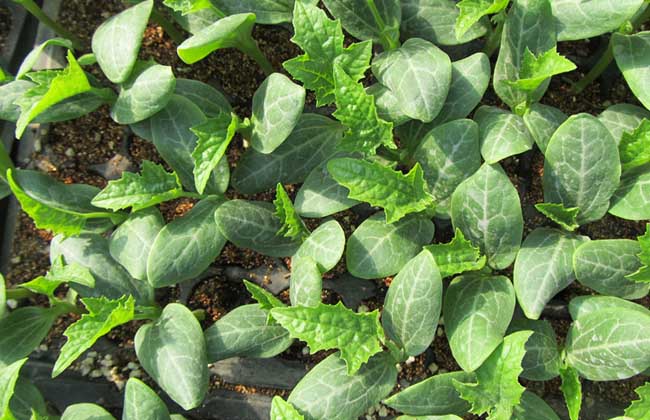
Loofah is heat-tolerant but not cold-tolerant. The optimum temperature for seed germination is 25-35°C, and the optimum temperature for seedling growth is higher than that of other cucurbits, at 25-30°C, so it has relatively high temperature requirements. For early-maturing cultivation, loofah is generally raised in electrically heated beds, with a seedling age of 30-40 days; it can be transplanted when it has 4-5 true leaves. The suitable sowing period can be calculated backward from the transplanting date. Now let us take a look at loofah seedling cultivation techniques together!
Variety Selection for Loofah
For loofah, choose varieties that are high quality, high yielding, good in market appeal, and suitable for the market. For winter and spring cultivation, choose long-club-shaped varieties aimed at the markets of Hong Kong, China, Macao, China and South China, such as Bilu, Shuangqing, Luwang, etc. For summer and autumn cultivation, it is advisable to choose short-club-shaped varieties aimed at the local island market, such as Thai loofah, etc.
Seed Treatment for Loofah
1. Disinfection and seed soaking treatment
① Soaking at room temperature: Put the seeds into room-temperature water and wash them clean, then change the water and soak the seeds for 3-5 hours.
② Hot water soaking: Put the seeds into warm water at 50°C--55°C, keep the water temperature uniform and soak the seeds for 15-20 minutes, then let it cool to room temperature, take the seeds out and wash them, then put them into room-temperature water and soak for 3-5 hours. This is mainly to kill pathogens on the seed coat surface.
③ Chemical soaking: Soaking with 50% procymidone: first soak the seeds in clean water for 1-2 hours, then soak them in a 1500-fold aqueous solution of procymidone for 10 minutes, take them out and wash them, then put them into room-temperature water and soak the seeds for 2-3 hours. This mainly prevents and controls loofah gray mold.
2. Seed germination method: Whether to germinate or not depends on the temperature conditions. After disinfection and soaking, take the seeds out and wash them, then place them under alternating or constant temperature at 25°C-30°C with moisture retention for germination.
Sowing Methods for Loofah
1. Sowing period: Choose a suitable sowing period according to the cultivation season, temperature conditions and market demand. For sowing practice, it is advisable to choose sunny days. For film-mulched cultivation, make the holes as small as possible to avoid the film being lifted when the wind is strong.
2. Sowing rate: According to the planting density of loofah, generally 800-1200 plants are planted per mu of field, with 2 seeds sown per hole, and the seed amount used is about 350-500 grams.
3. Sowing method: The survival rate of transplanted loofah is relatively low, so direct sowing is generally used. In March to April, prepare the land and make beds about 3 m wide. After the seeds are soaked and germinated, sow two rows on both sides of the bed surface. With a plant spacing of 35 cm, open holes and sow 3 seeds per hole; about 300-450 grams of seeds are needed per hectare. For single-row planting, the plant spacing is 30-50 cm, sow 2 seeds per hole, at a depth of 1-2 cm, with the seeds laid flat. The field water-holding capacity of the soil should preferably be 75%. If it is too dry, water a little. After sowing, cover with dry grass to keep warm and retain moisture.
4. Post-sowing management
① Thinning and final singling: For open-field directly sown loofah, thinning is generally carried out at the seedling stage when there are 3-4 true leaves, leaving one strong seedling per hole, and watering with water and fertilizer 2-3 times. For film-mulched cultivation, after final singling, water with water and fertilizer 1-2 times, then use dry fine soil to firm up the holes.
② Fertilizer and water management: When the vines begin to run, combine with hilling to apply the first heavy fertilizer. Use 1000 kg of decomposed farmyard manure, 20 kg of cake fertilizer, and 20 kg of ternary compound fertilizer per mu, mix them evenly and apply into the cultivation furrow. At the full fruiting stage, apply the second heavy fertilizer, applying 20 kg of ternary compound fertilizer and 10 kg of potassium chloride per mu. At the late fruiting stage, supplement fertilizer appropriately 3-4 times, applying 10 kg of ternary compound fertilizer or 20 kg of cake fertilizer per mu.