Which regions are the main lotus root producing areas?
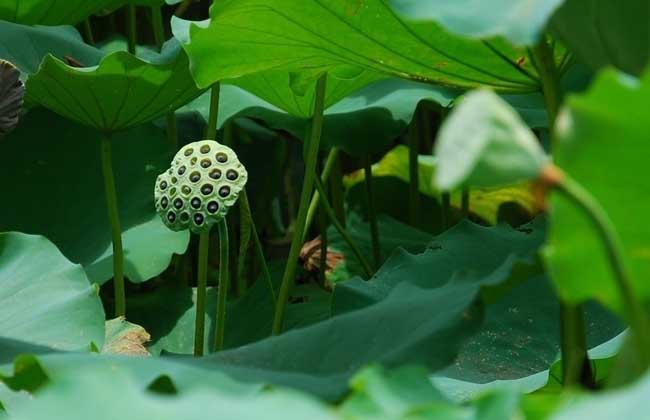
Lotus root is the rhizome of a plant in the lotus family. It is slightly sweet and crisp, and can be eaten raw or cooked as a dish, making it one of the common table vegetables. Its place of origin is India. In China it is distributed in Jiangsu, Zhejiang, Hubei, Shandong, Henan, Hebei, Guangdong and other places. Let us take a look at the producing areas and distribution of lotus root below!
Lotus root producing areas and distribution
The lotus root originated in India and was later introduced to China. At present it is cultivated in Jiangsu, Zhejiang, Hubei, Shandong, Henan, Hebei, Guangdong and other places in China. The more famous ones include Baoying lotus root and Jinhu lotus root in Jiangsu Province, Linyi lotus root in Shandong Province, and Cizhou white lotus root in Hebei Province.
The producing environment of lotus root
1. Temperature: Lotus root originated in warm and humid regions. During the growing period it needs high temperatures and an environment with plenty of sunlight, and it is required to grow in hot and rainy seasons. Sprouting requires a temperature of 15°C. At 20°C it grows lotus runners, fibrous roots and standing leaves. At 35°C it grows vigorously, buds and flowers. The most suitable temperature for the root-setting period is 25°C. When the temperature drops to 15°C, growth stops.
2. Water: Lotus root is an aquatic vegetable. Its water consumption is large and fast, but the ability of its root system to absorb water is very weak. It likes shallow water and high temperatures, and cannot tolerate drought. During the growing period, a water layer of a certain depth must always be maintained. During the sprouting and growing period, the water level should be shallow to help raise the soil temperature and promote early sprouting and fast growth. During the vigorous growing period, the water level should be deep to help the plants grow robustly. During the root-setting period, the water level should be lowered again to promote early root setting.
3. Soil and fertilizer: The lotus root plant is large and extremely tolerant of fertilizer. It likes soft, fertile clay soil. Fertilizer is generally based mainly on basal fertilizer, which accounts for 70% of the total fertilizer application, supplemented by topdressing, which accounts for 30%. The basal fertilizer is mainly fully decomposed chicken manure, pig manure and farmyard manure, combined with diammonium phosphate, potassium sulfate or NPK compound fertilizer. Topdressing is mainly urea and compound fertilizer. Applying more farmyard manure can reduce the reddish-brown rust spots attached to the lotus root body.
China's hometowns of lotus root
1. Baoying lotus root: Baoying County in Jiangsu Province is a nationally famous hometown of lotus root. As early as the Sui and Tang dynasties, Baoying began artificial cultivation of lotus root. Over more than a thousand years of history, Baoying lotus root farmers passed it down from generation to generation, making the lotus root grow more luxuriantly and better and better. The specialty lotus root starch has the characteristics of “pure, white, thin and large”. It has long been an imperial dietary item of the Ming and Qing dynasties and has the reputation of “goose-feather snowflakes”.
2. Linyi lotus root: Hedong District of Linyi City, Shandong Province, relies on the ten-thousand-mu lotus ponds of Jingangling in Bahu Town to guide farmers in planting lotus root, develop cash crops and sightseeing agriculture, and increase farmers' income. The economic and social benefits are remarkable. In 2008 it was officially named “Hometown of Chinese Lotus Root” by the China Vegetable Marketing Association.
3. Cizhou white lotus root: Cizhou white lotus root is a specialty of Ci County, Hebei Province, and is a Chinese geographical indication product. Ci County has a long history of planting lotus root. During the Three Kingdoms period it was listed as a tribute, supervised by lotus root officials and presented to the court every year. The soil in this area is mostly static-water sedimentary parent material, or clayey lacustrine static-water sediment. The surface texture is mostly medium loam and heavy loam, suitable for cultivating lotus root. It is the “hometown of lotus root” of Hebei Province, famous for being white and clean, thick and long, thin-skinned, crisp and tender, and free of fibre.
4. Jinhu lotus root: Jinhu County in Jiangsu Province is home to Baima Lake, Gaoyou Lake and Baoying Lake, with the Huai River waterway to the Yangtze passing through its territory. Its rich water surface resources and aquatic resources have formed Jinhu's unique water town characteristics. It has long been known as the “hometown of lotus culture”. With its long planting history and high-quality varieties, Jinhu lotus root has become the area's most well-known geographical indication product.