Detailed Explanation of the Key Points of Soilless Cultivation Techniques for Water Spinach
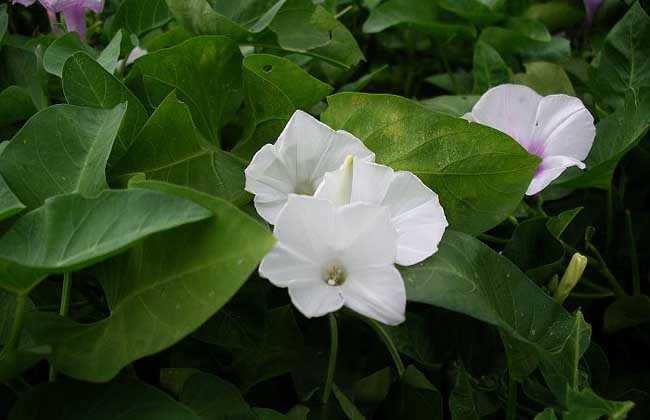
When water spinach is grown using soilless cultivation techniques, with clean production practices and the application of organic fertilizer, the amount of pesticides used can be reduced. This can improve the vegetable growing environment, overcome soil continuous cropping obstacles, and save production costs. Moreover, the vegetables grow quickly, yields are high, and product quality is good. It is a pollution-free vegetable and is very popular in market sales, meeting the requirements of current ecological agriculture development. Let us take a look at the soilless cultivation techniques for water spinach!
Cultivation System for Water Spinach
1. Building cultivation troughs: The cultivation troughs are 25-30 cm high and 50 cm wide, with a trough spacing of 70 cm, running north-south, higher in the north and lower in the south. The brick gaps can be bonded with cement mortar, or filled flat with mud (lay 1 layer of old plastic film on the bottom of the trough).
2. Cultivation substrate: Mix mushroom residue and furnace slag at a ratio of 1:1-1.5. To 1 cubic meter of mixed substrate, add 10 kg of disinfected expanded chicken manure and 2 kg of ternary compound fertilizer. Where conditions permit, fine sand, peat, vermiculite, and organic fertilizer can also be mixed at a ratio of 2:1:1:2 to make a composite substrate. Chicken manure and sheep manure are preferred for the organic fertilizer.
3. Filling the troughs: Spread sand in the troughs to a thickness of about 5 cm. Put the mixed substrate into the prepared troughs, level it, and water the substrate thoroughly with a large amount of water. After the water has completely drained down, cover with plastic film for 10-15 days to allow the fertilizer to fully decompose.
Sowing and Seedling Raising of Water Spinach
1. Seed soaking and sprouting: Before sowing water spinach seeds, soak them in hot water at 50-60°C for 30 minutes, then soak in clean water for 24 hours. After soaking, remove and wash them, then sprout them at 30°C. During the sprouting period, rinse once a day with warm water. After about 5-7 days, the seeds can be sown once they show white sprouts.
2. Preparation of plug trays and substrate: For water spinach seedling raising, plug trays with 72 or 128 cells are generally used. Lightweight substrates such as peat, vermiculite, or perlite should be used. These substrates have low bulk density and good water retention and aeration. When using lightweight substrates for seedling raising, the general substrate mixing ratio is peat:vermiculite:decomposed organic fertilizer = 2:1:1. The substrate must be disinfected to kill insects and diseases in order to cultivate disease-free strong seedlings. Generally, for 1 cubic meter of substrate, the dosage is 150 g each of 50% carbendazim wettable powder and phoxim emulsifiable concentrate.
3. Filling trays with substrate and sowing: When sowing, first fill the plug trays with seedling substrate, scrape off excess substrate, and water the substrate thoroughly. After the water drains down, stack 2-3 empty plug trays of the same specification and press out the sowing holes. After sowing, cover with 1 layer of vermiculite, cover with plastic film to retain moisture. After emergence, remove the cover promptly to allow ventilation and light.
4. Seedbed management: Maintain the temperature at around 25°C during the day and above 10°C at night. Water management is the key to the success of seedling raising. Throughout the seedling raising period, the seedling substrate should always be kept in a moist state. When the seedlings are 5-7 cm tall, spray 1 application of foliar fertilizer, commonly at a concentration of 0.2% urea or monopotassium phosphate. When the seedlings grow to 10-15 cm, they can be planted out.
Soilless Cultivation of Water Spinach
1. Planting out: The plant and row spacing for water spinach is about 15 cm × 15 cm. Planting out is generally carried out in the afternoon. Before planting, water thoroughly first. After the water drains down, plant the seedlings into the substrate, burying 2-3 nodes appropriately deep. With substrate cultivation, there is almost no transplanting shock, and normal growth begins very quickly.
2. Fertilizer and water management: After water spinach is planted out, it can be harvested continuously multiple times. In cultivation, sufficient base fertilizer should be applied, and after each harvest, timely topdressing should be carried out to achieve high yields. Apply 2-4 kg of urea as topdressing. Water spinach likes moisture and has a relatively high water requirement, so it should be watered frequently to always maintain a moist state. Generally, during the harvest period, water once every 4-5 days, and water thoroughly each time.
3. Pest and disease control: In organic ecological soilless cultivation, pests and diseases of water spinach are relatively mild. The main ones include damping-off, stem rot, white rust, whitefly, snails, cabbage caterpillars, red spider mites, locusts, aphids, bean moths, etc. Generally, insect-proof nets are used to prevent the spread of pests and reduce pesticide use.