How to prevent and control pests and diseases of water spinach? Detailed explanation of technical key points
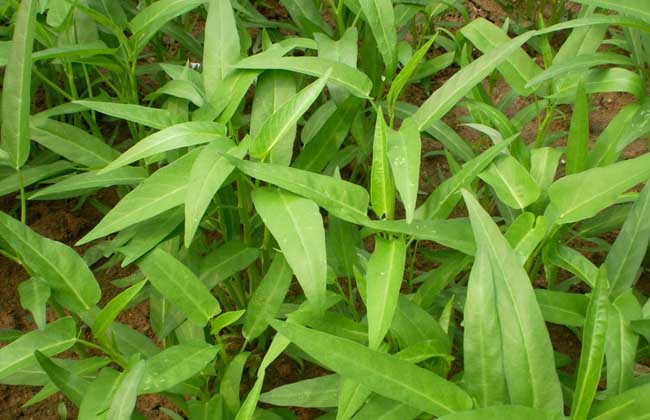
Water spinach, originally named water convolvulus, also known as rattan vine spinach, water convolvulus, tongxin cai, wuxin cai, weng cai, hollow-tube vegetable, bamboo-leaf vegetable, jiejie cai, etc., prefers high-temperature and humid environments, is suited to moist soil, likes sufficient light, has no strict requirements for soil conditions and likes fertilizer and water. It produces white trumpet-shaped flowers and its stem center is hollow, hence it is called “hollow vegetable”. It is commonly cultivated as a vegetable in rural areas of southern China. Now let us take a look at the pest and disease control techniques for water spinach!
Water spinach brown spot disease
[Damage symptoms]Lesions on leaves are nearly circular, sometimes restricted by large leaf veins and becoming semicircular or irregular, with lesion diameter reaching 5-10 mm. The lesions are brown, dark brown, or reddish brown, varying by variety; usually the lesion edges are darker and the center is lighter. Most lesions have a small nested spot in the center, with a lighter center and darker edge. Several lesions can merge into larger patches. After lesions develop along the main vein, they can cause leaf distortion. When dry, the center of the lesion cracks. When humid, black mold-like material forms on both sides of the lesion.
[Causal pathogen]The pathogen overwinters in diseased residues. The diseased residues produce conidia, which spread with wind and rain and cause primary infection. After the plant becomes diseased, conidia are produced on the lesions and continue to spread and infect. Multiple secondary infections can occur in one growing season.
[Agricultural control]① Reasonable fertilizer and water: fertilize reasonably according to variety characteristics, apply more decomposed organic fertilizer, pay attention to the combination of nitrogen, phosphorus, and potassium to prevent nutrient deficiency in the plants, water reasonably, do not over-irrigate, drain promptly after rain, and reduce humidity. ② Remove old leaves: implement crop rotation for more than 2 years in severely diseased fields, and promptly remove diseased old leaves at the base of the plants. ③ Clean the field promptly: after harvest, promptly remove diseased residues, deep plow and sun the soil, and remove field weeds.
[Chemical control]In the early stage of disease, choose to spray 25% triadimefon wettable powder 1200-1500 times solution, 50% iprodione wettable powder 1000-1300 times solution, 70% mancozeb wettable powder 600 times solution, 65% zineb 500-600 times solution, 70% thiophanate-methyl wettable powder 600 times solution, or 75% chlorothalonil wettable powder 500 times solution, etc. Spray once every 7-10 days, for 3-4 applications.
Water spinach white rust
[Damage symptoms]Water spinach white rust mainly damages leaves. When the disease occurs, pale yellow-green to yellow spots appear on the upper side of the leaves, later turning brown. The lesions are relatively large. On the underside of the leaves, raised blister-like spots appear, nearly round, oval, or irregular. When leaves are severely damaged, the lesions are dense, the diseased leaves are deformed, and the leaves fall off. The stems swell and deform, becoming 1-2 times thicker.
[Disease conditions]The disease is most likely to occur at temperatures of 20-35°C.
[Chemical control]Use 35% metalaxyl seed dressing agent at 0.3% of seed weight. In the early stage of disease, spray 58% metalaxyl-mancozeb wettable powder 500 times solution or 40% fosetyl-aluminum (Shuangyiling) wettable powder 250-300 times solution, once every 7-10 days, for 2-3 consecutive treatments.
[Agricultural control]Use disease-free seeds and rotate crops for 2-3 years for good disease control effect. Pay attention to field drainage and ventilation, and arrange reasonable spacing.
Water spinach anthracnose
[Damage symptoms]Water spinach anthracnose mainly damages leaves and stems, and seedlings are prone to death when infected. When leaves are infected, the lesions are nearly circular, dark brown, with slightly concentric rings on the surface and densely scattered small black dots. The lesions expand and merge, and the leaves turn yellow and dry up. Lesions on stems are nearly oval and slightly sunken inward.
[Disease conditions]High temperature and rainy weather, excessive nitrogen fertilizer application, overly vigorous growth, and overlapping stems and leaves that block light make the disease prone to occur.
[Control methods]In the seedling bed stage and the early stage of disease in adult plants, spray 70% carbendazim wettable powder 800-1000 times solution or 50% thiram powder 600-800 times solution, 40% carbendazim-sulfur suspension concentrate 500-600 times solution, 77% copper hydroxide 600 times solution, 10% difenoconazole water-dispersible granules (Score) 50-75 g/mu, 80% Bordeaux mixture wettable liquid (Bibei) 300-500 times solution, 25% bromothalonil wettable powder (Tanteling) 2000-2500 times solution, once every 10 days, for 2-3 consecutive times, and stop application 5 days before harvest.
Water spinach zonate leaf spot
[Damage symptoms]Water spinach zonate leaf spot mainly damages leaves. Initially, small brown spots appear on the leaves. After expanding, they become circular, oval, or irregular, reddish brown or light brown. The lesions are relatively large and have obvious concentric rings. Later, small black dots appear on the zonate lesions.
[Disease conditions]It is prone to occur in rainy seasons and in densely growing, closed-canopy fields.
[Chemical control]In the early stage of disease, spray 1:0.5:160-200 Bordeaux mixture or 45% amobam aqueous solution 1000 times solution, or 75% chlorothalonil wettable powder 600-700 times solution, or 58% metalaxyl-mancozeb wettable powder 500 times solution, 50% iminoctadine wettable powder (Baoliduo) 35-75 g/mu, 70% propineb wettable powder (Antracol) 150-220 g/mu, 10% difenoconazole water-dispersible granules (Score) 35-50 g/mu, once every 7-10 days, for 2-3 consecutive times.
[Agricultural control]In winter, remove fallen leaves and diseased residues from the ground, and combine with deep plowing to accelerate residue decomposition. Crop rotation for 1-2 years can be implemented.
Water spinach leaf roller
[Damage characteristics]Newly hatched larvae mostly feed on the leaf mesophyll inside the heart leaves and tender leaf sheaths of rice seedlings, as well as in old larval rolls and the tips of rolled leaves damaged by rice thrips, appearing as small white dots. Second-instar larvae feed on the mesophyll and leave the epidermis, forming short white strips, and spin silk to roll the leaf tip 1.5-5 cm longitudinally. Third-instar larvae feed on the mesophyll, forming white patches, and roll the leaves into larval rolls 10-15 cm long. Larvae of the fourth instar and above voraciously feed on leaves, eating the mesophyll and leaving the epidermis. One larva can eat 6-10 rice leaves.
[Agricultural control]① Use bundles of grass or piled grass to trap overwintering mature larvae. ② In autumn and winter, promptly capture and kill overwintering larvae in fallen leaves, cracks, or near buildings; in summer, promptly capture and kill newly hatched larvae, and remove damaged leaves when necessary. ③ Install blacklight lamps to trap and kill adults.
[Chemical control]In the three-generation occurrence area around Shandong and the four-generation occurrence area in Jiangsu and Zhejiang, attention should be paid to controlling the 3rd and 4th generations. Before the end of the 2nd instar and before the larvae roll the leaves, spray 80% dichlorvos emulsifiable concentrate 1000 times solution or 60% dimethoate-dichlorvos emulsifiable concentrate 1500 times solution, 90% trichlorfon crystal 1000 times solution, 25% phosmet emulsifiable concentrate 1000 times solution, 5% fipronil suspension concentrate 1500 times solution, 50% phoxim emulsifiable concentrate 1000 times solution.
Water spinach aphids
[Damage characteristics]Aphids have very strong reproductive capacity and develop quickly. In Guangdong, they can reproduce 30-40 generations per year. Warm and dry conditions are favorable for aphid reproduction. Adults and nymphs gather on the underside of leaves, flower stalks, or tender stems, suck pepper sap, and secrete honeydew. Damaged leaves turn yellow and curl. Damaged tender stems and flower stalks become curved and deformed, affecting flowering and fruiting. Plant growth is inhibited, and the plant may even wilt and die. Aphids can also transmit multiple viral diseases, worsening the occurrence of viral diseases. Aphids have a strong positive taxis to yellow and orange, and a negative taxis to silver-gray.
[Agricultural control]① Clean the field: remove weeds in and around the field to reduce insect sources. ② Silver-gray film mulching cultivation: use the negative taxis of aphids to silver-gray to achieve the purpose of avoiding aphids and preventing disease. ③ Yellow trapping: use the positive taxis of aphids to yellow, set yellow sticky traps in the field to trap and kill winged aphids. The yellow board is 1 m × 0.2 m, the yellow part is coated with machine oil, inserted between pepper rows, 60 cm above the plants, with 30 boards per mu.
[Chemical control]In the initial stage, use 10% imidacloprid wettable powder 1000 times solution, or 50% pirimicarb wettable powder 1000 times solution, or 10% duolaibao emulsion 1000 times solution, or 10% chlorfenapyr 3000 times solution, or 50.5% nongdile 1500 times solution, or 47% chlorpyrifos emulsion 1000 times solution, etc., used alternately, once every 7-10 days, for 2-3 consecutive times.
Water spinach cabbage worm
[Damage characteristics]Young cabbage worms feed on the mesophyll on the underside of leaves, leaving the epidermis and forming small sunken spots. After the 3rd instar, they eat the leaves into holes or notches. In severe cases, only leaf veins and petioles remain. At the same time, they excrete large amounts of feces, contaminating the leaves and heart of the vegetable, degrading vegetable quality, and the insect wounds also provide an invasion route for soft rot bacteria, causing soft rot in the plants and accelerating the death of the whole plant.
[Agricultural control]① Clean the field: after harvest, promptly remove residual plants and fallen leaves in the field and burn them in a centralized manner to reduce pest density. ② Manual capture: capturing larvae, pupae, and adults is easy to do, and adults can be captured effectively with nets. ③ Protect and utilize natural enemy insects: this method can both prevent pests and protect the environment, reducing pesticide pollution.
[Chemical control]Use 10 billion viable spores/g Bacillus thuringiensis wettable powder, 100-300 g per mu mixed with 50-60 kg water for spraying, or use 10 billion viable spores/g Qingchongjun powder 1000 times solution for spraying, or use 10 billion viable spores/g Serratia marcescens wettable powder diluted with water to 1000-1500 times solution for spraying. Choose any one of the above agents and begin spraying at the initial appearance of the pest, once every 7-10 days, for 2-3 consecutive sprays. The above biological pesticides can also control other butterfly and moth pests on vegetables. However, it must be noted that vegetable fields near mulberry orchards cannot use the above biological pesticides, nor can they be mixed with chemical microbial agents.
Water spinach diamondback moth
[Morphological characteristics]Adult body length 6-7 mm, wingspan 12-16 mm, forewings and hindwings slender, fringe hairs very long, the margins of the forewings and hindwings yellow-white with three curved wavy lines, forming 3 connected diamond-shaped spots when the wings are closed. The fringe hairs on the forewing margin are long and upturned like a chicken tail. Antennae filiform, brown with white markings, extending forward at rest. Females are larger than males, with the abdominal tip cylindrical; males have a conical abdominal tip, with the claspers slightly open. Eggs oval, slightly flattened, about 0.5 mm long and about 0.3 mm wide, pale yellow when newly laid, glossy, with a smooth eggshell surface. Newly hatched larvae dark brown, later turning green. Mature larvae 10-12 mm long, spindle-shaped, with sparse long black setae on the body. Head yellow-brown; the pronotum has two “U”-shaped markings composed of small light brown hairless dots. The anal prolegs extend backward beyond the end of the abdomen; the crochets of the abdominal prolegs are in a single row with a missing ring.
[Agricultural control]Reasonable layout, try to avoid year-round continuous cropping of cruciferous vegetables over a large area, so as to prevent the pest source from recurring. Strengthen management of seedling fields and control promptly. After harvest, promptly handle residual plants and fallen leaves to eliminate a large number of pest sources.
[Physical control]Diamondback moth has phototaxis. During the pest occurrence period, blacklight lamps can be placed to trap and kill diamondback moths, reducing pest sources.
[Biological control]Use bacterial insecticides, such as BT emulsion 600 times solution, which can infect and kill diamondback moth larvae.
[Chemical control]Use diflubenzuron 700 times solution, 25% kuishaling 2000 times solution, 24% wanling 1000 times solution, 5% cascade 2000 times solution for control. Pay attention to alternate use or mixed use to slow the development of pesticide resistance.
Water spinach red spider mite
[Damage characteristics]Adults, nymphs, and eggs overwinter under host leaves, in soil cracks, or on nearby weeds. Temperature and humidity are closely related to the rise and fall of red spider mite populations, with temperature having the greatest effect. When the temperature is around 28°C and humidity is 35-55%, it is most favorable for red spider mite occurrence, but when the temperature is above 34°C, red spider mites stop reproducing, and below 20°C, reproduction is inhibited. Red spider mites have parthenogenetic habits, and unfertilized eggs hatch into males. When eggs hatch, the eggshell splits and the larvae crawl out, first resting on the leaves, then entering the first-instar stage after molting. Larvae and early nymphs are less active, while late nymphs are active and voracious, with a tendency to move toward tender parts. The mites generally climb from the lower part of the plant upward, damaging as they move upward.
[Control methods]For red spider mites, spraying must be done early, that is, at the initial stage of localized occurrence, immediately use a sprayer to apply control. Available agents include 73% propargite emulsifiable concentrate 3000 times solution and 20% synergistic pyridaben 2500-3000 times solution.
Water spinach leafminer
[Damage characteristics]Larvae burrow under the epidermis of host leaves, winding through and feeding on green tissue, creating irregular gray-white linear tunnels. When damage is severe, almost all leaf tissue is damaged, and the leaves are full of tunnels, especially the leaves at the base of the plant, which may even wilt and die. Larvae can also mine tender pods and flower stalks. Adults can also suck plant sap, causing small white spots at the feeding sites.
[Control methods]① Irrigate at appropriate times, remove weeds, eliminate overwintering and oversummering pest sources, and reduce the pest population base. ② Grasp the peak emergence period of adults, spray promptly to control adults, and prevent adults from laying eggs. Adults mainly lay eggs on the underside of leaves, so spray should be applied to the underside of leaves. Or spray to control larvae when damage first appears. For larval control, spray 2-3 consecutive times. Pesticides can include 40% dimethoate emulsifiable concentrate 1000 times solution, 40% omethoate emulsifiable concentrate 1000-2000 times solution, 50% dichlorvos emulsifiable concentrate 800 times solution, 50% naled emulsifiable concentrate 1500 times solution, 40% diazinon emulsifiable concentrate 1000-1500 times solution.