When to Plant Water Spinach? A Detailed Guide to the Best Planting Time
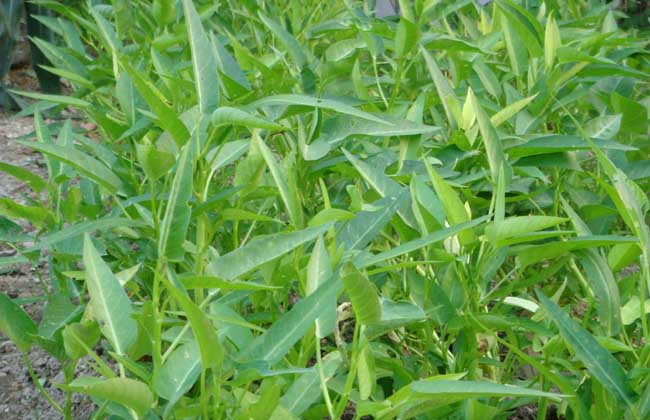
Water spinach is a vegetable native to tropical rainy regions. It is grown in all regions of our country, is rich in nutrients, and tastes delicious. It is a common dish in the kitchen and has very high market prospects for cultivation. Now let us take a look at when the planting time for water spinach is!
Water Spinach Planting Time
Water spinach is usually planted from April to July each year. It likes sufficient light, but is also fairly adaptable to dense planting. It is not strict about soil conditions, but because it likes fertilizer and water, soil that is relatively heavy and has strong water and fertilizer retention is still best. The leaf tips and shoots grow in large amounts and rapidly, so it needs a large amount of fertilizer, has strong fertilizer tolerance, and has an especially large demand for nitrogen fertilizer.
Water Spinach Growing Environment
Water spinach likes a high-temperature and humid environment. Seed germination requires above 15°C. In the initial stage of axillary bud sprouting of the seed vines, the temperature must be kept above 30°C so that sprouting is rapid and uniform. The suitable temperature for vine and leaf growth is 25-30°C. When the temperature is higher, vine and leaf growth is vigorous and the harvesting interval is shorter. It can tolerate high temperatures of 35-40°C, and below 15°C vine and leaf growth is slow.
Water Spinach Cultivation Techniques
1. Land preparation and fertilization: Before sowing water spinach, the soil needs to be deeply plowed. Apply 2500-3000 kg of decomposed organic fertilizer or 1500-2000 kg of human manure and urine, and 50-100 kg of plant ash per mu. After mixing evenly with the soil, rake it level and fine.
2. Seed treatment: Before sowing water spinach, first treat the seeds, that is, soak them in warm water at 50-60°C for 30 minutes, then soak the seeds in clean water for 20-24 hours. After removing and washing them, place them at about 25°C to germinate. During germination, keep them moist and rinse the seeds with clean water once a day. After the seed coat breaks and a white point is exposed, they can be sown. The seeding rate is 6-10 kg per mu.
3. Sowing method: Water spinach sowing generally uses drilling in dense planting, with a row spacing of 33 cm, and soil is covered after sowing. Broadcasting or hole sowing can also be used.
4. Field management: Water spinach is a crop harvested multiple times, so in addition to applying sufficient base fertilizer, topdressing must be carried out several times in stages to achieve high yield. During the seedling stage, 10-15% dilute human manure and urine can be used for drenching, with an amount of 1000-1500 kg per mu. When the seedlings have 3-4 true leaves, apply a mixture of 15-20 kg of compound fertilizer and 2-4 kg of urea. During the harvest period, apply 5-8 kg of compound fertilizer per mu as topdressing after each harvest. Water spinach has a relatively large water requirement, so it should be watered frequently to keep the soil surface moist. During the growth period, intertillage and weeding should be carried out in time. After the rows close, weeding and intertillage are not necessary.
5. Timely harvesting: Generally, 35-45 days after sowing water spinach, it can be harvested when the plants grow to 35 cm tall. If harvesting all at once, it can be harvested and marketed in one go when the plant height is 20-35 cm. If harvesting multiple times, thinning can be done when the plant height is 12-15 cm, and the thinned seedlings can be marketed. When the plant height is 18-21 cm, the seedlings can be pulled and marketed along with final thinning, and the remaining seedlings can be harvested and marketed multiple times. When picking water spinach, pinching it off with the hand is more suitable.