How to Grow Welsh Onions? A Detailed Video Tutorial on Cultivation Techniques
The Welsh onion (Allium fistulosum) originated in Siberia and has a long history of cultivation in China. Its leaves are round and hollow, and the bases of the leaf sheaths wrap together to form a "false stem." Both the young leaves and the white stalk can be eaten. Because of its strong adaptability, high yield and good returns, it is grown on a large scale across the country. Now let's take a look at the Welsh onion cultivation techniques video!
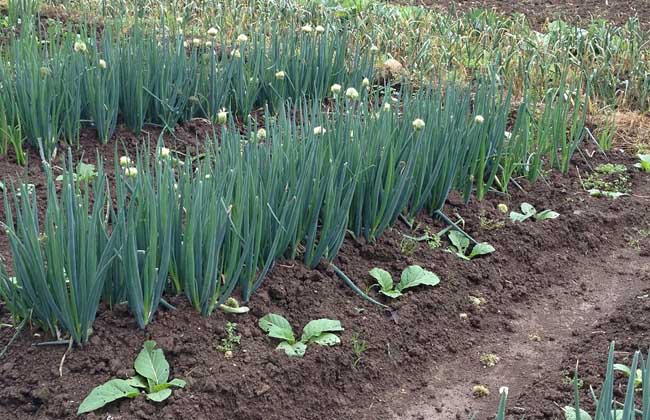
Seedling-Raising Techniques for Welsh Onions
1. Sowing time: According to different requirements for the product, it can be sown in all four seasons. The best sowing period for high-yield Welsh onion cultivation is autumn sowing (when the average temperature per ten-day period is stable at 16.5°C-17°C, which is exactly early October). The climatic conditions differ between the north and south of the country, so the sowing time also varies. The best time is determined by the size of the seedlings before overwintering: if too large, they easily pass through vernalization and bolt the following spring; if too small, they cannot overwinter safely. The standard for pre-winter seedlings is to grow to two true leaves and one heart leaf. Spring sowing is around Qingming Festival.
2. Preparing the seedbed: The seedbed should be chosen on flat, fertile land close to a water source with convenient drainage. Before making the beds, the seedling land should be shallow-plowed and finely harrowed so that the top is loose and the bottom is firm. Apply 50 kg of compound fertilizer per mu as base fertilizer, and at the same time apply 2.5 kg of carbofuran per mu and 0.5 kg of carbendazim powder to kill underground pests and pathogens (very important). The bed is 20-25 m long, 1 m wide inside, with a bed ridge of 30 cm. After trampling the bed ridge firm, use an iron rake to repeatedly level the inside of the bed until there are no clods.
3. Sowing: Before sowing, first take out the covering soil from the bed, then irrigate the bed with plenty of water (the amount of water must be large). After the water has seeped away, mix the seeds with sandy soil and broadcast them twice in the bed (spread evenly), and finally cover with soil. The covering soil thickness is 1.5 cm-2 cm, and the covering soil must be even. Seed quantity per mu for the seedling field: 1.3 kg, which can transplant to 3-5 mu of Welsh onions. On the morning of the second day after sowing, use an iron rake to lightly rake the bed surface once to prevent uneven soil covering.
Seedling-Stage Management of Welsh Onions
1. Autumn-sown seeds emerge after 7 days, and spring-sown seeds emerge after 8-12 days. Before the cotyledons straighten, control watering to avoid crusting and smothering the seedlings. If rain occurs during this period and the soil crusts, use an iron rake to lightly scratch the surface. The first watering should wait until the cotyledons straighten. Weed (herbicides cannot be used). When the seedlings grow to about 2 cm, roughly when they straighten, apply pesticide promptly to prevent fungal diseases. Generally spray once every 5 days (mainly using pesticides for treating root rot and seedling rot, viral diseases and gray mold). After the seedlings grow to more than 5 cm, apply urea in good time according to soil fertility to promote seedling growth.
2. Before winter, the main task is to cultivate strong seedlings. The standard: plant height 8-10 cm, true leaves reaching two leaves and one heart leaf, leaves green and robust, base diameter not exceeding 0.3 cm. During this period, water 1-3 times according to soil moisture. Before freezing, water with freezing water, and spread a layer of farmyard manure, plant ash or fine pen manure, with a thickness such that the leaf sheaths are just not visible above the ground.
3. After the Beginning of Spring for autumn-sown seedlings, the roots, hearts and leaves of the onion seedlings begin to sprout. Rake the bed surface all over once to remove debris, so as to prevent smothering the seedlings, retain moisture, increase temperature and promote early growth. In early March, water with green-up water, but not too early, so as to avoid low temperatures affecting the early growth of the onion seedlings. Together with watering, apply 10 kg of urea per mu to promote the seedlings. From late March to early April, when the seedlings are about 30 cm tall, thin them 1-2 times, thinning where dense and filling in where sparse, maintaining a seedling spacing of 3-5 cm. From late April to early May, when the seedlings are about 50 cm tall, this is the vigorous growth period of the onion seedlings, so fertilizer and water management must be done well. Urea, diammonium and compound fertilizer can be applied in stages, at least twice, at most three times, 10-15 kg each time, and combined with spraying, apply compound micro-fertilizer 2-3 times. Also apply pesticide promptly to prevent fungal diseases, with special attention to controlling onion maggots, onion thrips and leaf miners. Stop watering 15 days before transplanting and do seedling hardening to promote steady growth.
Transplanting and Field Planting of Welsh Onions
1. Choose a plot with high terrain, good drainage and fertile soil, preferably oriented north-south. Apply sufficient base fertilizer. The base fertilizer can be 5000 kg of farmyard manure per mu, 100 kg of phosphate fertilizer, 10 kg of urea, 15 kg of potassium fertilizer, or 30 kg of diammonium, or 50 kg of compound fertilizer. Then plow and sun the soil to eliminate sources of disease and weeds and improve fertility. Finally, open trenches with a trench spacing of 80 cm and a trench depth and width of about 25 cm each.
2. Transplant early at the right time, generally from mid-June to early July. Water once two days before lifting the seedlings. When lifting the seedlings, dig deep to get the roots, or lift them in handfuls, shake off the soil, and lay them flat. Discard damaged and diseased seedlings. Divide them into three grades according to size, height and thickness. When seedlings are sufficient, generally do not use grade-three seedlings. Lift, grade and transplant the seedlings one after another so that the onion seedlings remain fresh when transplanted. The transplanting spacing is preferably 3-4 cm.
3. Field planting methods
1) Dry planting method: After opening the trench, arrange the onion seedlings in order along one side of the trench wall at a certain spacing, with the onion leaves lying flat against the trench wall, then use a hoe to cover with soil. The soil depth should preferably not bury the heart leaf. After planting, tread firm. Or use a shovel to plant at a certain distance, then tread firm. After planting, water once immediately, preferably without delay.
2) Water planting method: Place the selected seedlings on the back ridge in one-meter handfuls, arranged evenly. Water the trench first. After the water seeps down, every 8-10 m one person squats on the back ridge to insert them. When inserting, use a rice-planting stick made from a peeled tree branch with a "V"-shaped fork at the top. Mostly hold the seedlings with the left hand and the rice-planting stick with the right hand, use the fork to press against the fibrous roots of the onion seedlings, and while the soil at the bottom of the trench is wet and soft, insert the onion seedlings straight down. Seedlings of different grades should be planted in different plots or in separate sections, and must not be placed side by side with tall and short mixed together, so as to facilitate management.
Cultivation Management of Welsh Onions
1. Timely watering: After transplanting, it is the hot season with high temperature and frequent rain, so generally do not water. Continuous rain will cause root rot and seedling death, so pay attention to timely drainage. If high temperature and drought occur, water to lower the temperature and promote growth.
2. Earthing up and fertilizing: As the white stalk continues to elongate, earth up and topdress in time. The final ridge height after earthing up is 70-80 cm. When earthing up, do not bury the heart leaf. Topdressing and earthing up are done at the same time. The first time should start from the Beginning of Autumn: apply 5000 kg of farmyard manure per mu and 10-15 kg of urea, then water. The second topdressing is done at the End of Heat: apply 15-20 kg of urea per mu and 50 kg of cake fertilizer. The third topdressing is at White Dew, when the white stalk enters the peak swelling period and fertilizer and water management are key. Along the trench, apply 1000 kg of human excrement and urine, 15 kg of urea, 50 kg of phosphate fertilizer and 5-10 kg of potassium fertilizer, then water. The fourth topdressing is at the Autumn Equinox: apply 10-15 kg of urea per mu, earth up and water. Around White Dew, spray compound micro-fertilizer, generally once every 5-7 days, for 2-3 consecutive sprays, with an obvious yield-increasing effect.
3. Pest and disease control: The main pests and diseases of Welsh onions include leaf miners, onion thrips, onion maggots, purple blotch and downy mildew. For specific control methods, please read "Welsh Onion Pest and Disease Control Techniques." The editor will not repeat them here.
4. Harvest and storage: Around the Beginning of Winter, the onions have grown sufficiently and can be dug up. After digging, make bundles of 15 kg and place them in a cool, ventilated place, with 5-6 bundles per row and a 50 cm passage left between rows. If hot weather occurs, untie the bundles and air them in the sun. During storage they fear heat but not cold, and rain must be prevented.