How to prevent and control pests and diseases of Welsh onions? A detailed practical guide
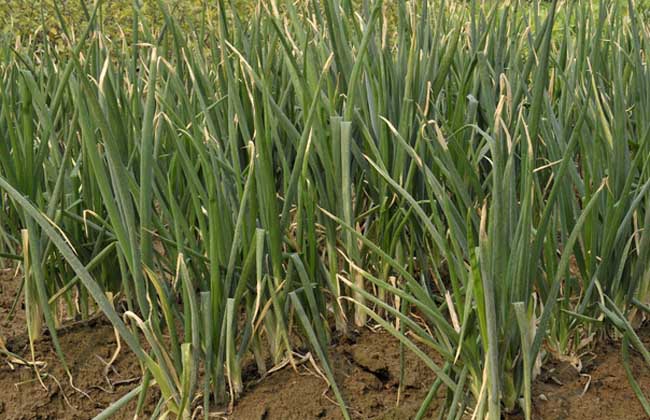
The Welsh onion is a perennial herbaceous plant with cylindrical, hollow leaves that are fragile and easily broken, and green in color. In East Asian countries and Chinese communities everywhere, the Welsh onion is often eaten as a very common spice, seasoning, or vegetable, and it plays an important role in Eastern cooking. Below, the editor will introduce the pest and disease control techniques for Welsh onions!
Welsh onion brown spot disease
[Disease characteristics] Welsh onion brown spot disease, also known as leaf tip yellow wilt disease, mainly harms the leaves. Infected leaves tend to start from the upper part, initially showing water-soaked yellow-brown spots, which then develop into spindle-shaped lesions, generally 10-30 mm long and 3-6 mm wide. The center of the lesion is grayish brown, the edge is brown, and small black dots, namely ascocarps, easily form on the lesion surface. In severe cases, several large lesions merge, causing localized drying and death of the leaves.
[Agricultural control] ① Choose heat-tolerant varieties such as Gaojiao Bai, Sanye Qi, Jitui Cong, and Zhangqiu Welsh onion. ② Strengthen management, drain promptly after rain, prevent the onion field from becoming too wet, improve root vigor, and enhance disease resistance.
[Chemical control] In the early stage of the disease, spray 50% Shukeling wettable powder or Puhaiyin wettable powder at 1000 times dilution, or use 50% carbendazim wettable powder at 800 times dilution or 70% thiophanate-methyl wettable powder at 1000 times dilution, plus 75% chlorothalonil wettable powder at 800 times dilution, once every 7-10 days, spraying 2-3 times in succession.
Welsh onion soft rot
[Disease characteristics] Bacterial soft rot of Welsh onion has shown an upward trend year by year. It generally spreads first from the stem base upward. The initial infection appears as water-soaked elongated spots, followed by semi-transparent grayish-white lesions. Then the base of the leaf sheath softens and rots, causing the leaves to collapse. The lesions spread downward. When the pseudostem is infected, it initially appears water-soaked, then the interior begins to rot, giving off the foul odor characteristic of bacterial diseases.
[Agricultural control] ① Apply more organic fertilizer and cultivate strong seedlings. Transplant at the proper time, cultivate frequently, water lightly, apply more phosphorus and potassium fertilizer, and prevent excessive nitrogen fertilizer. ② Control underground pests and aboveground pests in time to reduce artificial wounds.
[Chemical control] In the early stage of the disease, choose 77% Keshade wettable powder at 500 times dilution, 72% streptomycin sulfate soluble powder at 2000 times dilution, 10 million units of Xinzhimeisu at 3000 times dilution, or 14% copper complexing agent aqueous solution at 250 times dilution. Depending on the condition, apply once every 7-10 days, for 2-3 consecutive treatments.
Welsh onion yellow dwarf disease
[Disease characteristics] Welsh onion yellow dwarf disease, also known as Welsh onion viral disease, can affect Welsh onions from the seedling stage to the mature plant stage. Diseased plants have stunted growth, diseased leaves stop growing, the leaf surface is uneven, shrunken and distorted, the leaves become slender, and the leaf tips gradually turn yellow. Yellow-white stripe spots of varying lengths or yellow-green mottling sometimes appear on the leaves. Severely diseased plants are severely dwarfed, with twisted, smaller, flattened leaves, stopped growth, reduced waxiness, and drooping yellow leaves. In severe cases, the whole plant shrivels and dies.
[Agricultural control] ① Remove field weeds before planting onions, eliminate diseased seedlings, apply fertilizer and water in a timely manner, and take care not to plant adjacent to other onion crops. ② Control aphids and thrips in time. Choose 10% Baichongwei at 800 times dilution, or 40% omethoate at 1000 times dilution, or a mixed solution of 50% methamidophos at 1000 times dilution for spraying. ③ Apply more organic fertilizer, topdress in a timely manner, and spray plant growth regulators to enhance disease resistance.
[Chemical control] In the early stage of the disease, spray 1.5% Zhibingling emulsion at 800 times dilution, or 20% virus A wettable powder at 500 times dilution, or spray Xiaoyedi emulsion at 300 times dilution plus Lüfeng Jiuwu at 500 times dilution, once every 5-7 days, for 2-3 treatments.
Welsh onion anthracnose
[Disease characteristics] It harms leaves, flower stems, and pseudostems. Initial infection on leaves appears as nearly fusiform, spindle-shaped to irregular spots, light grayish brown to brown, with many small black dots on the spots, namely the pathogen's acervuli. In severe cases, it causes the upper leaves to die. The pathogen belongs to the deuteromycete subclass, genus Colletotrichum, the fungus Colletotrichum circinans. It overwinters as stromata or acervuli or mycelium with diseased residues in the soil and on infected pseudostems, and spreads by rain splash.
[Control methods] In rainy years with long periods of continuous overcast and rain, and in poorly drained low-lying fields, the disease is more severe. Generally, 80% anthracnose Fumei wettable powder at 800 times dilution, or 70% thiophanate-methyl at 1000 times dilution, or 70% Dacotech at 600 times dilution is used for spraying in the early stage of the disease.
Onion nematode disease
[Disease characteristics] The larvae parasitize the roots of Welsh onions. In severe cases, they cause root rot, making the entire plant turn yellow and rot. Onion nematode disease is caused by: the onion stem nematode, which bores into and feeds on the underground pseudostem and rhizome; the sweet potato stem nematode, which harms the underground pseudostem and rhizome parts, causing them to swell, crack, or rot; and the root rot nematode, which harms the rhizome or pseudostem, causing root rot or a symptom of no fibrous roots in the plant.
[Control methods] Treat the soil with 30% Miral, using 3-4 kg per mu, or spray or drench the roots with 50% phoxim at 500 times dilution, both of which can effectively control the damage.
Root suffocation
[Disease characteristics] Root suffocation is one of the common diseases in vegetable seedling raising. For Welsh onions, it also commonly occurs during the mature plant stage.
[Control measures] ① Stabilize soil temperature, promote strong seedling development, improve disease resistance, and raise the seedling field temperature to above 20°C. ② Reduce field humidity. Excessive field humidity is the key factor causing root suffocation. After watering the seedling field sufficiently before sowing, water as little as possible or not at all. When necessary, water lightly and frequently, and never use flooding irrigation. On cloudy and rainy days or when field humidity is too high, plant ash or fine dry soil can be spread on the seedling field to reduce field humidity. ③ Improve soil aeration conditions. When planting Welsh onions, choose sandy loam soil as much as possible, and apply a large amount of decomposed organic fertilizer to improve soil structure, increase soil buffering capacity, and improve aeration and air permeability conditions, so as to reduce the occurrence of root suffocation.
Onion leafminer
[Damage characteristics] The leafminer is a major pest harming Welsh onion leaves. The larvae bore into the leaves and feed on the mesophyll tissue between the two epidermal layers, forming curved or tangled tunnel patterns, destroying the green tissue of the leaves and seriously affecting the growth of Welsh onions.
[Agricultural control] Remove diseased leaves and residues. During the onion growing period, if leaves bored by larvae are found, they should be taken out of the field and buried deeply. After harvest, clean up the residual plants and either compost them or burn them, which can reduce the pest source. Also plow the soil deeply so that overwintering pupae freeze to death in winter.
[Chemical control] During the peak emergence period of adults, spray 4000 times dilution of Mieshabi, or 2000 times dilution of 80% dichlorvos. During the larval damage period, spray 25% quinalphos emulsifiable concentrate at 1000 times dilution, or 20% Sushading at 1500 times dilution, 18% Shachongshuang at 600 times dilution, 7.5% rotenone-cyanide emulsifiable concentrate at 1200 times dilution, or 10% nicotine emulsifiable concentrate at 800 times dilution, all of which can achieve good control effects. When the occurrence is heavy, generally apply once every 7 days. However, stop use 15 days before Welsh onion harvest to prevent pesticide residues from exceeding the permitted standard.
Thrips
[Damage characteristics] Thrips belong to the order Thysanoptera, family Thripidae. They harm Welsh onions and other onion and garlic vegetables. The insect body is very small, and adults are good at jumping. Both nymphs and adults pierce and suck the sap of onion leaves. In severe cases, the damaged surface forms dense small gray-white spots, shortening the life of onion leaves and reducing photosynthetic capacity. Thrips occur 6-10 generations per year, causing damage from May to September, and the damage is severe in hot, dry summer weather.
[Control methods] During the occurrence period, spray 40% dimethoate emulsifiable concentrate at 600 times dilution once every 5-7 days, for 2-3 consecutive sprays, with significant control effects. Spreading old kang stove soil on the ground can also repel insects and has a topdressing effect.
Onion fly
[Damage characteristics] The onion fly, also called the chive maggot, has larvae that harm onion and garlic vegetables. In spring and autumn, it lays eggs on the pseudostem near the ground. After hatching, the larvae sneak into the base of the leaf sheath and feed on young leaves and growing points.
[Control methods] During the adult egg-laying period, spray 40% dimethoate emulsifiable concentrate at 600 times dilution or 20% fenvalerate emulsifiable concentrate at 2000 times dilution to kill adults. When planting, remove damaged onion seedlings, and soak the lower part of the pseudostem of onion seedlings not yet damaged by maggots in the above pesticides to kill any young maggots that may be lurking inside.