When is the best time to plant Welsh onion? A detailed guide to planting times
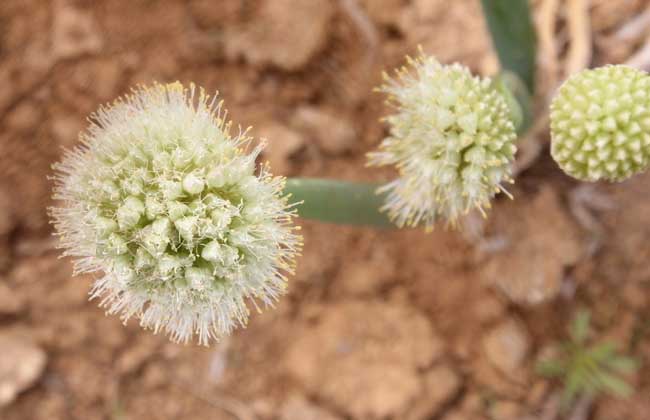
Welsh onion is a type of scallion. In northern China, Welsh onion growing areas mostly use seedling raising and transplanting, while the main production areas in the middle and lower reaches of the Yellow River mostly sow in autumn, but the seedlings must be strictly controlled to no more than 3 leaves before winter. South of the Yellow River, spring sowing is mostly used, and sowing should be done promptly when the soil temperature reaches 7°C. Let's take a look at the planting time for Welsh onion below!
Growing conditions for Welsh onion
1. Soil: Welsh onion is suitable for loam with a pH of 6.5-7.5. The seedling bed should be fertile and loose with sufficient bottom moisture. During the emergence stage, prevent surface soil crusting. Apply a topdressing once when the seedlings begin to grow rapidly. Control soil moisture 10-15 days before transplanting to prevent excessive vegetative growth and lodging.
2. Fertilizer: Welsh onion is fond of fertilizer and requires balanced application of nitrogen, phosphorus and potassium. It needs more nitrogen fertilizer in the early growth stage and more phosphorus and potassium fertilizer in the later stage. Special attention should be paid to the application of phosphorus fertilizer, because a lack of phosphorus fertilizer will lead to poor plant growth and reduced yield. At the same time, pay attention to the sulfur content in the onion field; sulfur deficiency in the soil will affect the yield increase effect.
3. Temperature: Welsh onion has strong stress resistance, being both cold-tolerant and heat-tolerant. Although temperature generally has little effect on the growth of Welsh onion, suitable temperature conditions are conducive to high quality and high yield.
4. Water: Welsh onion has few root hairs and poor ability to absorb water and nutrients. Most of its root system is distributed in the surface soil, and it likes moisture and requires relatively high soil humidity, but the root system is also afraid of waterlogging. High temperature and high humidity can easily cause root death.
5. Light: Welsh onion has moderate requirements for light intensity. Because the tubular leaves of Welsh onion can still obtain good light conditions under dense planting, strong light is not needed. Strong light has an adverse effect on the growth of Welsh onion, causing the leaf blades to age, fiber to increase, quality to decline, and even loss of edible value.
Planting time for Welsh onion
1. Autumn planting time: Sow in early September of the first year, overwinter as seedlings, transplant in early to mid-May of the second year, harvest before winter, store in cellars or overwinter in the open field, bolt and flower in spring of the third year, and collect seeds in the second season. The seedlings at transplanting time can be sold as scallions from early May to late June; they can also be planted in flat beds in clumps (bunch onions) around the Beginning of Summer, or planted as trench onions with reduced row and plant spacing to be supplied as autumn onions, or supplied as early spring ram-horn onions after overwintering.
2. Spring planting time: Sow after the soil thaws in early spring, supply as scallions before the hot summer arrives, or harvest in the same year after transplanting as dry onions or trench onions. They can also overwinter as ram-horn onions or be kept as seed plants.
3. Summer planting time: Mostly sown from late July to early August, so it is also called fu onion (summer onion). When overwintering that year, the plants are relatively large and easily complete the vernalization process, and in the following spring they sprout early and quickly bolt and flower. They generally come to market after ram-horn onions.
Planting methods for Welsh onion
1. Before transplanting, separate large and small seedlings, and remove diseased seedlings, weak seedlings, overly small seedlings and obviously curved seedlings. Plant spacing is 35-40 plants per meter, row spacing is 1 m, and about 23,000 plants are planted per mu. Avoid breaking the onion seedlings during transplanting. The transplanting depth should be such that the onion heart is not buried; too deep is not good for seedling development, and too shallow affects the length of the white stalk. When transplanting, the leaf surface should be arranged perpendicular to the planting trench, which is beneficial for dense planting and management.
2. For the transplanting tool, a garden iron rod or round wooden stick about 1.5 cm in diameter can be used. When transplanting, first make a shallow hole perpendicular to the ground, then insert the seedling, then lift it slightly upward so that the root fibers spread downward and the onion seedling remains straight. If it is bent, the stem will also be bent at harvest time, making it a substandard product.
3. Transplant on the same side of the onion trench, which is beneficial for drainage after rain.
4. After transplanting, compact the loose soil on both sides of the onion plants, then water thoroughly.