Detailed Explanation of Key Technical Points for Pea Pest and Disease Control
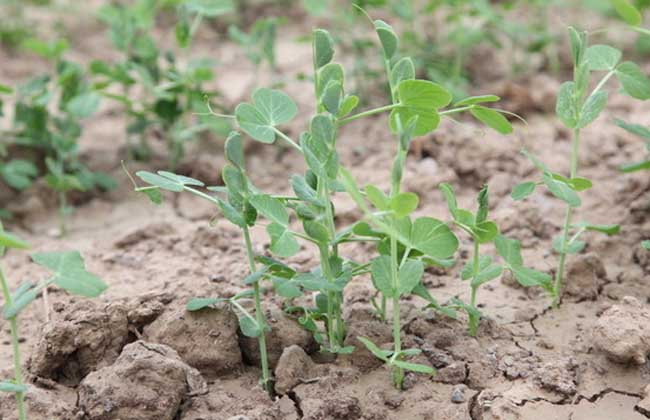
Pea is the world's fourth-largest legume crop, and China is the world's second-largest pea producer after Canada, holding a pivotal position in global pea production. The main diseases of peas include root rot, brown spot, powdery mildew, and brown streak, while the main pests include bean stem black leafminer and pea leafminer. Let's take a look at the pest and disease control techniques for peas!
Pea Root Rot
[Symptoms] The disease can occur from the seedling stage to the mature plant stage, with infections most common during the flowering period. It mainly affects the roots or the base of the stem. Leaves of affected plants first turn yellow, then gradually spread to the middle and upper parts, causing the entire plant to turn yellow and wilt. The main and lateral roots partially turn dark brown or earthy red, with root nodules and root hairs noticeably reduced. In mild cases, plants become stunted with thin stems, and leaves and branches appear wilted or withered.
[Causes] The pathogen spreads through soil, diseased plant debris, and seeds, invading through the seed coat and lateral roots, and is easily confused with Fusarium wilt. Generally, the disease is more severe in dry years.
[Agricultural Control] Select disease-resistant varieties, such as Gansu's Gongjingxuan, Ma Pea, Xiaodou 60, Xiaodou 704, and others.
[Seed Treatment with Fungicide] Treating seeds with 20% triadimefon emulsifiable concentrate at 0.25% of seed weight, or with 75% chlorothalonil wettable powder at 0.2% of seed weight, both have certain effects.
Pea Brown Spot
[Symptoms] It mainly affects leaves, stems, and pods. Infected leaves show irregular light purple spots. Under high temperature and high humidity conditions, the lesions spread rapidly, covering the entire leaf. Later, the diseased leaves turn yellow, become distorted, and die. Some show dark brown irregular concentric ring spots, with small black dots produced in the necrotic center. Causes: The pathogen mainly overwinters on seeds and spreads through wind and rain. Early sowing or exposure to low-temperature cold damage, or heavy clay soil with high humidity, or excessive nitrogen fertilizer causing excessive plant growth, all make the disease more likely to occur.
[Agricultural Control] Practice a 2-3 year rotation with non-legume vegetables in heavily infected fields. At the same time, disinfect seeds by pre-soaking in cold water for 4-5 hours, then soaking in warm water at 50°C for 5 minutes, then cooling, drying, and sowing. Plant at appropriate density and apply more potassium fertilizer.
[Chemical Control] At the early stage of disease, spray 50% benomyl wettable powder suspension at 800 times dilution, 70% thiophanate-methyl wettable powder at 500 times dilution, or 75% chlorothalonil wettable powder at 600 times dilution, once every 7 days, for 2-3 consecutive sprays.
Pea Powdery Mildew
[Symptoms] At the early stage, light yellow small spots appear on the leaf surface, expanding into irregular powdery patches. In severe cases, both sides of the leaves are covered with a layer of white powder, and eventually the leaves turn yellow and die. In the later stage, the powdery patches turn gray and produce many small black granules.
[Control Methods] At the early stage of disease, spray with 25% triadimefon wettable powder at 2000-3000 times dilution, or 70% thiophanate-methyl wettable powder at 1000 times dilution, or 50% carbendazim wettable powder at 500 times dilution, or 0.2-0.3 degrees Baumé lime sulfur mixture. Spray once every 10-20 days, for 2-3 consecutive sprays.
Pea Brown Streak
[Symptoms] It mainly affects leaves, stems, and pods. Infected leaves show irregular light purple spots. Under high temperature and high humidity conditions, the lesions spread rapidly, covering the entire leaf. Later, the diseased leaves turn yellow, become distorted, and die. Some show dark brown irregular concentric ring spots, with small black dots produced in the necrotic center. Causes: The pathogen mainly overwinters on seeds and spreads through wind and rain. Early sowing or exposure to low-temperature cold damage, or heavy clay soil with high humidity, or excessive nitrogen fertilizer causing excessive plant growth, all make the disease more likely to occur.
[Agricultural Control] It is best to practice a rotation of more than 3 years with non-legume crops, and disinfect seeds by soaking in warm water for 4-5 hours, then transferring to warm water at 55°C for 5 minutes, then placing in cold water to cool, drying, and sowing. Plant at appropriate density and apply more potassium fertilizer.
[Chemical Control] At the early stage of disease, spray 50% mixed sulfur suspension at 500 times dilution, or 75% chlorothalonil wettable powder at 600 times dilution, once every 7 days, for 2-3 consecutive sprays.
Bean Stem Black Leafminer
[Damage Symptoms] The bean stem black leafminer is a pest of the genus Melanagromyza in the family Agromyzidae of the order Diptera. It is a widely distributed boring pest that mainly damages legume crops. Newly hatched larvae bore through the tender parts of leaf veins and petioles into the main stem, feeding on the pith and xylem. If not controlled in time, it will cause severe yield reduction.
[Agricultural Control] Adjust the sowing period appropriately to avoid the peak egg-laying period of adults, thereby reducing damage.
[Chemical Control] Apply 40% dimethoate, or 40% omethoate, or 50% fenitrothion, or 45% phoxim emulsifiable concentrate, all diluted 1000 times with water, applying 75 kg of spray solution per mu.
Pea Leafminer
[Damage Symptoms] The pea leafminer belongs to the order Diptera, family Agromyzidae, also known as the rape leafminer, commonly called the arching worm, clamping worm, leaf maggot, etc. It is a polyphagous pest with more than 130 host plants. On vegetables, it mainly damages peas, broad beans, garland chrysanthemum, celery, Chinese cabbage, radish, and cabbage.
[Agricultural Control] After vegetable harvest, promptly remove residual plant debris and weeds from the field, burn or compost them, to reduce the field pest population.
[Chemical Control] Choose pesticides with short residual effects that are easily photodegraded and hydrolyzed. In addition, because the larvae damage by mining leaves, pesticide application must seize the critical period from the peak egg-laying stage to the early hatching stage. Spray with Mieshabi (21% synergized fenvalerate-malathion emulsifiable concentrate) at 800 times dilution, 2.5% deltamethrin or 20% fenvalerate at 2500 times dilution, 10% bromfenvalerate-malathion emulsifiable concentrate at 2000 times dilution, 10% fenvalerate-malathion emulsifiable concentrate at 1500 times dilution, 1.8% fenpyroximate and 1.8% Haitongsha at 3000-4000 times dilution. Spraying at the appropriate control time can achieve good control results.
Integrated Disease Control for Peas
1. Select disease-resistant varieties: Generally, thin-podded peas are more disease-resistant than thick-podded peas.
2. Practice crop rotation: Because pea root exudates affect the root nodule activity and root growth of the next year's plants, peas themselves should not be continuously cropped. They can be rotated with non-legume crops such as melons and fruits or gramineous grain crops.
3. Seed disinfection: Treat seeds with 70% thiophanate-methyl at 0.3% of seed weight, or mix 50% carbendazim wettable powder with 75% chlorothalonil wettable powder (1:1) for seed treatment, and seal for 48-72 hours before sowing.
4. Strengthen field management: Fertilize and plant at reasonable density, avoid planting in low-lying wet areas, and use raised beds or ridge cultivation. Apply more phosphorus and potassium fertilizers, avoid excessive nitrogen fertilizer, and regularly spray brassinolide to improve disease resistance.
5. Maintain field sanitation: Promptly pull out diseased plants and pest-damaged plants, as well as post-harvest straw and root stubble, and bury them deeply or burn them in a centralized manner to reduce disease and pest sources.
6. Chemical methods: For the control of bean stem black leafminer, the pea seedling stage should be the focus of control. Use 1.8% abamectin emulsifiable concentrate at 2000 times dilution, or 50% phoxim emulsifiable concentrate at 1000 times dilution, or 48% chlorpyrifos emulsifiable concentrate at 1000 times dilution for root drenching or spray control.