When is the best time to plant peas?
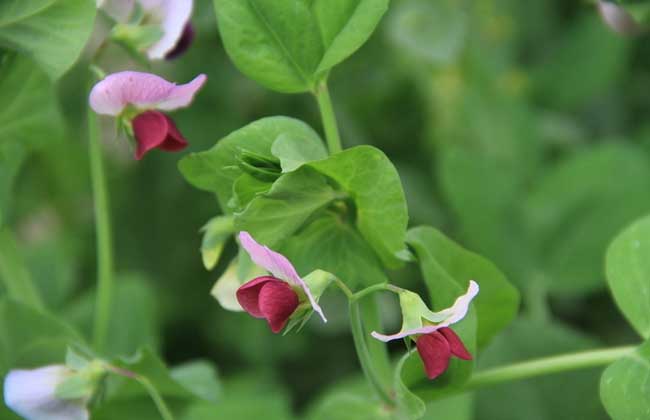
Peas are a spring-sown annual or autumn-sown biennial climbing herbaceous plant, and the world's fourth-largest legume crop, usable as both human food and animal feed. The pea planting area in China is about 1,295,900 hectares, with a total production of 10,274,300 tons. So when are peas planted? What is the planting time for peas? Today, let's learn about it together!
When to plant peas
Peas are a cool-loving, long-day crop that does not tolerate heat, so overwintering cultivation with autumn sowing and autumn harvest is common in many areas of the Yangtze River Basin; of course, in high mountain areas and northern China, spring sowing and summer harvest is generally still the practice. Since peas are not strict about day length, as long as suitable varieties are chosen, spring and autumn planting can also be done in the Yangtze River Basin region.
1. Overwintering cultivation: Overwintering cultivation is the most important planting method in the middle and lower reaches of the Yangtze River, generally using idle winter land, especially cotton fields after the cotton harvest, as the cotton stalks can serve as natural supports while also achieving the goal of increasing income and improving the soil. Overwintering cultivation is generally sown from late October to mid-November, overwintered in the open field, and harvested from April to May the following year. If sown too early, the plants grow too vigorously before winter and are prone to freezing to death when cold waves arrive in winter; if sown too late, the plant root system does not develop sufficiently before winter, and vines emerge late the following spring, resulting in low yields.
2. Spring planting: In the middle and lower reaches of the Yangtze River, sowing is done from late February to early March, and harvest occurs before high temperatures arrive; in Northeast China, spring sowing and summer harvest is practiced, generally sown from April to May, and if needed, low tunnels, plastic film and other covers can be used for earlier sowing. Spring planting has a short growing period, with low temperatures early on and high temperatures later, so cold-tolerant varieties with short growing periods should be chosen, such as Chihua Juanying and sweet crisp peas, and sowing should be done as early as possible.
3. Autumn planting: For autumn planting, early-maturing varieties should be chosen, sown in early September, and fully harvested before the cold wave arrives in late November. Autumn planting also has a short growing period, and the growing period can be extended by raising seedlings in advance in a shade house during summer and covering with plastic film in winter.
Growing habits of peas
1. Peas prefer a cool, moist climate, are cold-tolerant, and do not tolerate heat. Seedlings can withstand temperatures as low as 5°C. The suitable temperature during the growing period is 12-16°C, and the suitable temperature during the pod-setting stage is 15-20°C. Above 25°C, the fertilization rate is low, fewer pods are set, and yields are low.
2. Peas are long-day plants. Most varieties have a shorter growing period in the north than in the south. When southern varieties are moved north, they flower and set pods earlier; this is because spring sowing in the north shortens the seedling stage that would otherwise be spent overwintering in the south. Therefore, in the north, the growing period of peas is 65-75 days for early-maturing varieties, 75-100 days for mid-maturing varieties, and 100-185 days for late-maturing varieties.
3. Although peas are not strict about soil requirements and can be planted in well-drained sandy loam or newly reclaimed land, a loose, neutral (pH 6.0-7.0) soil with relatively high organic matter content is preferable, as it favors emergence and the development of rhizobia. When soil acidity is below pH 5.5, diseases are more likely to occur and the pod-setting rate decreases, so lime should be added to improve the soil. Peas have deep root systems and are slightly drought-tolerant but not moisture-tolerant. Poor drainage at sowing or during the seedling stage easily causes root rot, and drought during the flowering period leads to poor fertilization and easily results in empty or shriveled pods.
Sowing techniques for peas
1. Seed selection and sprouting: Before sowing, use a 40% salt solution to select seeds, removing floating, unfilled, or insect-damaged seeds. Before sowing, sprout the seeds; when the seeds begin to sprout, treat them at a low temperature of 0-2°C for 15 days before sowing.
2. Rhizobium seed inoculation: Inoculating pea seeds with rhizobia is an effective measure to increase yields. After rhizobium inoculation, root nodules increase, stems and leaves grow vigorously, more pods are set, and yields are high. The inoculation method is to use 10-19 grams of rhizobia per mu, add a small amount of water, mix well with the seeds, and then sow.
3. Fertilizing and sowing: Before sowing in the field, apply fully decomposed manure, compost, and a certain amount of phosphorus and potassium fertilizer. Applying phosphorus fertilizer in particular has an obvious yield-increasing effect. Peas are sown in hills, with a row spacing of 10-20 cm and an in-row plant spacing of 5 cm, sowing 2-6 seeds per hill, and covering with 5-6 cm of soil when the soil is moist. When the soil is dry, cover with slightly thicker soil. Use 10-15 kg of seed per mu.