Detailed Explanation of Key Points for Eggplant Pest and Disease Control Techniques
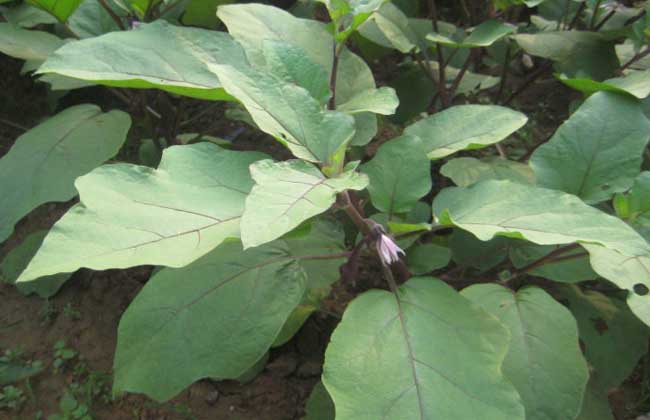
Eggplant originated in India and was introduced to China in the 4th-5th century AD. The national eggplant cultivation area is about over 3 million mu. The main diseases include eggplant Phytophthora rot, eggplant brown spot disease, damping-off, and Rhizoctonia rot, while the main pests include red spider mites and American leafminers. Let's take a look at eggplant pest and disease control techniques together below!
Eggplant Phytophthora Rot
[Damage Symptoms] Eggplant Phytophthora rot is also called "rotten eggplant" and "dropped egg." Besides damaging eggplant, it also damages tomato, cucumber, potato, etc. On eggplant, it mainly damages fruits, stems and leaves, and flowers can also be affected. On fruits, water-soaked circular or elliptical brown spots initially appear, rapidly expand and become sunken, often causing the entire fruit to rot. When humid, white loose cottony mold grows, and the internal flesh turns black and rots, easily separating from the calyx. On tender branches, water-soaked dark brown spots appear, which constrict and cause wilting and death. When seedlings are infected, damping-off symptoms occur.
[Disease Conditions] The pathogen mainly overwinters on diseased residues in the soil. The following year, it can directly infect the stems or roots of seedlings, or splash onto fruits near the ground through rainwater, causing fruit disease. Sporangia on the lesions undergo secondary infection through wind, rain, and watering. Generally in July-August, with continuous rain, stuffy hot weather, low-lying windless areas, poor drainage, and weakened growth, the disease is severe.
[Control Methods] ① Select resistant varieties: such as Beijing Nine-Leaf Eggplant, Six-Leaf Eggplant, Tianjin Damang, Liaoqie No. 3, Fengyan No. 1, Jinan Early Small Long Eggplant, etc. ② Agricultural control: Never continuous cropping with Solanaceae crops. Choose high, dry terrain with well-drained sandy loam soil. Plant on high beds or small high ridges, or wide ridges with close planting. Apply sufficient base fertilizer. Promptly remove diseased and old leaves and dispose of them centrally; do not use them for composting. Harvest promptly after rain and clean up diseased fruits in time. ③ Chemical control: Spray once for prevention before disease onset or before the rainy season. After disease onset, remove diseased fruits and leaves, spray once every 7 days or so, for 2-3 consecutive sprays. Chemicals include 1:1:160 Bordeaux mixture, 50% thiophanate-methyl 1000x solution, 50% captan 500x solution. At peak disease, spray 72% DuPont Curzate wettable powder 800-1000x solution, or 58% metalaxyl-mancozeb wettable powder 500x solution, or 64% oxadixyl wettable powder 500x solution.
Eggplant Brown Spot Disease (also called dry rot)
[Damage Symptoms] When seedlings are affected, spindle-shaped water-soaked lesions often form at the stem base near the ground, later turning dark brown, sunken, and shrunken. Under suitable conditions, lesions expand to encircle the stem, causing seedling damping-off. When leaves are affected, disease starts from bottom leaves and gradually develops upward. Initially, water-soaked brown spots appear, with grayish-white or light brown centers bearing many small black dots arranged in concentric rings. In dry conditions, lesions tend to crack; in rainy weather, they easily form holes. When stems are affected, lesions are irregular in shape, sometimes water-soaked spindle-shaped, with dark brown edges and grayish-white centers bearing many small black dots. Lesions gradually sink and dry-rot, connecting into longer necrotic areas. Fruits are most severely affected. Initially, yellow-brown lesions appear on the fruit surface, slightly sunken, circular or elliptical, expanding rapidly. The fruit becomes semi-soft-rotten. Later, many small black dots form in concentric rings. Finally, diseased fruits rot and drop off or shrink on branches into mummified fruits.
[Disease Conditions] Eggplant brown spot disease is a fungal disease, and this fungus only infects eggplant. The pathogen overwinters on diseased residues on the soil surface and can also overwinter on seeds. Seed-borne inoculum is the main cause of seedling damping-off and Rhizoctonia rot, and is also the pathway for long-distance spread of the pathogen. In the field, it mainly spreads through rain, insects, and field operations. The suitable temperature for disease development is 28-30°C, with relative humidity above 85%. In North China, July-August with high temperature and frequent rain, or high temperature and high humidity, results in severe disease. Excessive planting density also easily triggers disease. In addition, continuous cropping, poor drainage, heavy clay soil, excessive nitrogen fertilizer, and late transplanting of early spring eggplant also lead to severe disease.
[Control Methods] ① Seed treatment: Soak seeds in 40% formalin 100x solution for 15 minutes, then remove and rinse with clean water. Alternatively, soak seeds in mercuric chloride 1000x solution for 10 minutes. ② Agricultural control: Rotate with vegetables of other families for 2-3 years. Disinfect seedbeds with Wudai mixture at 8-10 g per sq m, or 50% carbendazim 10 g plus 20 g fine soil mixed evenly. Before sowing, spread 1/3 on the seedbed surface; after sowing, cover with the remaining 2/3 medicinal soil. Strengthen cultivation management: use N, P, K fertilizers in combination, apply sufficient base fertilizer, and promptly remove diseased plants, leaves, and fruits. ③ Chemical control: At early disease stage, use 75% chlorothalonil wettable powder 600x solution, 50% thiophanate-methyl 1000x solution, 65% zineb 500x solution, or 70% mancozeb 500x solution. Spray once every 7-10 days, for 2-3 consecutive sprays.
Damping-off
[Damage Symptoms] Damping-off is also called "neck strangling" and mainly infects during the seedling stage. It can occur after seed germination and before emergence. Before emergence, it causes seed or sprout rot. After emergence and before 2 true leaves, it mainly occurs at the stem base. The stem base near the ground of diseased seedlings shows water-soaked spots, then turns yellow and constricts into a thread-like shape. Before the cotyledons wilt, the seedling falls over on the ground. That is, when the seedling falls, the leaves are still fresh green, hence the name damping-off. When the environment is humid, an obvious layer of white cottony mycelium grows on the diseased seedlings and nearby soil surface.
[Disease Conditions] The pathogen overwinters in the soil with diseased plant residues, or lives saprophytically in humus. The pathogen can survive in soil for 2-3 years, and soils with high organic matter content have more pathogens. The pathogen spreads through rainwater or water movement in the soil. It reproduces faster at 15-20°C. Therefore, when raising seedlings in spring or winter, encountering rainy or snowy weather, or when greenhouses have poor insulation, poor ventilation, and excessive watering, the seedbed temperature is often low and humidity high, resulting in severe damping-off.
[Control Methods] ① Select resistant varieties: According to local consumption habits and temperature conditions, choose low-temperature-tolerant or early-maturing varieties, such as Jinan Small Long Eggplant, 94-1 Early Long Eggplant (low-temperature tolerant variety), Liaoqie No. 1, Liaoqie No. 4 (cold-tolerant varieties), etc. ② Soil disinfection: 2-3 weeks before sowing, mix 5 g thiophanate-methyl with 50 parts fine soil per sq m of seedbed and spread in the seedbed. Alternatively, mix 65% zineb and 40% quintozene technical powder in equal amounts at 7-8 g per sq m, or mix 50% carbendazim 8-10 g with 15 kg fine soil to make medicinal soil. Before sowing, water thoroughly; after water seeps down, take 1/3 and spread on the bed surface, then cover the seeds with the remaining 2/3 medicinal soil, about 1 cm thick, so the seeds are sandwiched in the medicinal soil. ③ Agricultural control: Choose fertile plots with high, dry terrain and good drainage for seedbeds. In greenhouses, use garden soil that has not grown Solanaceous vegetables for many years as bed soil. Before sowing, strengthen ventilation and moisture removal in the seedling area, and fully sun-expose the bed soil. After emergence, water as little as possible to increase soil temperature, and ventilate and let light through in time. Use drip-free film to cover greenhouses to improve light conditions, facilitate photosynthesis, and enhance seedling disease resistance. You can also spray 800x Lufeng 95 plant growth regulator to enhance seedling resistance.
[Chemical Control] After seedling disease onset, spray leaf surfaces with 75% chlorothalonil wettable powder 600x solution, 64% oxadixyl M8 wettable powder 500x solution, 1000x dexon solution, or 500x thiram solution, or 800x carbendazim solution. When disease occurs, drench roots with 800-1000x potassium permanganate solution, then wash leaf surfaces.
Rhizoctonia Rot
[Damage Symptoms] Rhizoctonia rot mostly occurs in the middle and late stages of seedling raising. After seedlings are infected, elliptical brown lesions appear at the stem base, which later become thinner and constricted, and stems and leaves wilt and die. The aboveground part wilts during the day and recovers at night, and only withers after repeating several times. The diseased area has concentric rings or brown mold. When large seedlings or mature plants are affected, the stem base becomes ulcerated, and the aboveground part turns yellow, wilts, and eventually dies.
[Disease Conditions] Rhizoctonia rot is a fungal disease. The pathogen overwinters on diseased residues or humus in the soil, and spreads through rain, flowing water, soil, and fertilizer. The optimum temperature for pathogen development is 17-18°C, and high humidity favors disease development. Warm and humid seedbeds, poor ventilation, and excessive seedling growth all easily lead to disease.
[Control Methods] Similar to damping-off control methods, with emphasis on strengthening seedbed management combined with chemical control. ① Strengthen seedbed management: same method as damping-off. ② Soil disinfection: Use Wudai mixture for soil disinfection, which can control both Rhizoctonia rot and damping-off. Method is the same as damping-off. ③ Chemical control: Spray 75% chlorothalonil wettable powder 600x solution, or 64% oxadixyl wettable powder 500x solution, or 70% mancozeb wettable powder 500x solution. During the seedling stage, spray once every 7-10 days, for 2-3 consecutive sprays.
Red Spider Mites
[Damage Symptoms] They often gather on the underside of leaves and pierce and suck sap with their piercing-sucking mouthparts. Affected leaves initially show small white spots, then lose green color and turn yellow-white. In severe cases, the entire plant's leaves dry up and turn red as if burned, and leaves drop off. When fruits are affected, the fruit skin becomes rough, affecting quality.
[Occurrence Pattern] 10-20 generations occur per year, with adults overwintering in weeds and soil cracks. In the following spring, they first reproduce on weeds or overwintering sites, then transfer to eggplant or other vegetables to attack. They begin by attacking lower old leaves, then spread upward. In North China, damage is severe from late May to early July. High temperature and drought easily cause massive outbreaks.
[Control Methods] ① Clean the field: Clear weeds, dead branches, and fallen leaves around eggplant plots. After eggplant harvest, clean up residual branches and fallen leaves to reduce pest sources. ② Chemical control: At early occurrence stage, use 20% dicofol 1000x solution, 25% mevinphos wettable powder 1000-1500x solution, 40% propargite wettable powder 1500-2000x solution, or 78% propargite emulsifiable concentrate 2000x solution. Spray once every 7 days, for 2-3 consecutive sprays, focusing on the underside of leaves. Rotate chemicals.
American Leafminer
[Damage Symptoms] Both adults and larvae can cause damage, with larvae mainly damaging leaves. Adults pierce and suck sap, and larvae tunnel into leaves, producing irregular snake-shaped white mines. The leaf surface becomes covered with mines, affecting photosynthesis, and in severe cases leaves drop off.
[Occurrence Pattern] The American leafminer reproduces quickly with short generation intervals. Generally, 1 generation takes 15-30 days in summer and 40-60 days in winter. It can occur year-round in protected cultivation. Larvae live inside leaves for 4-7 days, after which mature larvae bite through the epidermis and pupate outside the leaf or on the soil surface.
[Control Methods] ① Agricultural control: Strict quarantine to prevent the pest from expanding and spreading. Rotate, intercrop, and relay-crop with vegetables of other families. Promptly remove damaged old leaves and yellow withered leaves and destroy them centrally. Concentrate on elimination at early occurrence stage. When a few damaged leaves are found in the field, you can pinch the larvae to death leaf by leaf, then spray chemicals for control, with very good results. Use fly paper to trap and kill adults. Since adults are attracted to yellow, use yellow boards coated with machine oil to trap and kill them. ② Chemical control: Use 1.8% abamectin emulsifiable concentrate 3000-4000x solution, or 90% methomyl wettable powder 2500-3000x solution, or 98% cartap technical powder 1500-2000x solution, or 50% cyromazine powder 2000x solution spray. Spray once every 7-10 days, for 2-3 consecutive sprays. Note to alternate and rotate chemicals. For adult control, spray in the morning or evening; for larvae control, spray at the young larval stage, i.e., when most damaged mines are less than 2 cm in length. In protected cultivation, dichlorvos fumigation can be used.