When to plant eggplant? A detailed guide to planting times
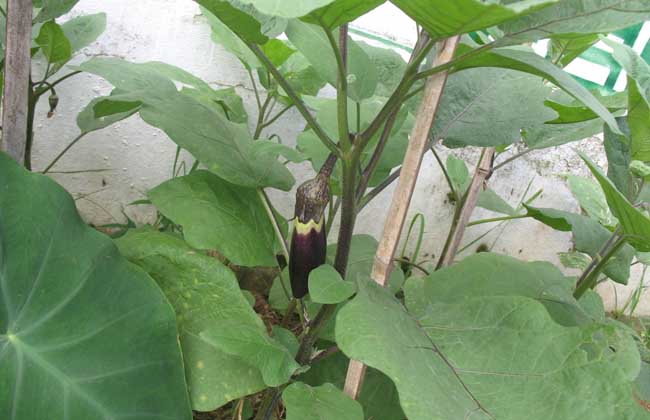
Eggplant originated in India and was introduced to China in the 4th-5th century AD. The national eggplant cultivation area is about 3 million mu, making it one of the few purple vegetables and a very common home-cooked vegetable on the dining table, with high cultivation value. Now let us take a look at the planting time for eggplant!
The planting time for eggplant
Eggplant is an annual herbaceous plant. Its growing temperature is between 20°C and 30°C, and it also has relatively high requirements for water and fertilizer, so it is suitable for planting in two periods: early spring and early autumn.
1. Early spring season: Eggplant in the early spring season can be planted from late December to the end of February.
2. Early autumn season: Eggplant in the early autumn season can be planted from early July to the end of August.
The growing conditions for eggplant
1. Temperature: Eggplant likes high temperatures. The suitable temperature for seed germination is 25-30°C. The suitable temperature for seedling development is 25-30°C during the day and 15-20°C at night. Below 15°C, growth is slow and flower drop is caused. Below 10°C, metabolism becomes disordered.
2. Light: Eggplant has relatively high requirements for both light duration and intensity. Under conditions of long sunshine and high intensity, eggplant grows vigorously, flower bud quality is good, fruit yield is high, and coloring is excellent.
3. Water: Before the first fruit forms, the water requirement is low. After eggplant grows rapidly, it needs more water. Around the harvest of the second fruit, the water requirement is greatest, and the water needs must be fully met. Eggplant likes water but also fears water. When the soil is moist and aeration is poor, root rot is easily caused, and high air humidity makes diseases more likely.
4. Soil: It is suitable for cultivation in soil rich in organic matter and with strong water and fertilizer retention capacity. Eggplant has relatively high requirements for nitrogen fertilizer. When nitrogen is deficient, flower bud differentiation is delayed and the number of flowers is significantly reduced. Especially during the full flowering stage, if nitrogen is insufficient, short-styled flowers increase and plant development is also poor. Under conditions of low nitrogen fertilizer levels, the effect of phosphate fertilizer is not very significant, and the absorption of potassium increases sharply in the later stage.
The sowing methods for eggplant
1. Select good seeds: At present, eggplant varieties suitable for planting in the Guangdong region are mainly those resistant to bacterial wilt and disease, tolerant to heat and rain, with purple-red skin, white flesh, and long club-shaped fruit. Varieties with fruit length of about 30 cm include Hongfeng, Changfeng, Zaofeng, Nongyou Changqie, and Guilin Changqie. Those with fruit length of about 25 cm include Yueqie No. 2, Yuefeng, and Shijie Hongqie. Among them, Hongfeng has fruit that grows large, uniform, and attractive in appearance. Yueqie No. 2 is a variety with high resistance to bacterial wilt and verticillium wilt. Yuefeng and Shijie Hongqie have dark color and very good gloss. Guilin Changqie has high yield and disease resistance, but its flesh is green.
2. Land selection and preparation: The seedbed and transplanting field should be selected from plots whose previous crop was not a Solanaceae crop, preferably paddy fields, with deep plowing and sun exposure, and high beds raised more than 30 cm. Bed width including furrow is 1.7 m for double-row planting and 1 m for single-row planting. Before sowing, 7-10 days earlier, the seedbed should be sprayed with quintozene or dexon at 500 times plus dichlorvos at 800 times and covered with plastic film for disinfection.
3. Apply sufficient base fertilizer: The transplanting field should be given sufficient base fertilizer. Generally, per mu, apply 1000-1500 kg of fully decomposed pig, cattle, and chicken manure, 80 kg of peanut bran, 50 kg of superphosphate, and 80 kg of lime, applied when making the beds. One to two days before sowing, apply fully decomposed finely crushed farmyard manure plus 20 kg of compound fertilizer per mu as base fertilizer and mix thoroughly with the topsoil.
4. Sow at the appropriate time: The suitable sowing period for spring eggplant is late October to November, with a seedling period of 60-70 days. The suitable sowing period for autumn eggplant is June to July, with a seedling period of 25-30 days. In cool regions, off-season cultivation can be sown in March to April and transplanted in May. Generally, the seeding rate is 15-20 grams per mu.