How good are the prospects for greenhouse vegetable cultivation?
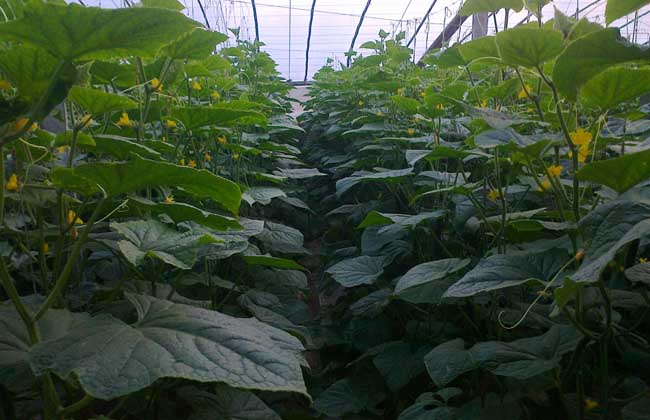
Greenhouse vegetable cultivation is a fairly common technique with good heat-retention performance, and it is deeply loved by people because off-season vegetables can be eaten at any time. Let us take a look below at just how good the prospects for greenhouse vegetable cultivation really are!
The prospects for greenhouse vegetable cultivation
The advantage of greenhouse vegetables lies in their off-season nature. In winter, for example, ordinary pepper plants freeze to death, but they can be grown in a greenhouse, and at that point there is market demand. Today greenhouses are gradually becoming widespread, market demand is gradually increasing, and the market prospects are good.
How can the risks of greenhouse vegetable cultivation be avoided?
1. Market awareness: Vegetables differ from other products in that they are more restricted by natural conditions and are not easy to store, so once supply exceeds demand and a backlog builds up, it will cause huge losses. Vegetable growers should pay attention to collecting supply-and-demand information and price information fed back from the market. In terms of vegetable varieties, quantities and planting times, they should be market-oriented, grasp market trends, analyse market potential, and carry out planning and adjustments in a timely manner to produce products that sell well.
2. Scientific and technological awareness: The cultivation and management of greenhouse vegetables is a complex and meticulous technical task, such as maintaining suitable light, temperature and humidity in the greenhouse, applying fertiliser scientifically, and carrying out harvesting, transport and storage reasonably. Among these, because greenhouse vegetables are very prone to pests and diseases, doing a good job of pest and disease control is the key to production. It can be said that the entire process of greenhouse vegetable production is inseparable from scientific and technological knowledge. Vegetable growers should be clear about the idea of “growing vegetables with science and technology” and raise their own technical level in an all-round way. They should actively introduce and apply new technologies to improve production levels.
3. Quality awareness: People's dietary consumption today has gradually shifted from emphasising quantity to emphasising quality, and this is especially true in vegetable consumption. Green, environmentally friendly vegetables are increasingly welcomed by consumers. Therefore, vegetable growers should change traditional, backward planting methods and management models, be careful and calculating in the application of agricultural inputs such as pesticides, chemical fertilisers and growth agents, apply them reasonably, and strive to produce high-quality green vegetable products that are non-toxic, harmless and pollution-free. This not only conforms to people's consumption trends, but also increases the competitiveness of the products and helps further open up the market.
4. Awareness of seeking novelty and speciality: There are many kinds of greenhouse vegetables. In addition to growing ordinary off-season vegetables, vegetable growers should pay attention to catering to consumers' desire for novelty and speciality and appropriately grow some special and rare vegetables. Such vegetables are generally welcomed and usually fetch higher prices, making this a market with great development potential.
5. Scale awareness: Only by forming a certain scale can greenhouse vegetable cultivation achieve considerable economic benefits. Some vegetable growers who are mature in technology and sales can, through investigation and analysis, rely on existing advantages to open up new markets, expand production scale, and then turn individual advantages into local advantages, so that more people can embark on the road to prosperity. By all means do not be satisfied with the status quo and refuse to move forward.
Points to note in greenhouse vegetable cultivation
1. Choose a good greenhouse site and improve the supporting water system: Before deciding on a greenhouse, investigate whether the site has sufficient water sources and whether the water sources are polluted. With sufficient water sources, ditches and canals must be well dug to facilitate water diversion and drainage. Where conditions permit, each greenhouse should have a water supply tap installed. Those with higher standards should also be equipped with sprinkler irrigation facilities.
2. Fertilise in a balanced way to promote steady vegetable growth: (1) Apply fully decomposed organic farmyard manure all year round. (2) Apply refined organic fertiliser and high-energy organic fertiliser, such as Yemeifeng and Guomeifeng. (3) Change from one-sided application of nitrogen and phosphorus to reducing nitrogen, stabilising phosphorus, increasing potassium, and applying trace-element fertilisers together. (4) Apply fertiliser in several split doses and in appropriate amounts. (5) Once fertiliser damage occurs, spray a variety of active liquid fertilisers to alleviate the harm.
3. Use pesticides scientifically to ensure vegetable safety: (1) If slight pesticide damage occurs, the method of strengthening fertiliser and water management can be used to restore the vegetables' normal growth functions. (2) Choose the right pesticide for the target, and be especially cautious when applying herbicides. (3) Keep a firm grip on pesticide dosage and concentration, and at the same time avoid repeatedly using one kind of pesticide. (4) By all means do not mix pesticides at will. (5) Avoid applying pesticides during high temperatures. (6) Equipment used to apply herbicides must be cleaned thoroughly before being used again.
4. Rotate crops and change stubble to adjust the vegetable cultivation environment: (1) For vegetables prone to disease, such as eggplant, tomato and cucurbits, replace them with other vegetable varieties by year or by season. (2) Greenhouses prone to continuous cropping obstacles should be given more organic fertiliser to improve the soil. (3) Use soil continuous-cropping agents to inhibit pathogens. (4) For soil deficient in nutrients, promptly supplement the missing nutrients.