What are the construction standards and costs for a vegetable greenhouse?
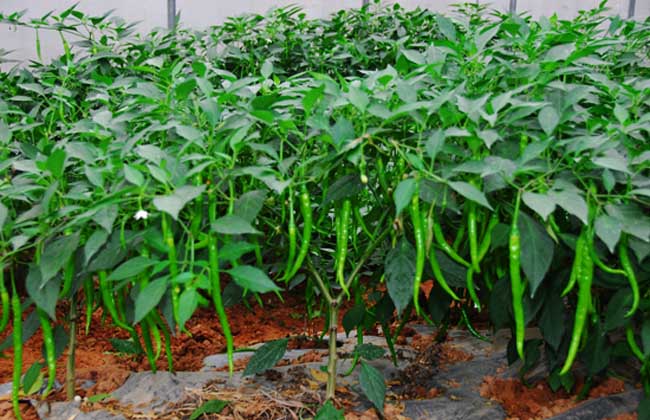
Vegetable greenhouses generally use a bamboo or steel frame structure, covered with one or more layers of insulating plastic film, thus forming a greenhouse space. The outer film effectively prevents the loss of carbon dioxide produced by the vegetables growing inside, giving the greenhouse good insulation. Now let's take a look at the construction standards and costs for vegetable greenhouses!
Vegetable Greenhouse Construction Standards
When building a vegetable greenhouse, we should choose a suitable location. It should be built in a wind-sheltered, sunny spot with fertile soil, good light and ventilation conditions, and no buildings nearby. The specific requirements are
1. Site location conditions: A greenhouse is a fixed facility with a relatively large investment and a long service life. For ease of management, it should be built in a concentrated area.
2. Light and ventilation conditions: The sun is the main light and heat source for a greenhouse, so a site with sufficient light conditions must be chosen for building the greenhouse.
3. Water level measurement: Different regions are suited to different greenhouse construction modes. Areas with too shallow a water level are not suitable for building sunken greenhouses.
4. Soil testing: At the initial stage of building the greenhouse, the soil composition needs to be measured in advance, to facilitate later variety selection and formula fertilization.
5. Soil and water conditions: Greenhouse vegetable cultivation generally involves multi-crop, three-dimensional planting, so good soil and water conditions are required.
Vegetable Greenhouse Construction Costs
1. 6-meter-wide assembled steel-frame greenhouse: This greenhouse type has been promoted and used for many years. It is a steel greenhouse type mainly using galvanized thin-walled steel pipes with a diameter of 22 mm and a thickness of 1.2 mm as the greenhouse frame material. The greenhouse is 6 m wide, with a top height of 2.2-2.5 m, a shoulder height of 1.2 m, a land utilization rate of 80%, a service life of more than 10 years, a cost of 10-30 yuan per sq m, and a construction cost of 7000-20000 yuan per mu. It is suitable for growing vegetables, flowers, etc. Its drawbacks are that the greenhouse width is relatively small, the operation and management efficiency is relatively low, and the winter insulation performance is relatively weak.
2. Simple bamboo-frame greenhouse: This is a widely used type. The greenhouse is generally 5-6 m wide, with a top height of 2-3.2 m, a side height of 1-1.2 m, and an arch rod spacing of 1-1.1 m. Its advantages are low cost, easy availability of materials, and easy construction, with a cost of about 3000 yuan per mu (including film). Its drawbacks are that there are many columns inside the greenhouse, the shading rate is high, operations are inconvenient, the service life is short, and the wind and snow resistance is poor. Among them there is a type commonly known as the "ground-rolling dragon" style, with a span width of 4-6 m, equal top and shoulder heights, and a covering method using a single film all the way to the ground, which saves more cost than ordinary bamboo vegetable greenhouses and is suitable for creeping crop cultivation. It is commonly used for greenhouse watermelon cultivation.
3. Steel-bamboo hybrid greenhouse: The greenhouse structure is the same as that of a simple bamboo-frame greenhouse, with steel pipes and bamboo poles used at intervals as arch rods. It has the advantages of saving steel, reducing cost, and convenient operation, and has a certain application area; its performance and cost fall between those of steel-frame greenhouses and bamboo-frame greenhouses.
4. 8-meter-wide improved steel-frame greenhouse: The height and width of the greenhouse body have been increased, the height and width of the ventilation windows on the sides of the greenhouse have been raised, the space inside the greenhouse has been enlarged, the management efficiency and winter insulation performance have been improved, and the land utilization rate has been increased. This greenhouse is built with galvanized pipes with a diameter of 28-32 mm and a thickness of 1.5 mm; the top height is 3.2-3.5 m, the shoulder height is 1.8 m, and the greenhouse body has a large space, making it suitable for growing tall-climbing vegetables, etc. However, the construction cost of this vegetable greenhouse has increased significantly, at about 20-45 yuan per sq m, or 15,000-30,000 yuan per mu, and it is mainly suitable for agricultural demonstration parks and vegetable growers with a certain economic strength.
5. Ordinary multi-span greenhouses and simple bamboo-frame multi-span greenhouses: The structure of an ordinary multi-span greenhouse is similar to that of a steel-frame multi-span greenhouse, with the advantages of large space and a high land utilization rate, but the cost is much lower, at 50-100 yuan per sq m.
Vegetable Greenhouse Construction Process
The vegetable greenhouse construction process is relatively simple, and the technology is relatively refined. China's vegetable supply is mainly based on vegetable greenhouse cultivation; therefore, the construction quality and design structure of vegetable greenhouses directly affect the yield and quality of vegetables in China.
1. Main design: This mainly involves setting the length, width, and height of the vegetable greenhouse, with design and production based on the planting area. Ordinary greenhouses in China are around 120 sq m.
2. Material selection: Vegetable greenhouse construction is divided into column type and steel-frame type. The steel-frame type is entirely made by welding steel frames, and only the foundation needs to be built and reinforced. Column-type vegetable greenhouses need to be made with cement columns or bamboo, etc. Steel-frame greenhouses have a relatively long service life, up to 25 years, while column-type vegetable greenhouses can be used for 3-5 years.
3. Foundation construction: For column-type vegetable greenhouses, a load-bearing back wall must be built, with a wall width of no less than 50 cm. Dedicated ventilation openings should also be installed.
4. Arch frame installation: Steel-frame vegetable greenhouses do not need arch frame installation, while vegetable greenhouses using bamboo poles or the column type do need arch frame installation. Uniform bamboo poles with a diameter of more than 2 cm should be used for installation. Insert the thick end of the bamboo pole into the back wall and fix both ends. Keep the arch shape consistent and the heights balanced and consistent. Also set up columns at the highest point of the arch for support.
5. Plastic film laying: Plastic film with good light transmission should be selected for laying, with drip-free film or ultraviolet film as the first choice. The plastic should be buried deep on both sides of the greenhouse. The burial depth should be no less than 20 cm.