How to grow lettuce in a greenhouse? Detailed explanation of key planting techniques
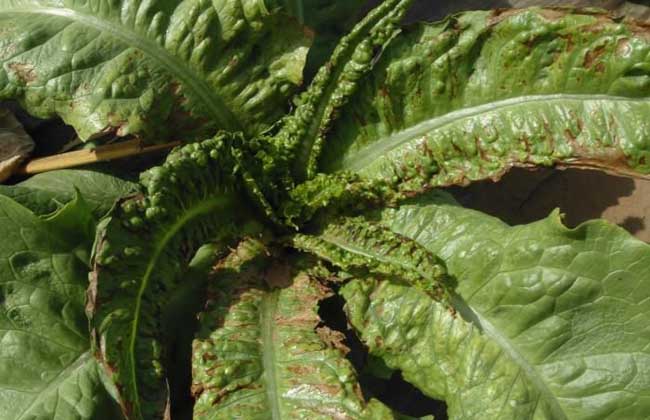
Lettuce planted in late autumn is generally marketed in early March after the Spring Festival. At this time, lettuce coincides with a concentrated market supply of vegetables, so prices are low and profits are poor. Using plastic greenhouses to cultivate winter lettuce results in high yield and good quality, and it is marketed during the Spring Festival, achieving significant economic benefits. Now the editor will introduce greenhouse lettuce planting techniques to everyone.
Pre-planting preparation for lettuce
1. Field selection: Lettuce should not be continuously cropped; rotation with gramineous crops is best, and paddy field soil is generally preferred. The field should be on high ground and convenient for irrigation and drainage.
2. Variety selection: Choose early-maturing varieties that are cold-resistant and freeze-tolerant. Such lettuce varieties include Kexing No. 1, Zhongdu Cold-resistant Erbaipi, Xuelisong, Guasihong, etc.
3. Timely sowing: Generally sow around September 10, within 2 days before or after, using about 50g of seed per 1 mu, with a seedling age of 30—50 days, and the planting period before October 15.
Planting and film covering for lettuce
1. Preparation before planting. One week in advance, plow deeply and sun the soil, and apply sufficient base fertilizer all at once. Apply 2500—3000 kg of decomposed organic fertilizer and 150 kg of ternary compound fertilizer per 1 mu, then prepare the land and make beds, with a bed surface width of 4—8 chi.
2. Planting density: The row spacing for planting is 40 cm and the plant spacing is 35 cm, so about 5000 plants can be planted per 1 mu.
3. In mid-December, when the cold winter has arrived, the plants grow slowly and are prone to low-temperature freeze injury, showing dry leaves, hard dry stems, and poor quality. In order to create good environmental conditions for lettuce plant growth, greenhouse film should be covered promptly to keep warm.
Lettuce planting management
1. Planting: After planting, immediately water with 5% human and livestock manure water to settle the roots. Apply 10% human and livestock manure water plus 0.2% urea once every 5—7 days to promote seedling growth, and carry out one soil cultivation. When the small rosette forms, the fertilizer requirement increases, so apply livestock manure water plus a mixed solution of 0.3% urea and 0.3% potassium chloride once every 7 days to promote early growth of lettuce. At the early stage of stem expansion, make holes between plants and apply 50g of a mixed fertilizer of ternary compound fertilizer and oil cake in a 7:3 ratio. After covering with film, attention should be paid to controlling fertilizer. From late December to January of the following year, apply a heavy stem-elongation fertilizer once, generally by watering with 30% human and livestock manure water plus a mixed solution of 0.5% urea and 0.5% potassium chloride.
2. Temperature and humidity control in the greenhouse: Temperature and humidity management is the key technical measure for the success or failure of winter lettuce in greenhouses. According to plant growth needs and climate changes, management is roughly divided into two stages: in the early stage, prevent high temperature from causing stem bolting and excessive vegetative growth. In the later stage, the main task is to keep warm and prevent freezing, while also paying attention to ventilation and dehumidification. Generally, after covering with film, if the temperature is too high, the side film should be opened to cool down. Later, as the temperature drops, the side film is no longer opened. Only the doors at both ends of the greenhouse are opened for ventilation and cooling. In frost and snow weather, ventilate and dehumidify once every 1—2 days, and simply keep the air in the greenhouse fresh.
3. Application of growth regulators: After planting and seedling recovery, if the temperature is relatively high, the seedlings are prone to bolting, so 50mg/1 mepiquat chloride or paclobutrazol solution can be sprayed once to control internode elongation. When the small rosette forms, spray with 100mg/1 "481" aqueous solution to increase functional leaves and promote the formation of photosynthetic products. During the stem expansion period, spraying with 25mg/1 "Shifengle" or 600-fold "Jintianbao" nutrient liquid fertilizer can further increase yield and improve quality.
Lettuce disease control
Greenhouse lettuce is under long-term high humidity and is susceptible to downy mildew and sclerotial soft rot. In addition to strengthening greenhouse management, microbial control and chemical control should be combined. Before infection, spray 2—3 times with 500—600-fold "Yi'an Shenli" or "Yiyijiu" microbial liquid to improve plant disease resistance. After infection, for downy mildew, spray 70% ethylicin-mancozeb at 500-fold; for sclerotial soft rot, spray 50% carbendazim at 400-fold plus 70% mancozeb at 500-fold, or 50% thiophanate-methyl at 800-fold plus 50% procymidone at 1000-fold. Chlorothalonil smoke agents or procymidone smoke agents can also be used for control.