Cultivation techniques and field management key points for water bamboo (Zizania latifolia)
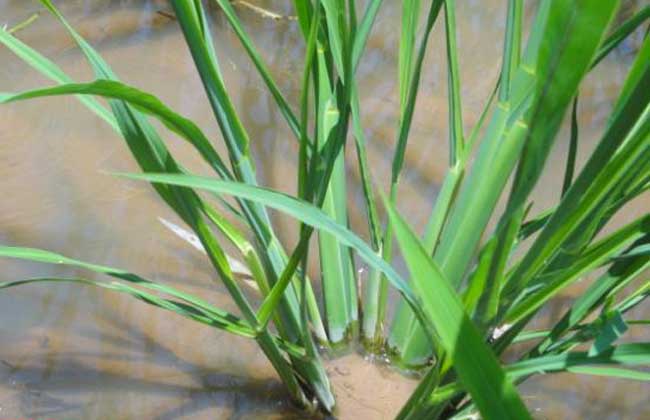
Water bamboo has two types: autumn-producing single-crop water bamboo and autumn-summer double-crop water bamboo, both propagated by division. In the Yangtze River basin, single-crop water bamboo is planted by dividing clumps from Qingming to Guyu. Double-crop water bamboo can be planted in spring and autumn: spring planting around Guyu, autumn planting around Liqiu. Let's take a look at the cultivation techniques for water bamboo below!
Selection of seed plants for water bamboo
Since gray water bamboo and male water bamboo naturally appear in normal water bamboo fields every year, seed selection must be done annually. In some places newly introducing water bamboo, production is often better in the 1st year, then gray water bamboo and male water bamboo begin to appear in the 2nd year. By the 3rd year, the seed clumps can no longer be used as seed, large numbers of gray water bamboo and male water bamboo appear, and yield drops sharply. If seed clumps or divisions of gray water bamboo or male water bamboo are used as seed, they will still be gray water bamboo and male water bamboo in the 2nd year, and will never become normal water bamboo.
Before harvesting autumn water bamboo, select excellent individual plants that bear shoots early, have thick, white, tender flesh, have main shoots and tiller shoots with consistent harvest periods, have no gray water bamboo, no pests or diseases, and no male water bamboo around them. Insert bamboo poles as markers. When gray water bamboo or male water bamboo is found, tie the leaves in a knot as a mark. When dividing clumps in spring of the 2nd year, first dig out the gray water bamboo and male water bamboo together with their roots. Each mu of field needs 200-300 seed clumps. After harvesting the selected excellent seed plants, dig up the seed water bamboo clumps together with roots from mid-December to mid-January of the following year.
For water bamboo seed plants, the buds sprouting from the underground stems 1-2 nodes below the soil surface are effective tillers, so the topmost and bottommost nodes of the seed plant should be cut off, leaving the middle section for cutting and temporary planting. The row spacing for temporary planting is 50 cm, plant spacing 15 cm, with an 80 cm walkway left every 5-6 rows. The depth of temporary planting should be level with the mud of the water bamboo clump, and a shallow water layer of 1-2 cm should be maintained. To encourage the temporarily planted seedlings to root and sprout early and prevent freezing, the seedling field can be covered with plastic film, which can advance the growth and development of water bamboo, thereby advancing maturity and increasing yield.
After the temporarily planted seedlings survive, 3-4 kg of ammonium bicarbonate can be applied per mu of seedling field to promote seedling growth. In spring, for water bamboo clumps with dense rhizomes and crowded tillers, when the seedlings are about 10 cm tall, thin and weak tillers should be removed, and a piece of mud should be pressed toward the root zone so that tiller buds spread out around, improving nutritional conditions and ventilation and light transmission between plants. One week before transplanting and planting, remove seedlings with excessively vigorous growth that tend toward "male transformation" to reduce the occurrence of male water bamboo. "Wandering water bamboo" sprouting from stolons cannot be used as seed water bamboo.
Planting methods for water bamboo
1. Water bamboo field selection: The water bamboo field should be chosen with good light, level land, deep soil, a water source, and strong water and fertilizer retention. Paddy fields with cool water flowing through them, or plots near reservoirs where deep reservoir water can be used for irrigation, are best.
2. Plowing and fertilizing: Plow the water bamboo field and apply 3000 kg of decomposed farmyard manure or 2500 kg of concentrated human feces and urine per mu. If the previous crop was paddy rice, increase the amount of base fertilizer, then rake level, and then irrigate 2-3 cm, achieving level fields, soft mud, and sufficient fertilizer.
3. Timely planting: From April to early May, when water bamboo seedlings are about 20 cm tall and the paddy soil temperature is above 10°C, seedlings can be transplanted and planted. If old water bamboo clumps are used for raising seedlings, at this time dig up the old water bamboo clumps together with roots, use a sharp knife along the direction of tiller growth, and divide the clumps longitudinally with 3-5 healthy tillers as 1 clump. The divided clumps should carry old stems, and when splitting, damage the tillers and new roots as little as possible, and dig, divide, and plant as you go. If the water bamboo seedlings are too tall, cut off the leaf tips so that seedling height remains at 25-30 cm, preventing lodging after planting. Planting density is generally 70-80 cm row spacing, 65 cm clump spacing, with large and small rows, and large rows as walkways. Plant about 1200 clumps per mu, ensuring 6000 basic tiller seedlings. The planting depth should be such that the old stem shoot tubes carried are covered with soil. Planting on a sunny afternoon is best.
Planting management for water bamboo
1. Water level management: Water level management for water bamboo follows the principle of "shallow-deep-shallow." In the early growth period after planting (before tillering), maintain a shallow water level of 3-5 cm, which helps raise soil temperature and promote rooting and tillering. By the late tillering stage in June, deepen the water level to 12-15 cm to inhibit ineffective tillering. Because temperatures are high in July-August, the deep water level also has a cooling effect, but water should be changed regularly to prevent root rot caused by soil oxygen deficiency. Entering the shoot-bearing stage, the water level should be deepened to 15-18 cm, but must not exceed the position of the "water bamboo white eye" (the highest water level should not exceed 2/3 of the pseudostem), preventing elongation of the shoot tubes. In the late shoot-bearing stage, lower the water level to 3-5 cm to facilitate harvesting. After harvesting, the water bamboo field should maintain a shallow water layer or moist state through winter and must not dry out. Each time topdressing is applied, wait until the fertilizer is absorbed into the soil before irrigating. In case of heavy rain, drain promptly to prevent shoot tube elongation caused by excessively high water levels.
2. Topdressing by stages
① Seedling-promoting fertilizer: After the water bamboo seedlings survive 7-10 days after planting, apply 500 kg of human feces and urine or 15-20 kg of ammonium bicarbonate per mu to promote seedlings. If the base fertilizer in the water bamboo field is sufficient, the fertilizer amount can be reduced.
② Tillering fertilizer: In the early tillering stage (about 10 days after the 1st fertilization), apply 1000 kg of human feces and urine or 20-30 kg of ammonium bicarbonate per mu to promote effective tillering and plant growth. If no seedling-promoting fertilizer was applied, the tillering fertilizer should be applied appropriately earlier.
③ Regulating fertilizer: During the full tillering stage in June-July, topdress according to plant growth conditions, generally applying 10-15 kg of ammonium bicarbonate per mu. If plants are growing vigorously, it may be omitted.
④ Shoot-promoting fertilizer: When 10%-20% of the tiller seedlings of new water bamboo have pseudostems that have become flattened (beginning to bear shoots), heavily apply shoot-promoting fertilizer to promote expansion of the fleshy stems and increase yield, generally applying 2500-3000 kg of decomposed human feces and urine per mu, or 30-40 kg of ammonium bicarbonate. Shoot-promoting fertilizer must be applied at the right time. If applied too early, the plants have not yet borne shoots and are prone to excessive vegetative growth, thus delaying shoot bearing. If applied too late, it cannot meet the fertilizer needs of the shoot-bearing stage, affecting yield.
3. Cultivating and weeding the field, removing yellow leaves. After water bamboo planting and survival, cultivate and weed the field in time. To protect tiller seedlings, when cultivating the field, work from near to far to prevent damaging tiller seedlings. The best cultivation is with no weeds, soil not too compacted, and level field soil. In late June, in the late tillering stage of water bamboo, when plant clumps are crowded, promptly remove old leaves and yellow leaves at the base of the plants to promote ventilation and light transmission and encourage shoot bearing. Remove yellow leaves once every 7-10 days, 2-3 times in total. Step the stripped yellow leaves into the field mud at any time; they can serve as fertilizer.
4. Pest control: The main pests of water bamboo include the long green planthopper, giant borer, striped stem borer, thrips, and aphids. The long green planthopper gathers on leaves and causes damage, causing leaves to wither and yellow and reducing yield. The giant borer and striped stem borer damage the water bamboo flesh as larvae during the shoot-forming stage. Thrips and aphids gather to damage young leaves, causing leaf tips to wither, yellow, and curl. Control measures: After planting and survival until 7-10 days before harvest, spray once every 12 days for prevention. For the long green planthopper and thrips, use 40% dimethoate 1000x solution, 25% buprofezin 2000x solution, or 2.5% Uranus emulsifiable concentrate 1000-1500x solution. For the giant borer and striped stem borer, use 5% fipronil 1000x solution, Bt series wettable powder 800x solution, 5% chlorfluazuron emulsifiable concentrate 2500x solution, 80% dichlorvos emulsifiable concentrate 1000x solution, or 18% bisultap 800x solution. Also use 20% triazophos 800-1000x solution, 25% phosmet 600-800x solution, or 20% diazinon 1000x solution, alternating sprays.
5. Disease control: The main diseases of water bamboo include water bamboo rust, brown spot, and sheath blight, which damage leaves and fleshy stems, causing leaves and fleshy stems to wither, yellow, and die. Especially in high-temperature seasons, the disease is severe and affects yield. Control measures: For water bamboo rust in the early stage of disease, spray with 20% triadimefon 1500x solution, 97% sodium dimethyldithiocarbamate 500x solution, 70% mancozeb 700x solution, or 40% flusilazole 8000x solution, once every 7-10 days, 2-3 times in total. Various agents should be used alternately. Brown spot can be controlled with 50% iprodione 1000x solution or 50% carbendazim 500x solution. Sheath blight can be controlled with 5% validamycin 300x solution. After water bamboo enters the shoot-bearing stage, fungicides are prohibited to avoid killing the smut fungus and causing water bamboo not to bear shoots. Therefore, disease prevention must be carried out in the early stage of plant growth (before tillering).
6. Timely harvesting: Water bamboo in mountainous areas generally begins to bear shoots in early July, and is harvested from mid-August to early September, 20-30 days earlier than autumn water bamboo in plain areas. Different climatic conditions, especially temperature levels, affect the shoot-bearing time and harvest period of water bamboo. When harvesting, cut off the shoot tubes, cut off the leaves, and leave 40 cm of leaf sheath. Water bamboo with leaf sheaths soaked in clean water can be stored for 3-5 days (if stored in a cold storage, it can be kept fresh for 60-70 days). Generally, it takes about 14-18 days from the beginning of shoot bearing to harvest. If harvested too early, the fleshy stems have not fully expanded and yield is low. If harvested too late, the water bamboo flesh turns green, quality declines, and gray water bamboo is easily formed. After entering the harvest period, harvest once every 3-4 days. The general yield is about 1600 kg of shelled water bamboo per mu.