Detailed Explanation of Key Points in Double-Cropping Water Bamboo Cultivation Techniques
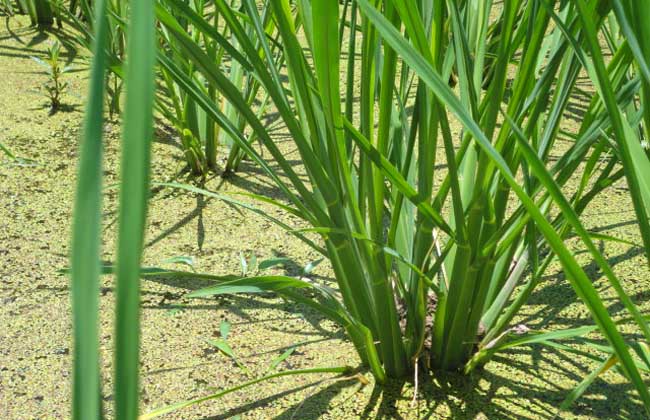
Water bamboo (Zizania latifolia) has two types: single-cropping water bamboo harvested in autumn, and double-cropping water bamboo harvested in both autumn and summer. Both are propagated by division. In the Yangtze River basin, single-cropping water bamboo is divided into clumps and transplanted from Qingming to Guyu, while summer-autumn double-cropping water bamboo can be planted in both spring and autumn, with spring planting around Guyu and autumn planting around Liqiu. Now let's take a look at the double-cropping water bamboo cultivation techniques!
Growth Characteristics of Water Bamboo
1. Roots: Water bamboo roots are mainly found in two locations - one type grows on underground stems, and the other grows on perennial roots. Roots grow 20-70 cm long. The root system of water bamboo is very well-developed and is the organ through which water bamboo fully absorbs nutrients.
2. Stems: Water bamboo has two types of stems - underground stems and above-ground stems. Underground stems are also called underground creeping stems; the tips of creeping stems emerging from the ground can also produce water bamboo. Above-ground stems form tiller tubes on the surface, called perennial stems, on which leaves grow and water bamboo forms. Water bamboo can tiller, and its tillering ability is very strong. Tillers produced from basal leaves are called primary tillers, and the basal leaves of primary tillers can further tiller into secondary tillers, forming the basic seedling population.
3. Leaves: Water bamboo leaves are relatively long, divided into leaf blade, leaf sheath and leaf pillow, with parallel veins. Leaves are 100-150 cm long and 3-3.5 cm wide.
4. Temperature, water and nutrients: The suitable temperature for water bamboo growth is 20-25°C, with air humidity above 85%. It is particularly fond of water, so it must grow in water, but the water cannot be too deep. In swampy areas, water bamboo fields should generally maintain an appropriate water layer. The water layer should be deeper during gall formation and shallower during tillering. When summer temperatures are high, water bamboo is prone to disease, so ventilation is needed, yellow leaves should be pulled off, and deep water should be irrigated to lower the temperature, benefiting water bamboo growth. Water bamboo needs to grow in paddy fields rich in organic matter and with fertile soil. Increasing potassium fertilizer application has a clear yield-increasing effect on making water bamboo grow clean and produce white, tender galls.
5. Gall formation: When water bamboo growth reaches a certain level and the climate is suitable, gall formation begins.
① Gall formation time: In summer, from late May to early June through late July; autumn water bamboo can form galls from August to October.
② Characteristics of gall formation: When temperatures begin to cool in early to mid-September with large day-night temperature differences, nutrients begin to accumulate in the water bamboo plant. The accumulated nutrients transfer and are transported to the flower stem. The stem base of the water bamboo gradually becomes flat, which old farmers call "flat stem." After another 3-5 days, the middle of the stem begins to swell until it shows white, forming the water bamboo gall. The gall formation process is essentially the smut fungus (Ustilago esculenta) within the water bamboo plant and the thick-walled spores it produces; the mycelium produced invades the growth point of the water bamboo. The mycelium secretes indoleacetic acid, stimulating the flower stem. The flower stem swells, forming the water bamboo gall. Water bamboo is a fleshy stem that can be eaten as a vegetable.
③ Gall formation is related to temperature. The optimal temperature for water bamboo gall formation is 24-25°C, with humidity of 85-95%. Too high or too low will affect gall formation.
④ Gall formation is related to fertilization. Over-fertilization or under-fertilization will also affect gall formation, especially for summer water bamboo. Attention must be paid to gall-promoting fertilizer; if applied poorly, it will delay gall formation, and excessive fertilization will affect yield.
⑤ Gall formation is related to management. This includes management of water, fertilizer, diseases, pests and weeds. If the field has no water and is too dry, roots will grow deep, easily causing reversion to wild type, becoming tough water bamboo. If over-fertilized and fertilization is excessive, the smut fungus cannot stimulate effectively and gall formation will not occur. If too lean and nutrient accumulation from growth is insufficient, gall formation will also not occur. If weeds are overgrown in the field, water bamboo will not grow well and will not produce galls.
Double-Cropping Water Bamboo Cultivation Techniques
1. Seedling selection and planting: Foster seedlings in a nursery. The fostering period is between New Year's Day and January 20. Place the introduced water bamboo seed clumps in a seedling field. The fostering field should be easy to irrigate, able to retain water, and most of the seed clumps should be inserted into the mud, arranged well, fertilized and irrigated for overwintering. They will sprout in February of the following year. Water must not be cut off during winter. Ensure each clump produces 8-20 or more seedlings.
2. Main field preparation: For fields to be planted with water bamboo, generally plow 5-6 cun (approximately 17-20 cm) deep in winter, and level the highs and lows so that water can reach a uniform level.
3. Building field ridges, puddling the field bottom, and covering field ridges
① Building field ridges: Begin building field ridges in mid-to-late March, puddle the field bottom, and cover field ridges. Use subsoil from below the plow layer to build ridges around the field that are 50 cm high, 60-80 cm wide at the base, and 40 cm wide at the top. The ridges should be built smooth and firm, and tamped solid with quicklime. After irrigation, they should not collapse, fall apart, or leak water.
② Puddling the field bottom: For fields near rivers or ditches, fields or sections with underground channels, the field bottom needs to be puddled - that is, remove the topsoil, spread a layer of quicklime powder on the raw soil portion, and compact it layer by layer with a stone tamper to prevent water and fertilizer leakage.
③ Covering field ridges: After the ridges are built, if there is bright sunny weather, use loose soil from within the field to pack both sides of the ridges to prevent sun-cracking.
4. Base fertilizer: Base fertilizer can use 3-5 tons of cow dung, or 150 loads of human urine and night soil, or 60 loads of chicken manure, spread evenly. If base fertilizer is lacking, use 100-150 jin of compound fertilizer with N, P, K content of 45%. Break up the soil finely, level it, and then prepare to irrigate and plant water bamboo.
5. Transplanting: Transplanting time is April 15-20, with a density of 1 m × 0.5 m. For seedlings, dig out the fostered seedlings, divide into clumps, with about 4 seedlings per clump, and transplant the same day. When planting water bamboo seedlings, irrigate to level the field soil, then transplant. The water layer should be shallow during transplanting - shallow water for planting seedlings, with lines stretched for positioning, one mark per meter on a line, 0.5 m per row. In this way, the basic seedling population per mu is 5,000 seedlings. Do not transplant too deep - the tiller tube being in the mud is sufficient. If too shallow, they will fall over when the wind blows. After two days, fallen seedlings can be replanted. After planting, irrigate with deep water to help them establish.
Double-Cropping Water Bamboo Cultivation Management
1. Water management: Mainly based on the growth stages of water bamboo, following the principles of shallow water for transplanting, deep water for establishment, shallow water for tillering, gradually deepening in the mid-to-late stages, combining deep and shallow during the harvest period, and moist overwintering. Specifically: shallow water for transplanting, shallow water for tillering, then continuously deepening the water layer, with deep water during high-temperature periods to lower temperature and get through summer.
2. Fertilizer management
① Apply tillering fertilizer: One week after transplanting water bamboo, when the water layer in the field appears clear, apply 100 jin of ammonium bicarbonate per mu to promote tillering.
② Hoeing for weed control: Hoeing means using an iron-toothed rake to turn the soil between water bamboo rows and plants, achieving the goals of loosening soil, raising soil temperature, and accelerating fertilizer decomposition. At the same time, it can also remove weeds, break some old water bamboo roots with the rake, and promote new root production. Generally hoe 2-3 times. The first hoeing is 5-7 days after transplanting, when plants have just turned green. Pull the soil away from around the water bamboo plants so that the tillering nodes are not buried in the soil. When hoeing seedlings, the direction of movement should be perpendicular to the row direction (i.e., moving laterally). The second hoeing is 7-8 days after the first, and this time the soil pulled up in the first hoeing should be turned over, moving along the row direction. The third hoeing is 7-8 days after the second, and this time the soil should be further worked into a fine mud consistency, and all the soil in the field should be leveled and deeply hoed. After these two hoeings, if there are weeds in the field, they should be pulled by hand, and the pulled weeds should be stepped into the mud as fertilizer.
③ When water bamboo seedlings grow to the end of June, tillering basically ends, and the number of seedlings per clump can reach over 20 at this time. At this point, ineffective tillers begin to die off. Fertilization during the thickening stage should be based on observing the seedlings, with the purpose of consolidating effective tillers, making effective plants grow thicker, and achieving balanced growth. But they should not grow too vigorously - combined with high temperatures, excessive growth leads to severe diseases, many pests, and poor ventilation and light penetration. If some fields with water and fertilizer leakage have thin seedlings and short plants, affecting future gall production, the water leakage problem should be solved on one hand, and potassium should be supplemented to promote vigor on the other.
④ Heavy application of gall-promoting fertilizer: The fertilization principle for autumn water bamboo is heavy-light-heavy, meaning heavy application of tillering fertilizer, light application of stem-thickening fertilizer, and heavy application of gall-promoting fertilizer. But the gall-promoting fertilizer should be timed according to weather, seedlings, and field conditions. "According to weather" means applying when temperatures cool in early September - generally during this period cold air moves south, and there is a clear cooling process. "According to seedlings" means applying less when fertility is good and more when fertility is poor, generally 150-200 jin of ammonium bicarbonate per mu. After heavy application of gall-promoting fertilizer, water bamboo gall formation can be uniform, with large, white, tender galls and high yield. If applied poorly or too early, it may delay gall formation time, causing late market arrival and affecting returns.
3. Harvesting: After water bamboo transplanting, several types of water bamboo galls appear
① Generally, in June, the water bamboo galls growing on new water bamboo are called "dai niang jiao" (mother-accompanying galls). When picking water bamboo, be careful not to pull out the roots.
② Generally, water bamboo galls that appear in June and July are called "guai jiao" (strange galls). If the weather is suitable and fertilizer and water conditions are good at this time, some will also produce galls. At this time, the yield is low and individual weight is light, but the price is high and the market demands it as an off-season vegetable supplement. In cultivation, the approach of heavily applying gall-promoting fertilizer to fields producing strange galls to strive for further tillering and gall formation is called second-crop water bamboo.
③ In September-October, the galls of water bamboo that have formed are harvested. During harvesting, be careful not to pull out the roots. When harvesting until October when the weather turns cold, there are still tiller seedlings that will grow into water bamboo, which can also be harvested. The yield of autumn water bamboo is generally about 1,000 kg per mu, with some reaching over 1,250 kg. Water is cut off around the winter solstice, and old water bamboo is cut one week after cutting off water.
④ Heavy application of winter fertilizer: After frost, the above-ground leaves wither and turn yellow, but the underground creeping stems are still growing. Around the winter solstice, cut the old water bamboo clumps level with the mud surface, remove them from the field and burn them. Immediately apply 150-200 loads of human urine and night soil heavily in the water bamboo field to promote the growth of water bamboo seedlings for the coming year.
4. Summer water bamboo management
After autumn water bamboo is left, the field should not be kept dry all the time during winter - it should maintain a moist state. Starting from mid-January, begin irrigation, keeping a thin layer of water in the field to help raise soil temperature and produce more seedlings.
The key to summer water bamboo management is still water and fertilizer. Water should be maintained without leakage. For fertilization, winter fertilizer should be applied in a timely manner before irrigation in early to mid-January. In early April, seedling-promoting fertilizer should be applied, and gall-promoting fertilizer should be applied based on seedling observation. However, generally considering the gradual temperature rise, even if gall-promoting fertilizer is applied, it should be very light - just a supplement. This is because if summer water bamboo gall-promoting fertilizer is applied poorly, it causes tough water bamboo that does not form galls, reducing yield. But if summer water bamboo is too lean, it also cannot form galls. This differs from the heavy application of booting fertilizer for rice and wheat, and also differs from autumn water bamboo. The yield per mu can reach over 1,200-1,500 kg. Summer water bamboo is a crop with low input and high returns.
Double-Cropping Water Bamboo Pest and Disease Control
1. Disease control: The main diseases are: water bamboo blast disease and Helminthosporium leaf spot.
[Agricultural control] Do not apply excessive nitrogen fertilizer; increase potassium fertilizer application to strengthen plant disease resistance.
[Chemical control] Use validamycin at 1:400 for spraying to control water bamboo blast disease, spraying twice in three days. For Helminthosporium leaf spot, use 50% carbendazim at 1:400 for spraying, or 0.2 kg of isoprothiolane at 1:600 dilution for spraying.
2. Thrips
[Damage characteristics] New water bamboo may be damaged by thrips in early May, causing new leaves to curl and turn yellow, with thrips present inside.
[Control method] Use dimethoate at 1:600 dilution for spraying.
3. Sesamia inferens and Chilo suppressalis
[Damage characteristics] Sesamia inferens, Chilo suppressalis, and other stem borers damage plants with their larvae, causing water bamboo seedling death or boring into the water bamboo gall body to create wormy galls, affecting the commercial edibility of water bamboo, affecting yield and reducing returns.
[Agricultural control] ① Remove weeds on field ridges and in the field. ② Apply pesticides promptly during the egg-hatching period.
[Chemical control] Use 25% dimehypo at 0.3 kg per mu mixed with 200 jin of water for large-machine spraying, or mixed with 400-500 kg of water for splashing. Generally, apply 2-3 times per field.