Detailed explanation of water bamboo storage methods, teaching you how to preserve water bamboo correctly
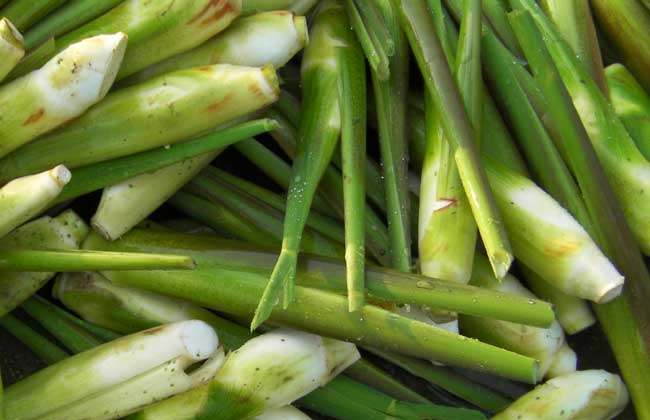
Water bamboo, also known as gaogua, gu sun, gu shou, jiao sun, gao sun, etc., is a relatively common vegetable, mostly grown in the Yangtze River and lake areas, suitable for growing in fresh water. Let us take a look at the storage methods for water bamboo below!
Fresh water immersion storage
Take selected water bamboo that is neither tender nor old, with white flesh, firm and thick, with the sheath removed and 2 to 3 wrapper leaves retained, place it directly or in a cattail bag, and soak it in a clean water pool (vat). Be careful to keep the water bamboo completely submerged in the water, change the water frequently, and keep the water clean. This method can keep water bamboo fresh without loss, and both the appearance and flesh are excellent.
Alum water storage
Take selected, good-quality water bamboo with the outer shell peeled off, soak it in alum water (add 0.5 to 0.6 kg of alum to every 50 kg of water and stir until dissolved), cover it with disinfected bamboo strips arranged in a crossed pattern, place stones on top, and press the water bamboo to 10 to 15 cm below the water surface. In terms of management, promptly remove the foam on the water surface. If there is too much foam and the water turns yellow, replace the alum water in time to prevent the water bamboo from rotting. You can also directly apply alum powder to the base of the water bamboo, then box and stack it. If the storage temperature can be controlled at around 1°C, it can be kept fresh for 2 to 3 months.
Cold storage
Take selected water bamboo with 2 to 3 wrapper leaves retained, put it in boxes (baskets) and stack it in a cold storage, or tie it into bundles of 5.0 to 7.5 kg, put them in mesh bags, and place them on the storage shelves in the cold storage. Maintain the storage temperature at 0 to 1°C and relative humidity at 95% to 98%. It can be stored safely for about 2 months.
Plastic film bags
Take selected shelled water bamboo flesh, put it into 0.04 mm thick polyethylene plastic film bags, tie the bags sealed, or put it into 0.06 mm thick perforated polyvinyl chloride plastic film bags, about 5 kg per bag, place them on shelves in cold storage, maintain the storage temperature at 0 to 2°C and relative humidity at 95% to 98%. It can be stored and kept fresh for more than 2 months. The appearance and quality of the water bamboo are both good, and losses from dehydration and mold rot are not great.
Salt sealing
This is a folk storage method. The specific practice is to first spread a layer of table salt about 5 cm thick on the bottom of a container (vat, barrel, pool, etc.), then place selected water bamboo with the sheath removed and with two or three shells retained flat in the container in order, stack it to 5 to 10 cm from the container opening, and seal it well with salt. This storage method is more suitable for areas with dry air and colder climates. Because the southern region has higher temperatures and greater humidity, the sealing salt is likely to dissolve, and the water bamboo is also likely to turn yellow, deteriorate, and rot, so special attention should be paid to humidity control during storage.
Cellar storage
Choose late-maturing water bamboo that is neither old nor tender, with two or three shells retained, shorten the sheath, spread it on the vegetable racks in the cellar, maintain the cellar temperature at 0 to 8°C, and it can be stored for more than 2 months.