What are the prospects for growing Houttuynia cordata?
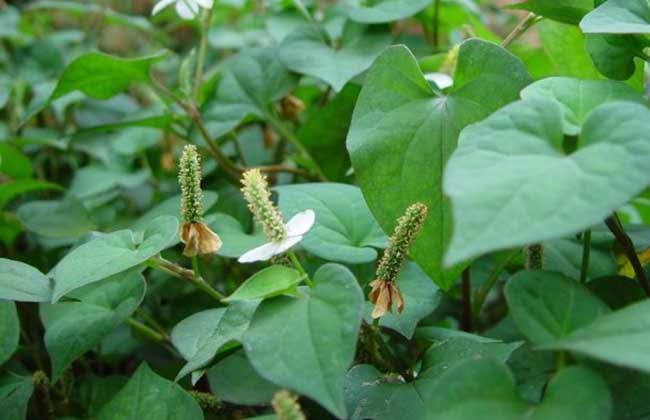
Houttuynia cordata, also known as dog heart grass, zhe'ergen, or dog ear, is used whole as medicine; it clears heat, detoxifies, and promotes diuresis, and treats enteritis, dysentery, nephritic edema, mastitis, otitis media, and more. Its tender rhizome is edible, and people in southwestern China often use it as a vegetable or seasoning. Let's take a look at the growing prospects for Houttuynia cordata below!
Growing Prospects for Houttuynia cordata
Houttuynia cordata is widely distributed across the southern provinces and regions of China, and is also found in parts of the northwest, north China, and Tibet. In recent years, influenced by the trends of “returning to nature” and “medicine and food from the same source”, the practice of digging up Houttuynia cordata in the wild for sale and for eating as a distinctive wild mountain vegetable has gradually flourished. Wild resources fall short of demand, and market prices are relatively high.
In addition, Houttuynia cordata is a traditional medicinal plant. Pungent and cold in nature and flavor, it has the effects of clearing heat and detoxifying, reducing swelling and discharging pus, and promoting diuresis to treat strangury. It can be used to treat lung abscess and ulceration, cough and asthma from lung heat, heat dysentery and heat strangury, edema, beriberi, urinary tract infections, excessive vaginal discharge, carbuncles, swellings, and sores. Therefore, in traditional Chinese medicine prescriptions, Houttuynia cordata often becomes the main drug for lung diseases and urinary system diseases.
Houttuynia cordata can be produced industrially as a wild vegetable for in-depth development and utilization, and can also serve as a pharmaceutical raw material to be processed into Western medicine injections or Chinese patent medicines, so it currently has a fairly ideal market prospect.
Growing Benefits of Houttuynia cordata
Growing Houttuynia cordata brings quick results. In the middle and lower reaches of the Yangtze River, it is planted from late February to early March, and can be harvested in batches 3 months after planting; it can also be planted and harvested out of season. Yield is about 3000 kg per mu, with high yields reaching 5000 kg. Because of its fishy smell, no pests or diseases have been found during its growth period; it is a pollution-free, non-harmful vegetable that sells well on the market and brings high returns.
Growing Environment for Houttuynia cordata
Houttuynia cordata has a wide range of adaptability and can grow throughout China during the frost-free period. In the middle and lower reaches of the Yangtze River it can overwinter normally, sprouting at a temperature of 12℃, with a growing-period temperature of 16 to 25℃. It likes moisture, tolerates waterlogging and shade, has low requirements for light and soil, and does not compete for land with other crops, so it can be cultivated by making full use of wasteland.