Remember the ancients' 12-character mnemonic for fertilizing orchids, and get one detail right to stay far away from fertilizer burn
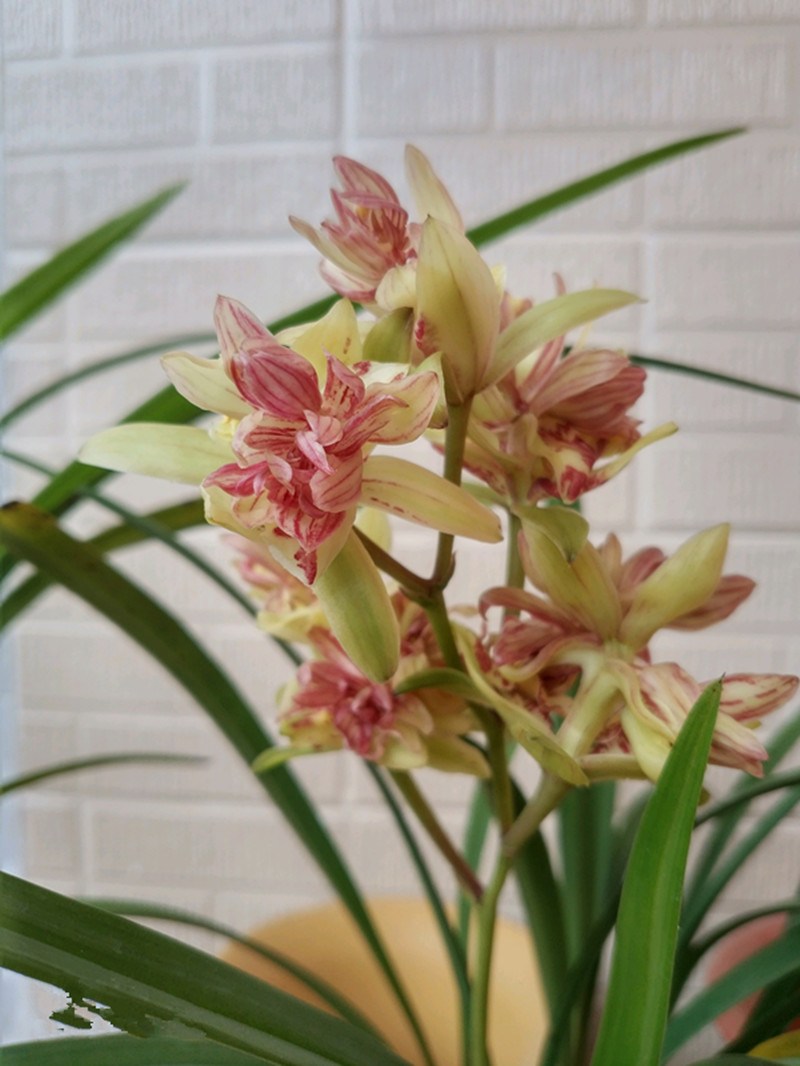
There are quite a few orchid lovers out there, and many people have a few hungry, waiting-to-be-fed orchids sitting at home, yet have no idea where to start. When it comes to growing orchids, this little gardener has always advocated learning from the ancients, standing on the shoulders of those who came before, and drawing on the care experience of our predecessors to grow orchids well. That is far better than fumbling along all alone, don't you think?
1. Fertilizing orchids: the 12-character mnemonic
What this little gardener wants to share with fellow orchid owners today is the mnemonic for using fertilizer: "Fat orchids should not be left thin for long, thin orchids should not be fattened suddenly" - just 12 characters, but I hope you will study the details in them carefully. This is one of the principles of fertilizing orchids, and the reason many people fail at growing orchids is that they do not get these two points right when fertilizing.
2. "Fat orchids should not be left thin for long"
First let's look at "fat orchids should not be left thin for long." This means: for strong orchid seedlings, nutrition must keep up. "Fat orchids" are sturdy orchid seedlings. We all know that people in good health eat more, and orchids are the same: a strong orchid seedling needs more nutrients, so only by regularly applying a supplemental organic fertilizer specially formulated for orchids can you ensure its growth.
3. "Thin orchids should not be fattened suddenly"
Now let's look at "thin orchids should not be fattened suddenly." This means: for weak, spindly orchid seedlings, fertilizing should be light - apply dilute fertilizer frequently, never apply concentrated fertilizer. We have all heard that one big mouthful can stuff a fat person to death, and for an orchid in relatively weak condition, it cannot absorb that many nutrients. With concentrated fertilizer, the fertilizer accumulates in the pot and easily damages the roots.
For example, if I am growing a relatively weak, spindly orchid, when fertilizing I will first dilute it 2000 times and use it once every 2 weeks. Once it gradually recovers and becomes strong, I will adjust to diluting it 1000 times and use it once every 2 weeks. When it reaches the vigorous growth period, I will adjust to diluting it 500-1000 times and use it once a week. Taking it step by step like this is the safe way to fertilize a weak, spindly orchid.
4. The life-saving little detail in fertilizing
There is one more thing this little gardener must remind fellow orchid owners of: the absorption of orchid nutrients needs the help of water to be completed better, so after each fertilization, we can water once in the early morning of the next day to ensure absorption. In summer, water evaporates too quickly; when the water evaporates, the fertilizer becomes more concentrated and can easily burn the roots. This is the life-saving detail. You can use a plant and flower monitor to measure humidity, replenish water in time, and stay far away from fertilizer burn.
When growing orchids, silently recite this 12-character mnemonic while fertilizing, and remember this life-saving little detail, and our orchids can stay far away from fertilizer burn and grow strong and healthy!