What are the growing conditions for Agrocybe aegerita? Detailed explanation of cultivation environment requirements
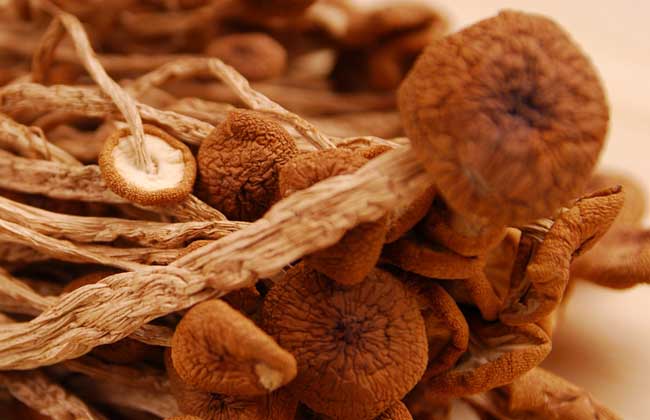
The growth and development of Agrocybe aegerita are very closely related to environmental conditions such as nutrients, water, temperature, pH, air and light. The quality of these environmental conditions determines the success or failure of Agrocybe aegerita cultivation. Let's take a look below at what the growing conditions for Agrocybe aegerita are!
Nutrients
Agrocybe aegerita is a wood-rotting fungus with relatively weak ability to decompose lignin and cellulose. Wild Agrocybe aegerita grows only on Camellia oleifera trees. After artificial domestication, broadleaf trees such as tung tree, maple, willow, oak and white poplar can be used as cultivation materials, but mixed sawdust with a looser texture and less tannin content is more suitable for the growth of Agrocybe aegerita. Wheat bran, rice bran and cake fertilizer can be fully utilized as nitrogen sources.
In addition to mixed sawdust, Agrocybe aegerita can also use bagasse, rice straw, cottonseed hulls and mushroom grass as carbon sources. Among carbon sources, mono- and disaccharides are the best, while the ability to utilize starch and cellulose is relatively weak. If the cultivation formula contains only glucose, the mycelium grows loosely; when a small amount of sucrose is added as well, the mycelium grows densely and vigorously. This indicates that mineral elements are relevant during mycelial growth.
Temperature
Agrocybe aegerita is a medium-temperature edible fungus. On PDA medium at 26°C, spores germinate after 24 hours, and after 48 hours fine mycelium can be seen with the naked eye. The optimum temperature for mycelial growth is 23-28°C; growth stops above 34°C, and it can be preserved for 3 months at minus 4°C. The temperature range for primordium differentiation of the fruiting body is 12-26°C, with the optimum temperature being 18-24°C; lower or higher temperatures will delay primordium differentiation. At lower temperatures, the fruiting body grows slowly, but the tissue is firm, the mushroom shape is larger and the quality is good. At higher temperatures, it is prone to opening its cap and forming long-stemmed mushrooms with thin caps.
Water
The moisture content of the culture medium for Agrocybe aegerita cultivation should be kept at 60%-65%, that is, grab a handful of culture medium and squeeze hard; it is ideal if the spaces between the fingers are moist, with a little water but not dripping, and when the fingers are released it forms a clump that breaks apart after falling to the ground. However, different types of sawdust and different degrees of coarseness vary slightly, so it should be controlled flexibly. During mycelial growth, the relative air humidity should be required to be below 70%. The fruiting body formation and development period is 85%-95%, and it should be appropriately lowered during the growth period to extend the product's freshness retention period.
Air
Agrocybe aegerita is an aerobic macrofungus and is very sensitive to carbon dioxide. Poor ventilation and excessively high carbon dioxide concentration can easily cause slow mycelial growth, thick and long fruiting body stipes, small caps, early cap opening and deformed mushrooms.
Light
Agrocybe aegerita is a light-requiring fungus, and the fruiting body has phototropic growth characteristics; suitable diffused light is a necessary condition for completing its normal life cycle. During the mycelium cultivation period, it still grows under lightless conditions, but does not form fruiting bodies. The fruiting body is not easy to differentiate without light, and the suitable light intensity is 50-300 lux.
pH
Agrocybe aegerita mycelium prefers a weakly acidic environment, with the optimum pH being 5.5-6.5. Below pH 4 or above pH 6.5, the mycelium grows sparsely and slowly.